
4 Days in Sorrento: The Perfect Sorrento Itinerary
Sorrento makes a perfect base for exploring the Amalfi Coast and the Bay of Naples, and four days is enough time to see the highlights without feeling rushed! This Sorrento itinerary covers exactly how to spend those four days, with one full day in Sorrento itself and three day trips to Capri, the Amalfi Coast, and Pompeii.
I’ll walk you through how to get to each destination, what to see once you’re there, and whether it’s worth doing it yourself or joining an organized day trip. By the end, you’ll have a clear plan for 4 days in Sorrento that covers the very best of the region.
Disclosure: This post contains a few affiliate links, which means I may receive a small commission, at no cost to you, if you make a purchase through my link.
Quick Travel Planning Tips for Sorrento
🏨 Where to Stay: Stay in or near Sorrento’s town center for easy access to ferries, trains, and restaurants. Hotel Continental is a great central option with sea views, while Hotel Il Faro works well for a more affordable stay near the marina.
🚆 How to Get There: From Naples, you can take the train directly to Sorrento. Check train schedules on Omio, or rent a car if you want more flexibility.
✈️ Airport Transfers: If you don’t want to deal with public transport, you can arrange a private airport transfer from Naples.
🌟 Best Tours: Join a guided walking tour of Sorrento with limoncello tasting, or book a pasta and tiramisu cooking class for a hands on local experience.
🗺️ Best Day Trips: From Sorrento, join a Capri boat tour, book a full-day Amalfi Coast tour, or visit Pompeii on a guided day trip.
📱 Stay Connected: Use an eSIM from Airalo to stay online in Sorrento for maps, transport, and bookings without swapping SIM cards.
No time to read now?
Pin it for later!
Day 1: Explore Sorrento
Start your Sorrento itinerary with a slow, easy day in town. After traveling to get here, this is the perfect chance to get your bearings without rushing from one sight to the next.
Begin at Piazza Tasso, the heart of Sorrento and the natural starting point for almost everything in town. Grab a coffee at one of the cafes lining the square and watch the town wake up around you, the mix of locals running errands and tourists figuring out which direction to walk in.
From there, head down Corso Italia, Sorrento’s main pedestrian street. It’s lined with shops selling limoncello, ceramics, and leather goods, and it’s worth wandering without much of a plan.
Don’t get me wrong, it’s touristy, but it’s also genuinely fun to browse and a good way to get a feel for the town’s rhythm!

Make your way to the Cloister of San Francesco, just a few minutes off Corso Italia. It’s easy to walk straight past the entrance since it’s tucked next to a small church, but the cloister itself is quiet and beautiful, with arched walkways and a courtyard full of greenery.
If you’d rather learn about the town instead of exploring on your own, a guided walking tour is a great option.
It lasts for about two hours and covers the historic center, including spots like the Cloister of San Francesco and Marina Grande, finishing with a limoncello tasting. It’s a good way to get some context on Sorrento’s history before continuing to explore on your own!

Cloister of San Francesco 
Piazza Tasso
For lunch, head down to Marina Grande, Sorrento’s old fishing village turned harborside neighborhood. It’s a steep walk down, but the pastel houses and fishing boats make it one of the most charming corners of Sorrento.
Bagni Delfino sits right at the end of the pier, with tables practically over the water and a menu full of fresh seafood and homemade pasta. It’s a bit pricier than eating in town, but the setting makes it worth it.
Spend the rest of the afternoon at the beach. Sorrento doesn’t have wide sandy stretches, but its beach clubs more than make up for it, with sunbeds lined up on wooden piers over the water.
Bagni Salvatore and Marameo Beach are both popular choices, easy to reach from the town center, and a good way to spend a few hours swimming and relaxing before the evening.

Marina Grande 
Beach in Sorrento
As the afternoon turns to evening, head up to Piazza della Vittoria, one of the best viewpoints in Sorrento. It overlooks the bay and Mount Vesuvius in the distance, and it’s a far quieter spot than Piazza Tasso, with far fewer crowds.
From there, walk over to Villa Comunale di Sorrento, a small park perched on the cliffside above Marina Piccola, for sunset. It’s one of the best free things to do in Sorrento, and it’s worth timing your day around it!
For dinner, both O’Parrucchiano La Favorita and Ristorante La Basilica are excellent choices, and both lean into Sorrento’s love of lemons in their dishes and decor. I highly recommend either one if you want to end your day with a fantastic meal.

Villa Comunale 
Ristorante La Basilica

Related Post
20 Best Things to Do in Sorrento, Italy
Want the full picture of what Sorrento has to offer? My guide to the best things to do in Sorrento has you covered.
Day 2: Day Trip to Capri
No Sorrento itinerary is complete without a day trip to Capri. The island is famous for its dramatic cliffs, crystal-clear water, and a reputation for glamour that goes back decades, and it’s an easy add-on to your trip since it’s just a short ferry ride away.
Spend the day exploring its rocky coastline, charming piazzas, and a couple of standout viewpoints, and you’ll see exactly why it’s earned its name.
Getting to Capri
Capri is easy to reach from Sorrento, whether you want to organize the trip yourself or join a guided tour that takes care of the logistics.
If you’d rather do it yourself, ferries run from Sorrento’s port at throughout the day. Depending on the company you choose, the journey will take around 20-30 minutes. The first departures are around 7 am and the last one comes back around 6:30 pm, so you can make a full day out of it.
Although there are several ferries during the day, it’s worth booking your ferry tickets at least a few days in advance to secure your spot.
If you’d rather skip the planning, an organized day tour from Sorrento is a great alternative. These tours include round-trip transport, a guide, and sometimes extras like a boat ride around the island or free drinks and snacks.
These options take a lot of the guesswork out of the day, especially during peak season when ferries can get crowded.
Best day trips to Capri from Sorrento
What to do in Capri
There is no better way to start your day in Capri than with a boat tour around the island! Boats leave from Marina Grande (where the ferries arrive), and sailing past Capri’s dramatic cliffs and hidden coves is one of the best ways to appreciate the island’s scale before setting foot on land.
You’ll also have the option to add-on a visit to the Blue Grotto. It’s a very small sea cave lit up by an unreal blue glow and you’ll have to transfer to a smaller boat in order to get inside. This always costs extra and you might have to wait a while until you can get into the cave because of boat traffic, but it’s worth it!
Once you’re back on land, take the bus up to Anacapri, Capri’s quieter second town. From there, hop on the chairlift up to Monte Solaro, the highest point on the island. The ride takes about 12 minutes each way, and the view from the top, looking down over both coastlines and across to the mainland, is worth every minute.
From Anacapri, take the bus over to Capri Town, the island’s lively main hub. Other than the bus connecting the two towns, you’ll be exploring entirely on foot from here, but Capri Town is compact enough that it’s an easy walk between sights.
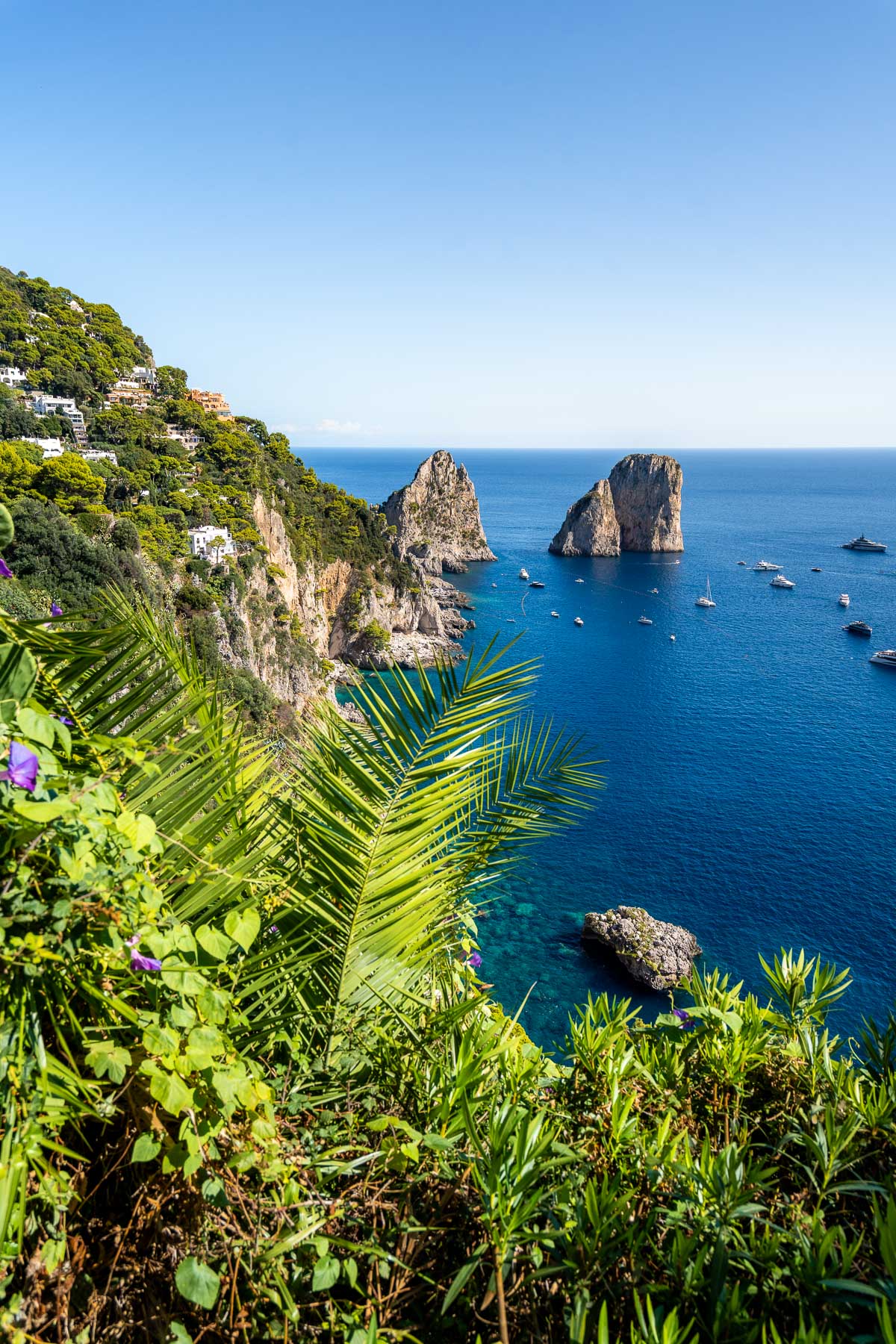
Wander through the famous Piazzetta, then make your way to the Gardens of Augustus, where the views over the Faraglioni rock formations and the winding Via Krupp below are some of the best on the island.
If you still have energy left, it’s worth the walk out to the Natural Arch and Villa Lysis on the island’s quieter eastern side. Both are far less crowded than the main sights, and the walk there takes you through some of Capri’s wilder, more untouched scenery.
Gardens of Augustus 
Via Camerelle 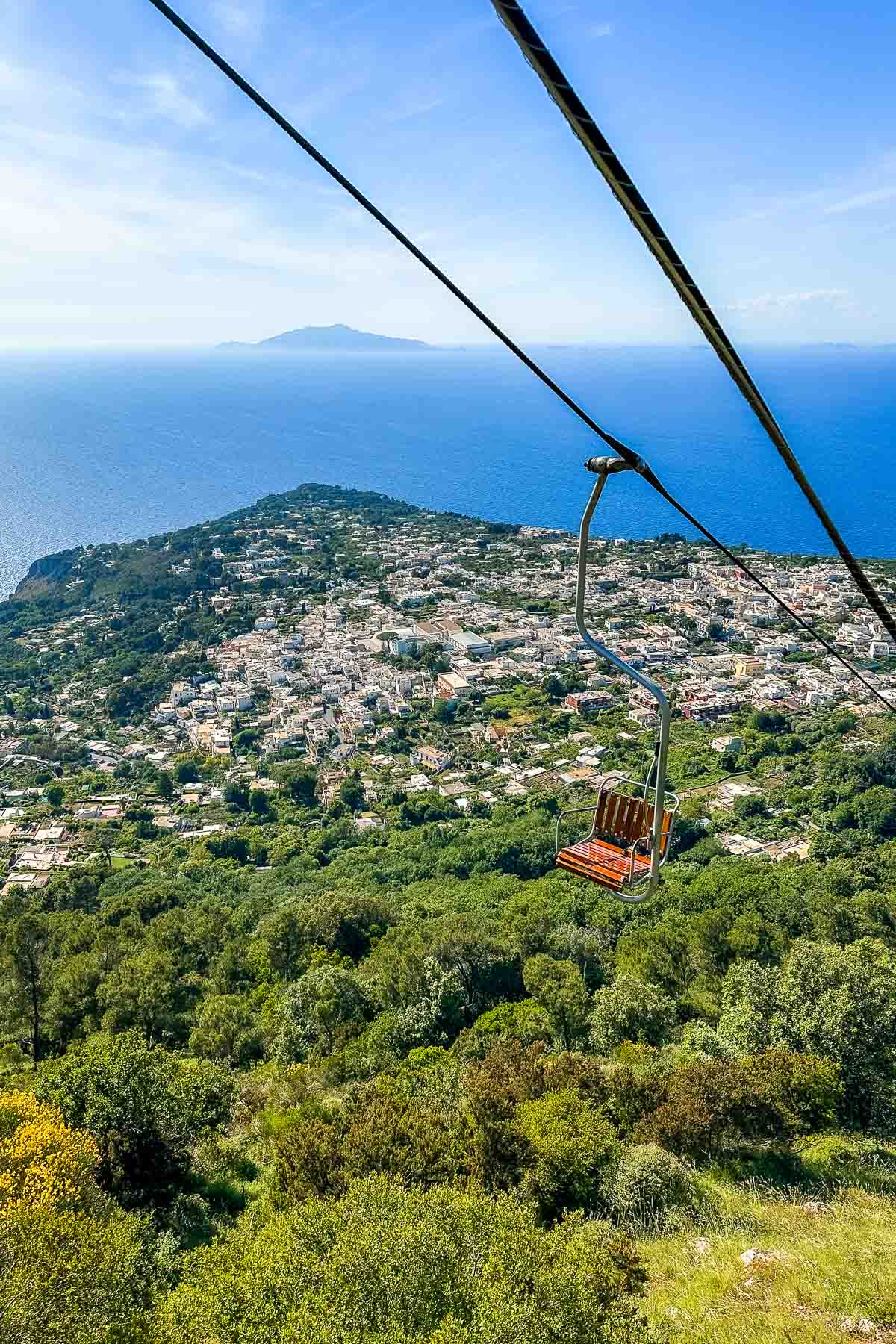
Monte Solaro chairlift 
Villa Lysis
Read more about Capri


Day 3: Day Trip to the Amalfi Coast
Technically, Sorrento isn’t part of the Amalfi Coast, but it makes the perfect gateway for exploring it. Many people choose to base themselves in Sorrento for exactly this reason: it’s noticeably cheaper than staying in towns like Positano or Amalfi, while still being close enough to visit them easily on a day trip.
So if you’re spending 4 days in Sorrento, you have to dedicate at least one day to the Amalfi Coast! Positano is the highlight for most people, but there are several other towns worth knowing about too.
Getting to the Amalfi Coast
Getting around the Amalfi Coast is honestly a bit of a hassle. There are several ways to do it, but the roads and ports are almost always crowded and chaotic, especially in peak season.
If you’re doing this day on your own, I recommend sticking to just one town: Positano. Trying to fit in more than that without a guide usually means spending most of the day in transit instead of actually enjoying it.
The bus from Sorrento to Positano is the obvious budget option, but I’d avoid it. Buses are almost always full, and you’ll likely have to let a few pass before you manage to squeeze on. Once you do, expect to be packed in like sardines for the ride.
The ferry is a much better choice. Yes, it costs more, but it’s comfortable, reliable, and the views of the coastline on the way there are genuinely worth it on their own.
The first ferry departs around 9:30 am and it arrives in Positano in about 40 minutes. There are not a lot of ferry departures throughout the day so make sure to book your ferry tickets in advance!
If you’d rather see more than just Positano in a day, booking an organized day tour is the way to go. These take care of all the transportation for you, and they often cover Amalfi, Atrani, and Ravello as well, all towns worth visiting if you have the time.
Best Amalfi Coast tours from Sorrento
What to do on the Amalfi Coast
As I mentioned, if you’re doing this day trip independently, I recommend sticking to Positano only. Once you get there, start at the Cristoforo Colombo viewpoint for one of the best views over the town before heading down toward the water.
Spiaggia Grande is Positano’s main beach, right in the heart of town, and a good spot to relax for a while or just watch the boats come and go. From there, take some time to wander the streets, ducking into the shops selling handmade ceramics, a local specialty worth bringing home.
The town’s main church, with its distinctive tiled dome, is worth a quick stop too. For a drink with a view, Franco’s Bar is a popular choice, especially if you want to sit and watch the town from above for a while.
Honestly, getting a little lost in Positano’s narrow, stepped streets is part of the experience. There’s no wrong way to spend an hour just wandering!


If your day trip includes Amalfi, the town’s Duomo is the main landmark and worth visiting. Amalfi also has its own beach and a network of small streets that are nice to wander, similar in feel to Positano but quieter.
Atrani is a short walk from Amalfi and doesn’t have major attractions of its own, but it’s one of the cutest, most low-key towns on the coast, and worth the short detour if you have time.
Ravello is a bit different. It sits higher up and it’s a bit harder to reach independently from Sorrento. But if you opted for a tour and it includes Ravello, you’re in for a treat! Villa Cimbrone and Villa Rufolo are the two most famous attractions, both known for their gardens and sweeping views over the coastline.

Duomo di Amalfi 
Villa Cimbrone in Ravello

Related Post
Day 4: Day Trip to Pompeii
Pompeii is an easy add-on to a Sorrento itinerary, and a complete change of pace from the coastal towns. Instead of cliffs and beaches, you’re walking through a Roman city frozen in time by the eruption of Mount Vesuvius in 79 AD.
It’s also one of the simplest day trips on this list, since it’s a direct train ride away with no ferries or winding coastal roads involved.
Getting to Pompeii
Getting to Pompeii from Sorrento is simple, since it’s a direct train ride with no transfers needed.
The Circumvesuviana train runs frequently throughout the day and takes about 30 minutes. Tickets cost just a few euros and can be bought at the station right before you go, so there’s no need to plan ahead.
The train stops right in front of the entrance to the archaeological site, so there’s no extra walking once you arrive.
If you’d rather not deal with public transport, an organized day tour is a solid option too. These usually include round-trip transport and a guide to walk you through the ruins.
One real advantage of a guided tour is that some of them combine Pompeii with a visit to Vesuvius National Park afterward. Doing both in one day on your own is difficult, since there’s no easy public transport link between the two, but tours take care of that for you.
Best day trips to Pompeii from Sorrento
What to Do in Pompeii
Pompeii was a thriving Roman city until 79 AD, when the eruption of Mount Vesuvius buried it under ash and stone. The disaster destroyed the city, but it also preserved it almost perfectly, which is exactly why it’s such a remarkable place to visit today.
Start at the Forum, the old civic heart of the city. It’s surrounded by temple columns, with Vesuvius looming in the background, and it’s one of the best spots to picture what Pompeii must have looked like before the eruption.
From there, make your way to the Amphitheater, one of the oldest surviving Roman arenas in the world. It once held thousands of spectators watching gladiator fights, and walking through it gives a real sense of scale.
The House of the Faun is worth seeking out too, one of the largest and most elaborate homes in the city, with mosaic floors still intact. If you have time, the plaster casts on display elsewhere in the park are some of the most haunting parts of the visit, preserving the exact positions of victims at the moment of the eruption.
Pompeii is large, covering dozens of hectares, so it’s worth planning for at least two to three hours if you want to see the main highlights, or longer if you want to explore more thoroughly. Comfortable shoes are a must, since most of the site is uneven stone streets with very little shade.


Read more about the Amalfi Coast