

4 Days in Budapest: The Ultimate Budapest Itinerary
Planning to spend 4 days in Budapest and want to see the best of the city without feeling rushed?
I’ve lived in Budapest for more than 10 years, so this isn’t just a checklist of sights. This is the exact way I would show the city to a friend visiting for the first time.
Four days is the perfect amount of time here. You can cover the big landmarks like Fisherman’s Bastion, the Parliament, and the thermal baths, but you also have space to slow down, enjoy long dinners, climb up to the best viewpoints, and experience the city after dark.
In this guide, I’ll walk you through a detailed 4 day Budapest itinerary, including what to see each day, how to structure your time, and practical local tips to make everything flow smoothly.
Disclosure: This post contains a few affiliate links, which means I may receive a small commission, at no cost to you, if you make a purchase through my link.
Quick Travel Planning Tips for Budapest
🏨 Where to Stay: I recommend staying on the Pest side, either in or close to the city center. Radisson Collection at the Basilica is a great central option, while B&B Hotel Budapest City works well for a budget friendly stay.
⭐ Best Tours: Take a Danube river cruise to see the city from the water, or join a walking tour of the Buda Castle District for history and views.
🎟️ Tickets to Book in Advance: Book tickets for Szechenyi Thermal Bath in advance, and secure the guided tour of the Hungarian Parliament Building early, as it often sells out.
💸 Save Money on Tickets: If you plan to visit multiple attractions and use public transport, the Budapest Card can help you save money with free transport and discounted entry to popular sights.
📱 Stay Connected: Use an eSIM from Airalo to stay online in Budapest for maps, bookings, and getting around without swapping SIM cards.
No time to read now?
Pin it for later!

Overview of Your 4 Days in Budapest
Breakdown of your 4 day Budapest Itinerary
- Day 1: Fisherman’s Bastion, Matthias Church, Buda Castle, Chain Bridge, Jewish Quarter, Ruin bars, Danube River Cruise
- Day 2: Hungarian Parliament, Shoes on the Danube Bank, Margaret Island, St. Stephen’s Basilica, ISSEI Skybar
- Day 3: Szechenyi Thermal Bath, City Park & Heroes Square, House of Terror, Hungarian State Opera, 360 Bar
- Day 4: New York Cafe, Hungarian National Museum, Metropolitan Ervin Szabo Library, Central Market Hall, Liberty Bridge, Gellert Hill
Map for your 4 days in Budapest
To make planning easier, I created a custom map with every stop included in this 4 day Budapest itinerary.
Each day is marked with a different color so you can clearly see how the city is structured and how the locations group together. This will help you visualize the flow of each day and avoid unnecessary backtracking.
How to use this map: This map is fully interactive, so you can move around, zoom in/zoom out, and click on the icons. If you want to see a larger map, click on the bracket in the upper right corner. To see more details and the different layers, click on the tab in the upper left corner. If you want to save it for later, click on the star icon next to the name of the map. Then simply open Google Maps either on your desktop or phone, go to ‘Saved’/’Maps’, and open the map whenever you need it.
Day 1
Fisherman’s Bastion
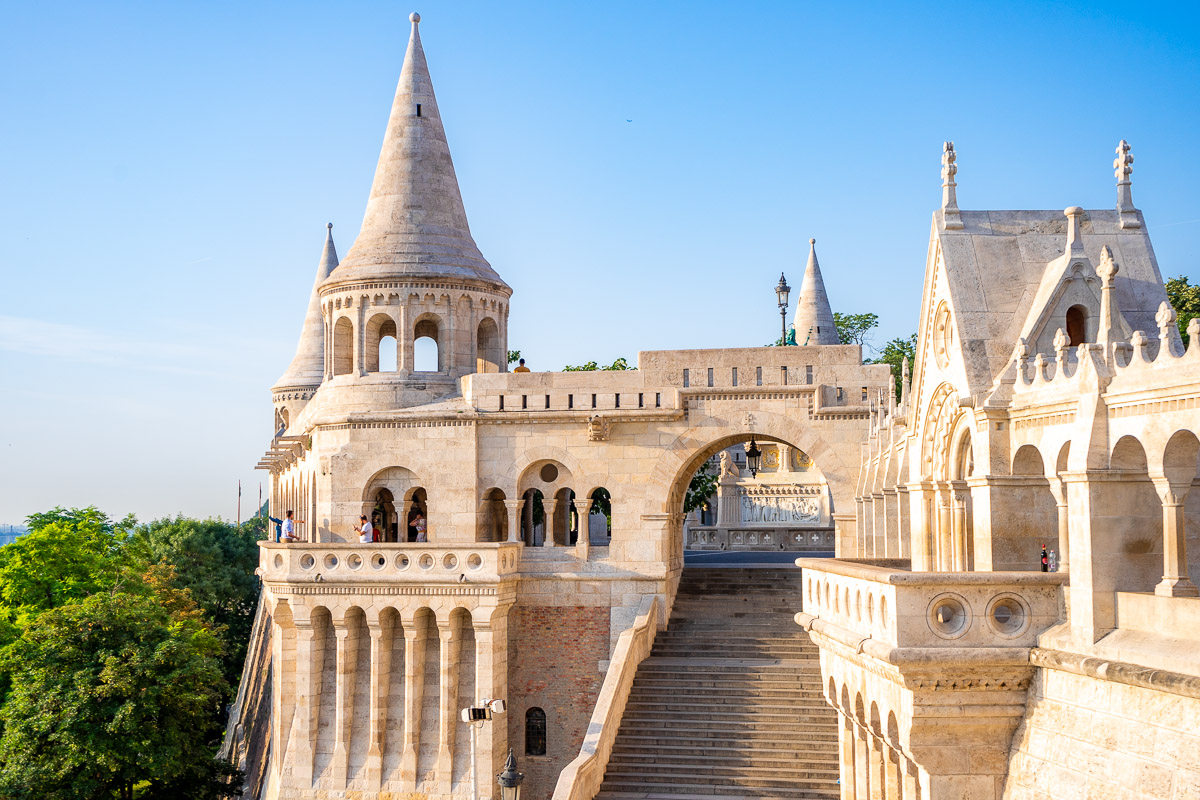
Kick off the first morning of your 4 day Budapest itinerary with an early start at Fisherman’s Bastion! If you can bear to set your alarm, it’s absolutely worth coming up here for sunrise. I’ve been here more times than I can count, and I still can’t get enough of it.
Built in the late 19th century, this place is definitely one of the most Instagrammable places in Budapest. The fairytale-like turrets and sweeping views over the river and the Hungarian Parliament Building make it one of the city’s most iconic spots!
The lower terraces are completely free to visit. The upper terrace requires a small entrance fee, but if you arrive before 9 am, you can usually go up without paying.
Just manage your expectations: this is one of the most famous landmarks in Budapest, so it will be crowded. Yes, even at sunrise! You probably won’t have it to yourself, but getting there early still makes a noticeable difference.


Matthias Church
Right next to Fisherman’s Bastion, you’ll find Matthias Church, so it makes perfect sense to visit it next while you’re already in the Castle District.
This church has played an important role in Hungarian history. It was the setting for King Matthias’s wedding and later served as a coronation church for several Hungarian rulers.
Although the original church dates back to 1015, most of the building you see today was constructed in the late 14th century. It was heavily restored in the late 19th century by architect Frigyes Schulek, who gave it its distinctive look, including the colorful diamond-patterned roof tiles and the dramatic spires lined with gargoyles.
If you have time, it’s worth stepping inside as well. The interior is just as impressive as the exterior and adds another layer to your visit to the Castle District.

Buda Castle
From Fisherman’s Bastion, it takes around 15 minutes to walk through the Castle District to reach the Buda Castle funicular. The walk itself is scenic, so there’s no rush!
Once you’re there, you have two options. You can continue walking up to Buda Castle, which takes another 10 to 15 minutes. It’s a bit steep in parts, but not difficult if you take your time. Or you can hop on the historic funicular, which takes less than 5 minutes to reach the top.
In my opinion, the funicular is slightly overpriced, but you’re paying for the experience rather than the convenience. If it’s your first time in Budapest, it can still be a fun little ride!
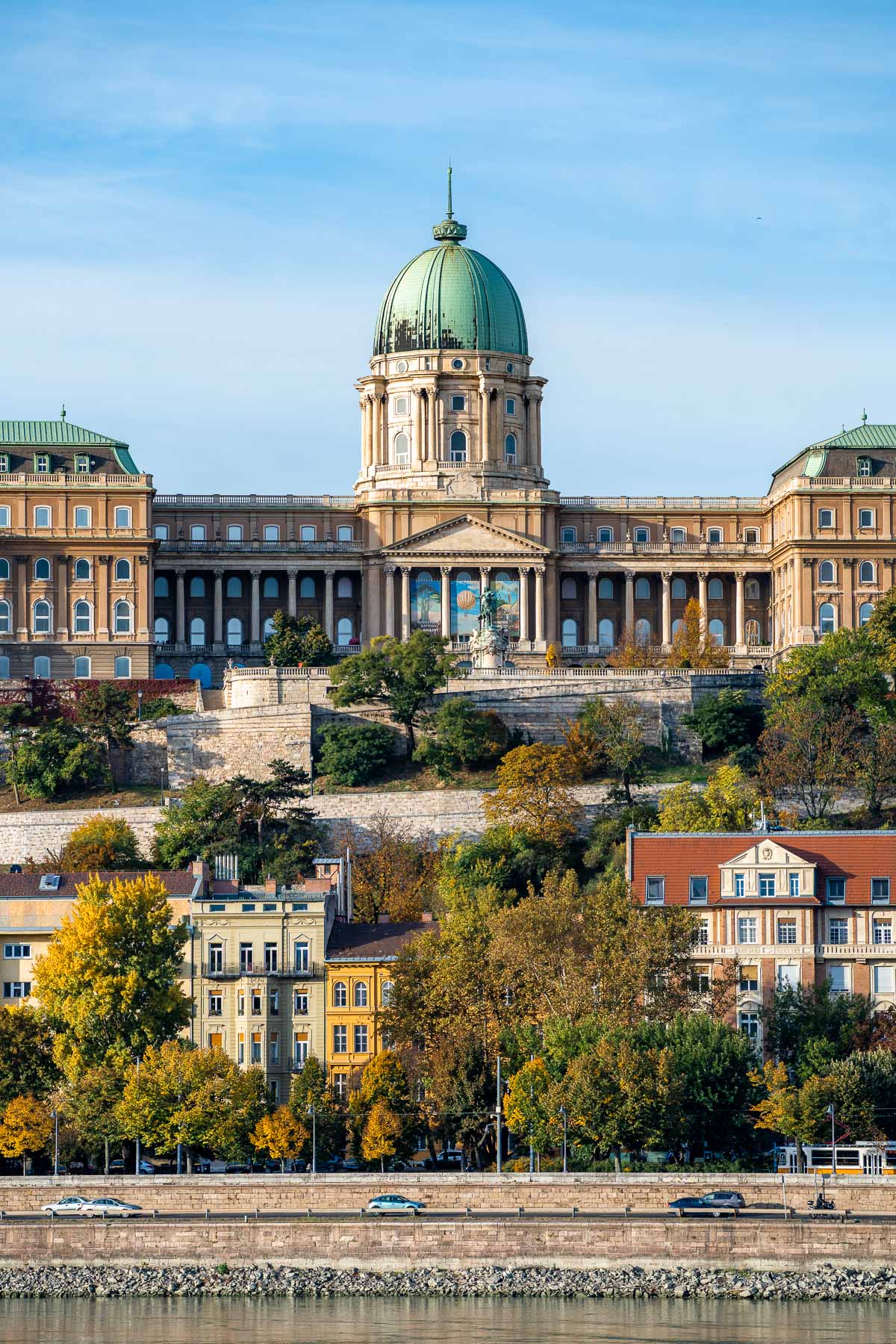
Originally built in the 13th century, Buda Castle served as a royal residence for centuries and played a central role in Hungarian history.
Today, the complex houses the Hungarian National Gallery and the Budapest History Museum. If you want to dive deeper into the city’s past during your 4 days in Budapest, you can visit one of the museums. Just keep in mind that they’re closed on Mondays.
Even if you skip the interiors, it’s absolutely worth coming up here for the views alone. From the terraces, you get sweeping panoramas over the Danube, Pest, and the surrounding hills. It’s free to explore the castle grounds.
Before heading down toward the Chain Bridge, stop by the Castle Garden Bazaar at the base of the hill. The restored neo-Renaissance buildings and landscaped gardens offer a different perspective of the castle and make a great final photo spot before crossing over to Pest.
Would you rather explore Buda Castle with a local guide? This affordable 2-hour walking tour covers both Fisherman’s Bastion and Buda Castle.
Buda Castle from the distance 
Buda Castle Funicular 
Buda Castle 
Castle Garden Bazaar
Chain Bridge
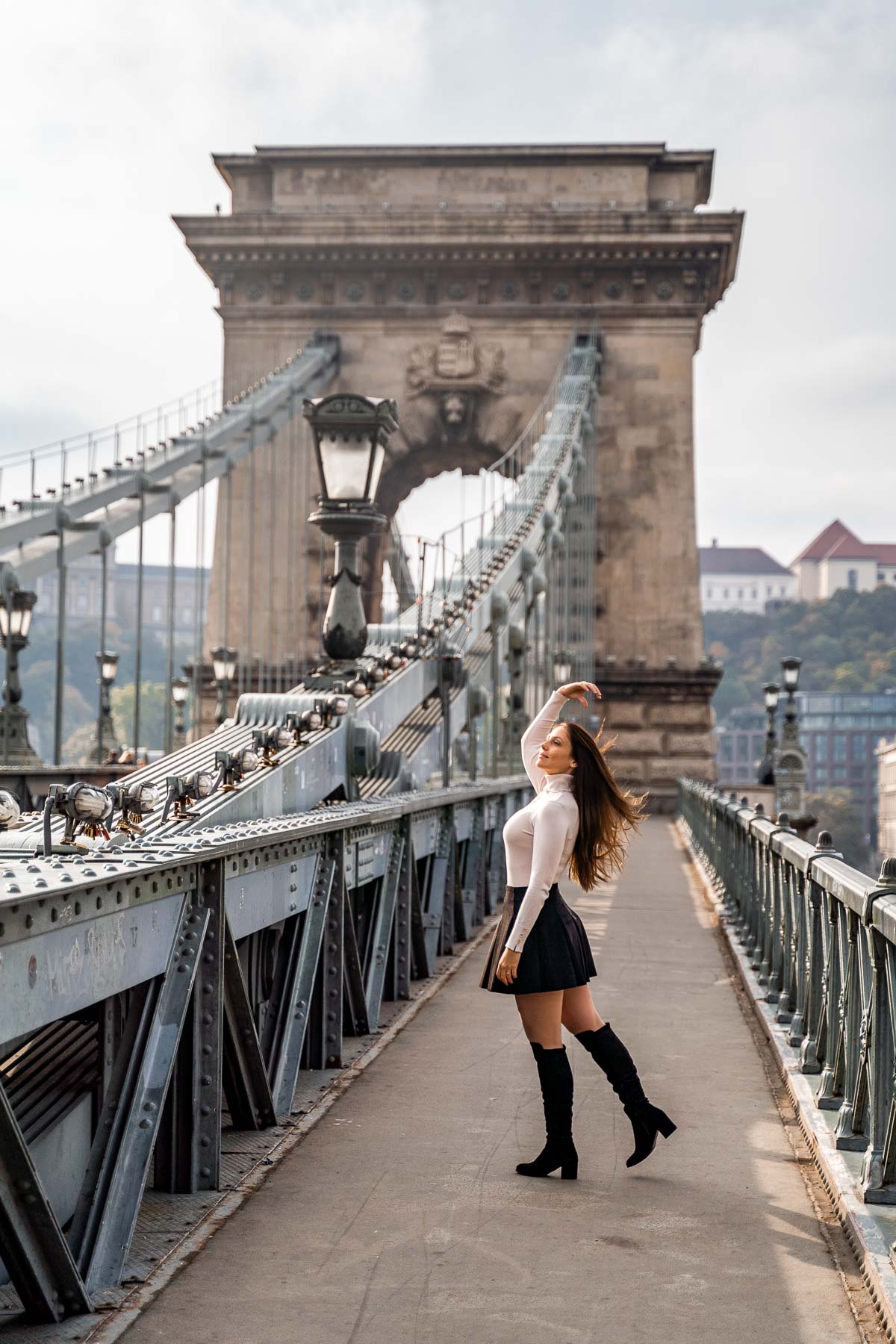
From the Castle Garden Bazaar, make your way down to the Chain Bridge and cross over to the Pest side. This is one of the most iconic bridges in Budapest and a symbolic link between Buda and Pest, which were once separate cities.
Opened in 1849, it was the first permanent bridge connecting the two sides of the Danube. Today, it’s one of the best spots for skyline views, especially back toward Buda Castle.
Take your time walking across! Stop halfway for photos, look back at the Castle District, and enjoy the perspective from the river. Once you reach the Pest side, you’ll head straight into the lively Jewish Quarter for the evening.

Jewish Quarter
You can spend the rest of your afternoon wandering around the Jewish Quarter of Budapest, which is one of the most fascinating things to do in Budapest in 4 days.
This historic neighborhood was once the center of Jewish life in the city, and it still carries that layered past today.
As you walk around the streets near Kazinczy Street and Dob Street, you’ll notice a mix of grand old buildings, memorial plaques, street art, trendy cafés, and independent shops all existing side by side.
One of the most important landmarks here is the Dohány Street Synagogue, the largest synagogue in Europe. It’s an impressive building both inside and out, but keep in mind that entry tickets have become quite expensive in recent years.
If you’re particularly interested in Jewish history, it may still be worth visiting, but it’s something to factor into your budget.
If you’d prefer more context while exploring, you can also join a Budapest Jewish Heritage Memorial Walking Tour. Just note that these usually start around 10 am and only run on selected days, so joining one would mean reshuffling this itinerary slightly.

Ruin Bars
No first trip to Budapest is complete without stepping inside at least one ruin bar!
These unique bars are set inside abandoned buildings and courtyards in the Jewish Quarter, filled with mismatched furniture, graffiti-covered walls, old bathtubs turned into seats, and a slightly chaotic but fun atmosphere.
What started as a creative response to empty buildings in the early 2000s has become one of the city’s most famous nightlife concepts.
The most well-known ruin bar is Szimpla Kert, which is worth visiting at least once to see where it all began. It can get very busy, especially on weekends, so expect crowds. If you prefer something slightly less hectic, there are plenty of smaller spots nearby to explore.


Danube River Cruise
End the first day of your Budapest itinerary with a cruise on the Danube. Seeing the city illuminated from the water is one of those experiences that never gets old! The Parliament, Buda Castle, and the bridges look completely different once the lights come on.
There are endless cruise options in Budapest, but these are the two I recommend the most.
My personal favorite is the sightseeing cruise with unlimited Prosecco, beer, and Aperol Spritz. These run multiple times a day, and I suggest choosing a sunset or evening departure for the best atmosphere. It’s relaxed, fun, and a great way to finish the day.
If you’re looking for something more traditional, you can book a dinner river cruise with live music. This includes a full meal while you sail past the city’s most famous landmarks, making it a more structured and elegant experience.
Whichever you choose, go for sunset or after dark. That’s when Budapest really shines.


Day 2
Hungarian Parliament Building
Start your second day with one of the most iconic landmarks in the city: the Hungarian Parliament Building. Sitting right on the banks of the Danube, it’s hard to miss and even harder to forget once you see it up close.
Completed in 1904, the building is one of the largest parliament buildings in the world and a masterpiece of Neo-Gothic architecture. The intricate facade, dramatic spires, and riverside setting make it one of the most photographed spots in Budapest.
If you’re interested in history and architecture, I highly recommend booking a guided interior tour. The tour lasts around one hour, so it’s very easy to fit into your 4 day Budapest itinerary.
You’ll see the grand staircase, the Dome Hall, and the Hungarian Crown Jewels. Tickets tend to sell out weeks in advance, especially in high season, so make sure to book as early as possible!
Even if you decide not to go inside, take some time to walk around the exterior and along the riverfront. It’s impressive from every angle.
Another great tip: if you want one of the best views of the Parliament from across the river, hop on metro line M4 and get off at Batthyány tér. From there, you’ll have a perfect panoramic view of the building!


Shoes on the Danube Bank
Just a short walk from the Parliament, you’ll find one of the most moving memorials in Budapest: the Shoes on the Danube Bank.
This simple yet powerful monument commemorates the thousands of Jews who were executed along the riverbank during World War II. Victims were ordered to remove their shoes before being shot, and the iron shoes you see today represent those who lost their lives here.
It’s a quiet, reflective stop and doesn’t take long to visit, but it adds important historical context to your time in the city. I always recommend taking a few minutes here, even if you’re short on time.
From here, you’ll also have beautiful views across the Danube toward the Buda side. You can clearly see Fisherman’s Bastion rising above the rooftops, which is a nice reminder of where you started your first day in Budapest.

Margaret Island
After exploring the Parliament area, head north toward Margaret Island for a more relaxed part of your day. With 4 days in Budapest, you have enough time to include places that aren’t just major landmarks, and this is one of them!
Margaret Island is a large green island in the middle of the Danube, located between the Margaret Bridge and the Árpád Bridge. It’s completely car-free and feels surprisingly peaceful compared to the busy city center.
You can keep it simple and just go for a walk, or rent a bike or a four-seater pedal cart if you’re in the mood for something more fun.
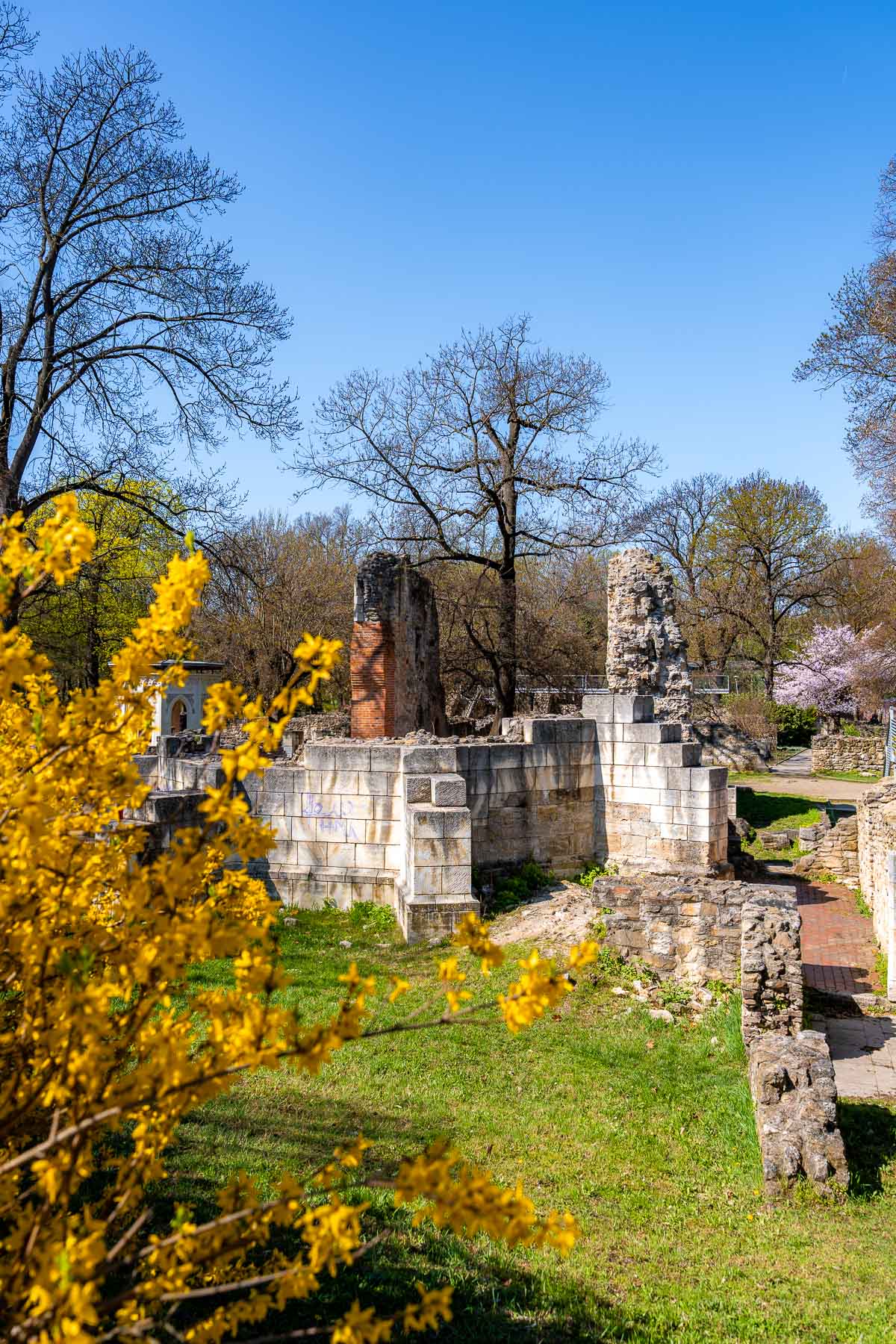
There’s a small Japanese garden, a musical fountain, medieval ruins, and plenty of shaded paths if you’re visiting in summer.

St. Stephen’s Basilica
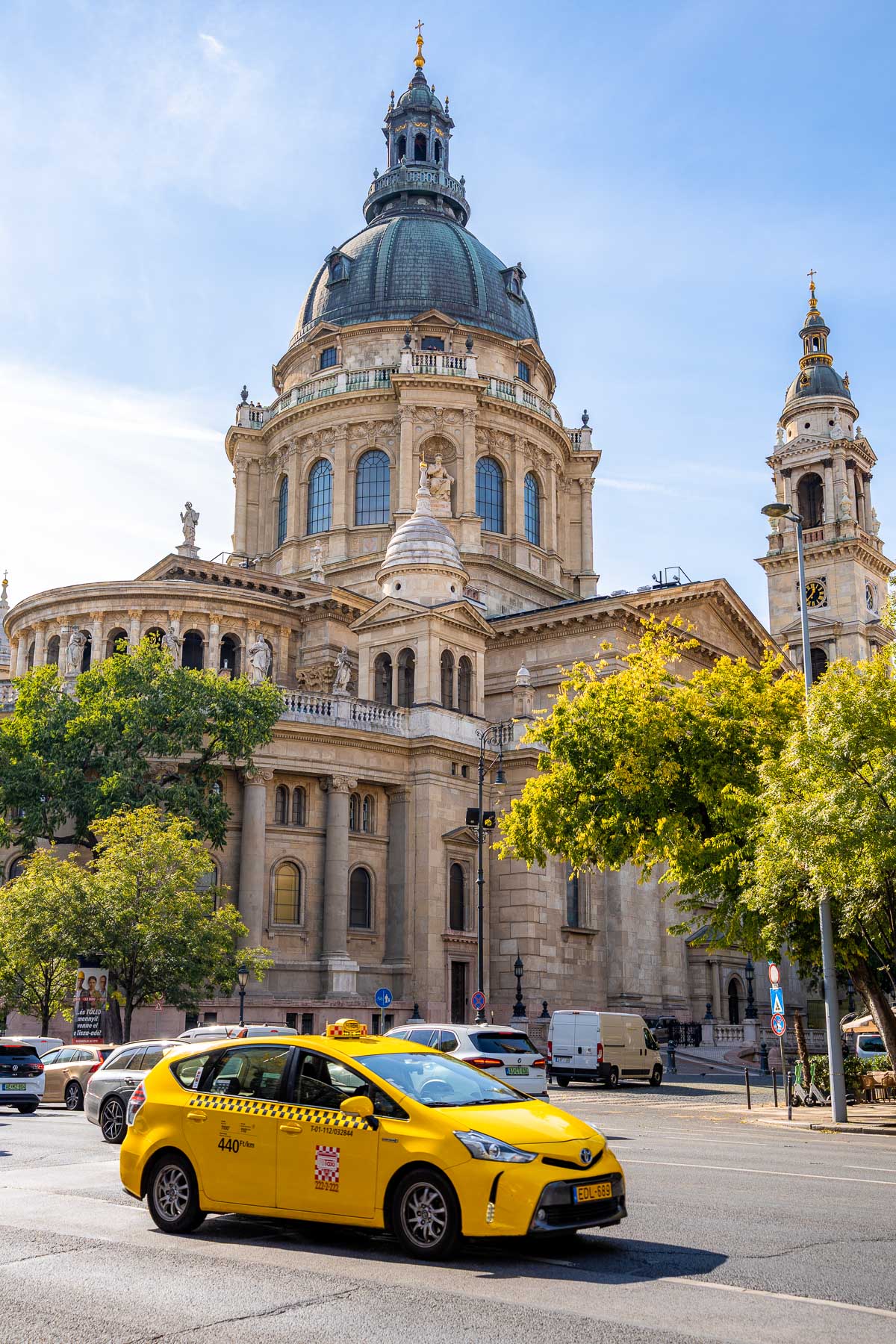
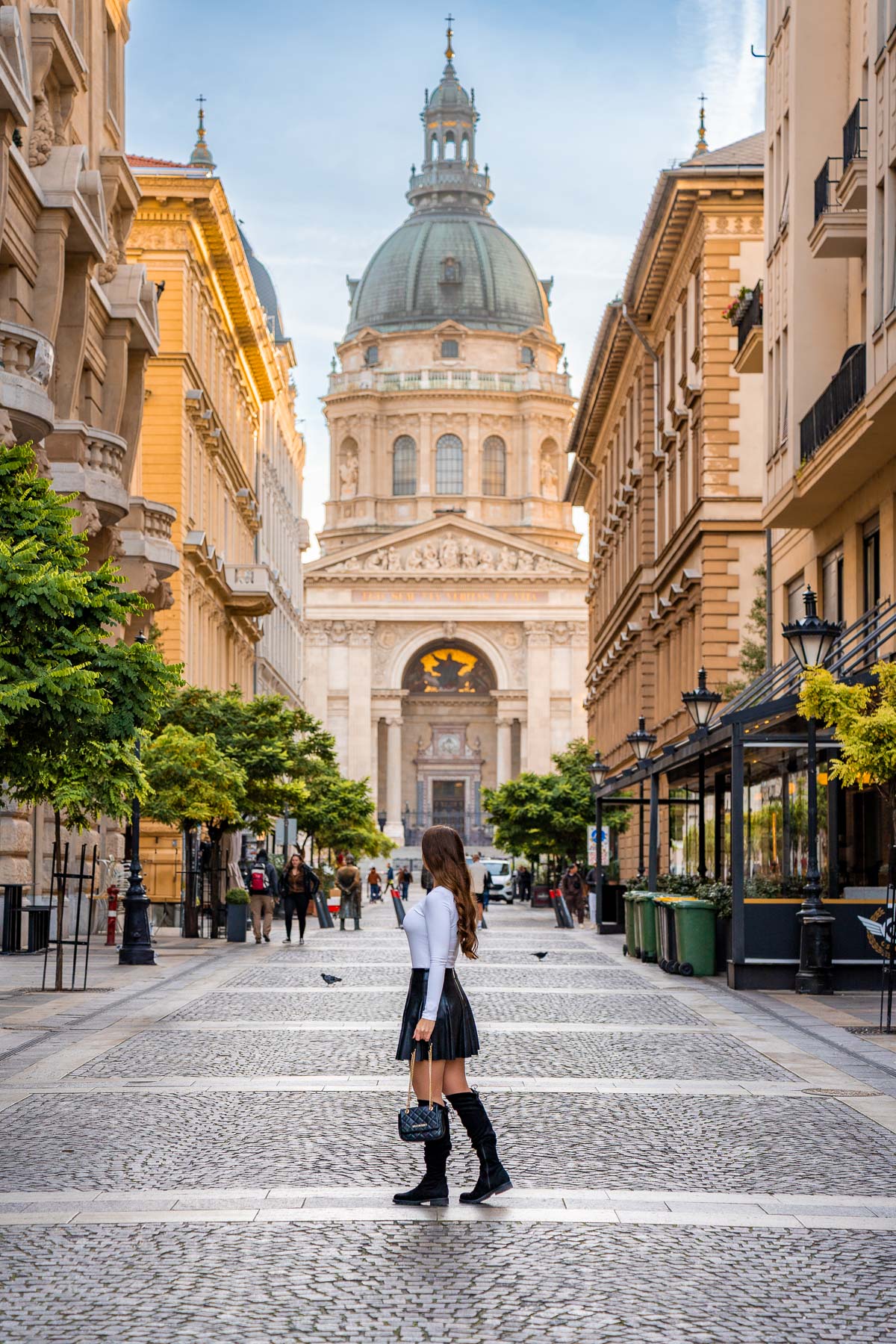
After your break on Margaret Island, head back toward the city center and make your way to St. Stephen’s Basilica, one of the most important religious buildings in Hungary.
Named after Hungary’s first king, Saint Stephen, the basilica was completed in 1905 and is one of the tallest buildings in Budapest. The interior is richly decorated with marble, mosaics, and detailed frescoes, so it’s definitely worth stepping inside.
I recommend visiting later in the afternoon. The church hall closes at 5:45 pm, and it’s usually less crowded toward the end of the day.
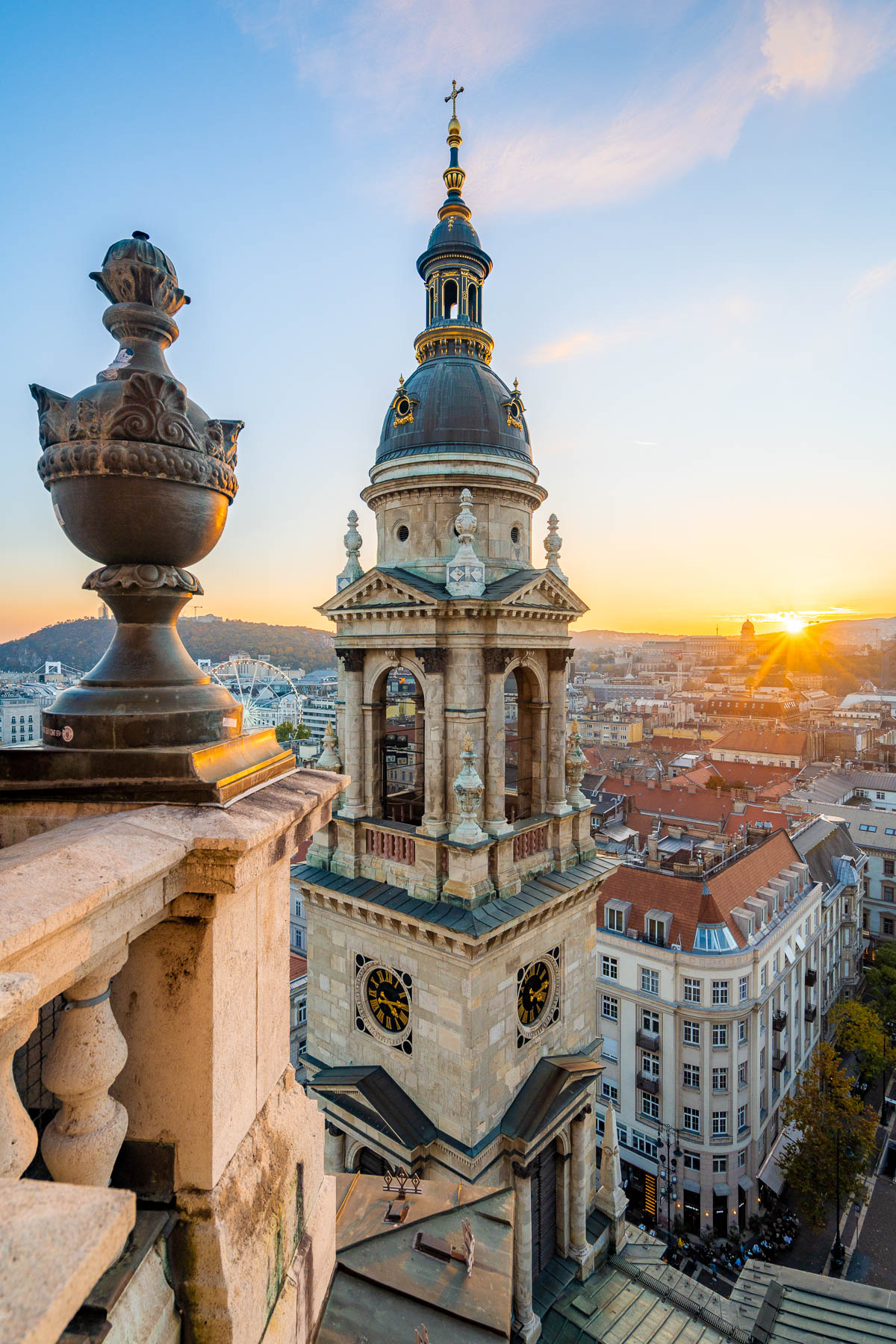
If you time it right, you can explore the interior first and then head up to the panoramic terrace for sunset. The views from the dome are insanely beautiful!
You can buy a combination ticket that includes entry to the church hall, the panoramic lookout, and the treasury, which makes it easy to experience everything in one visit. If you have time, I’d definitely suggest doing both the interior and the dome.

ISSEI Skybar
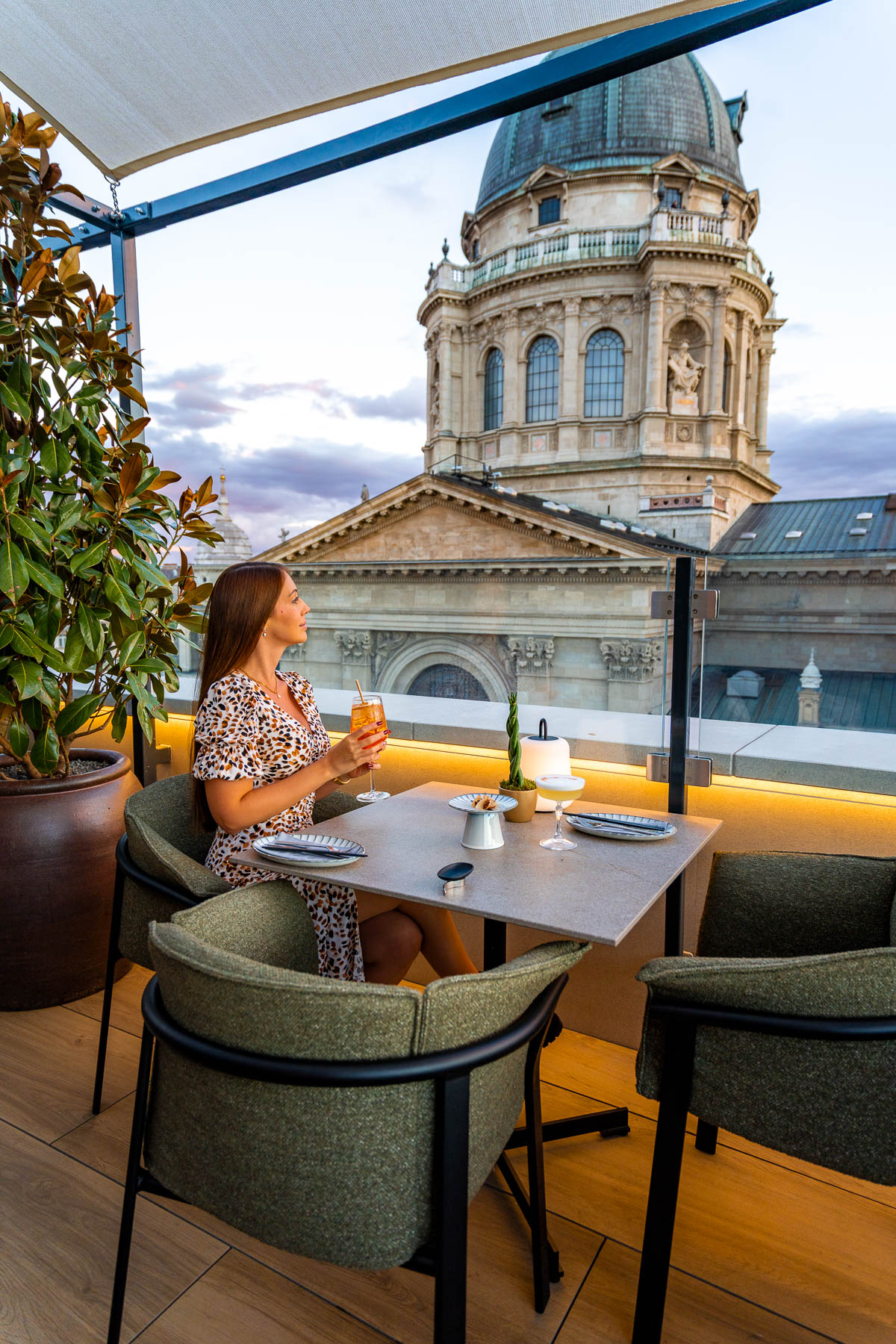
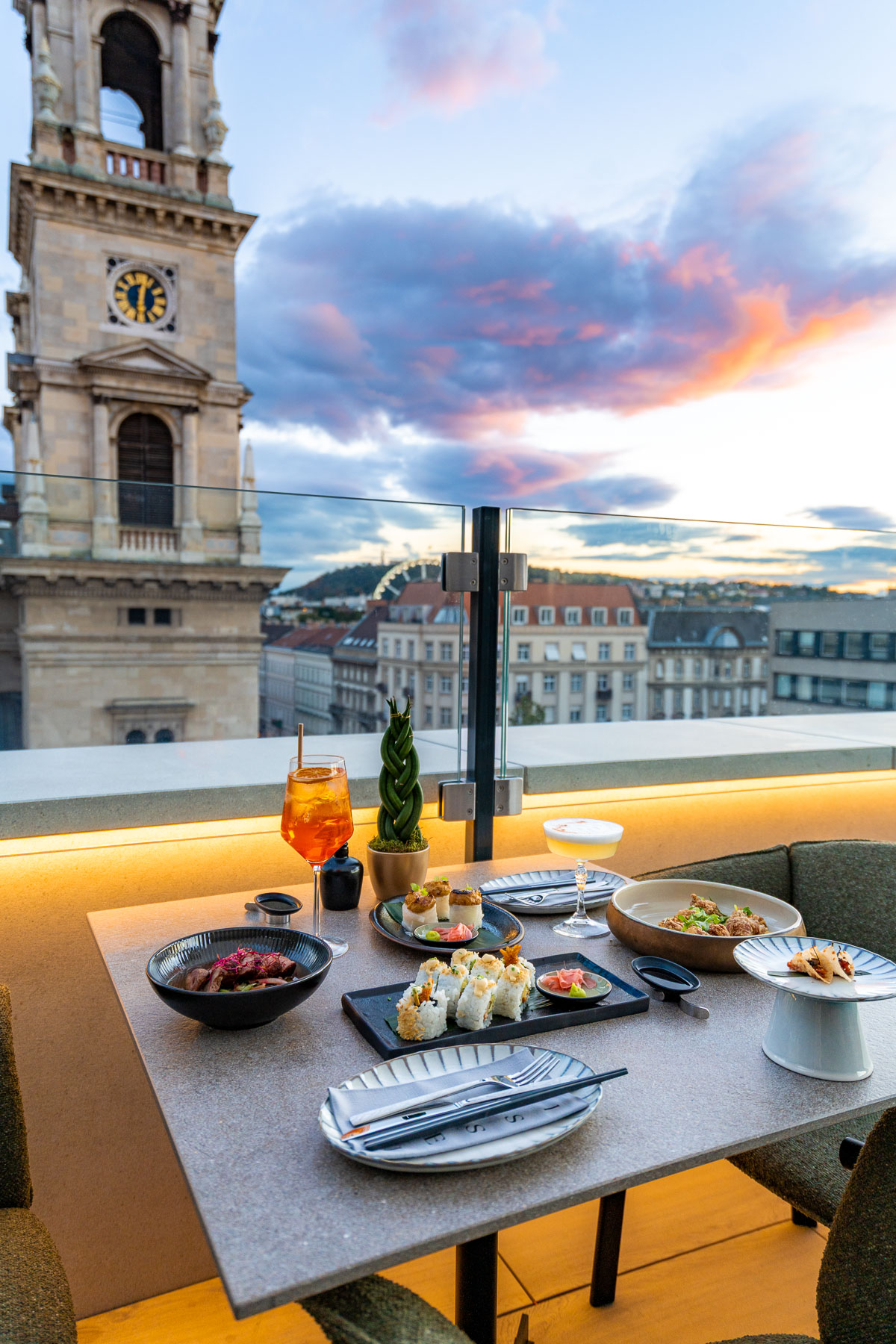
For your final stop of the day, head up to ISSEI Skybar, located on top of the Radisson Collection Basilica, right next to St. Stephen’s Basilica.
The location alone makes it special! You’re almost at eye level with the Basilica’s dome, and the views over the city center are fantastic, especially around sunset and after dark when the lights come on.
ISSEI isn’t just about the view, though. The food and drinks are genuinely excellent. The menu blends Peruvian and Japanese flavors, and the cocktails are just as impressive as the skyline.
If you’re visiting in the warmer months, rooftop spots fill up quickly, so it’s worth reserving ahead or arriving earlier in the evening.
💌 SAVE THIS POST
Day 3
Szechenyi Thermal Bath
Budapest is famous for its thermal baths, and visiting at least one is an essential part of spending 4 days in Budapest!
Arriving earlier in the day usually means fewer crowds and a more relaxed experience before continuing your time in City Park.
Széchenyi Thermal Bath is the largest and most iconic spa in the city. Located in City Park, the bright yellow Neo-Baroque complex has been operating since 1913 and is fed by natural hot springs. The outdoor pools are the main highlight, especially in the morning when the weather is still chillier outside.
Plan to spend around 2 to 3 hours here. You can move freely between the outdoor pools, indoor thermal baths, saunas, and steam rooms. Lockers and private cabins are available, and I recommend booking your ticket in advance, particularly during high season, as lines can get long.
If you’re looking for something a little different, you can also try the beer spa experience, where you soak in a wooden tub filled with warm water infused with beer ingredients while pouring yourself unlimited draft beer. It’s definitely more of a novelty, but it’s a fun add-on if you want something memorable!


City Park & Heroes Square
Stepping out of Széchenyi, you’re already in the heart of City Park, one of the largest and most diverse green spaces in Budapest.
One of the highlights here is Vajdahunyad Castle, a fairytale-like complex that combines Romanesque, Gothic, Renaissance, and Baroque architectural elements. It was originally built for the 1896 Millennium Exhibition and later reconstructed permanently.
Today, it houses the Museum of Hungarian Agriculture, which you can visit if you’re interested, but it’s also completely free to walk around the courtyard and explore the exterior.
City Park actually offers much more than most visitors realize. You’ll also find the Budapest Zoo, the striking contemporary House of Music Hungary, the House of the Hungarian Millennium, and the Museum of Ethnography nearby.
Realistically, you won’t have time to visit everything on this 4 day Budapest itinerary, but you can pick what interests you most or come back later if you have extra time.
Continue toward Heroes’ Square, one of the most important public squares in Hungary. The Millennium Monument stands at the center, surrounded by statues of Hungarian leaders and historical figures. It’s a grand, open space and a strong architectural contrast to the greenery of the park.
A relaxed stroll through City Park combined with a stop at Heroes’ Square is the perfect transition before heading down Andrássy Avenue.

Vajdahunyad Castle 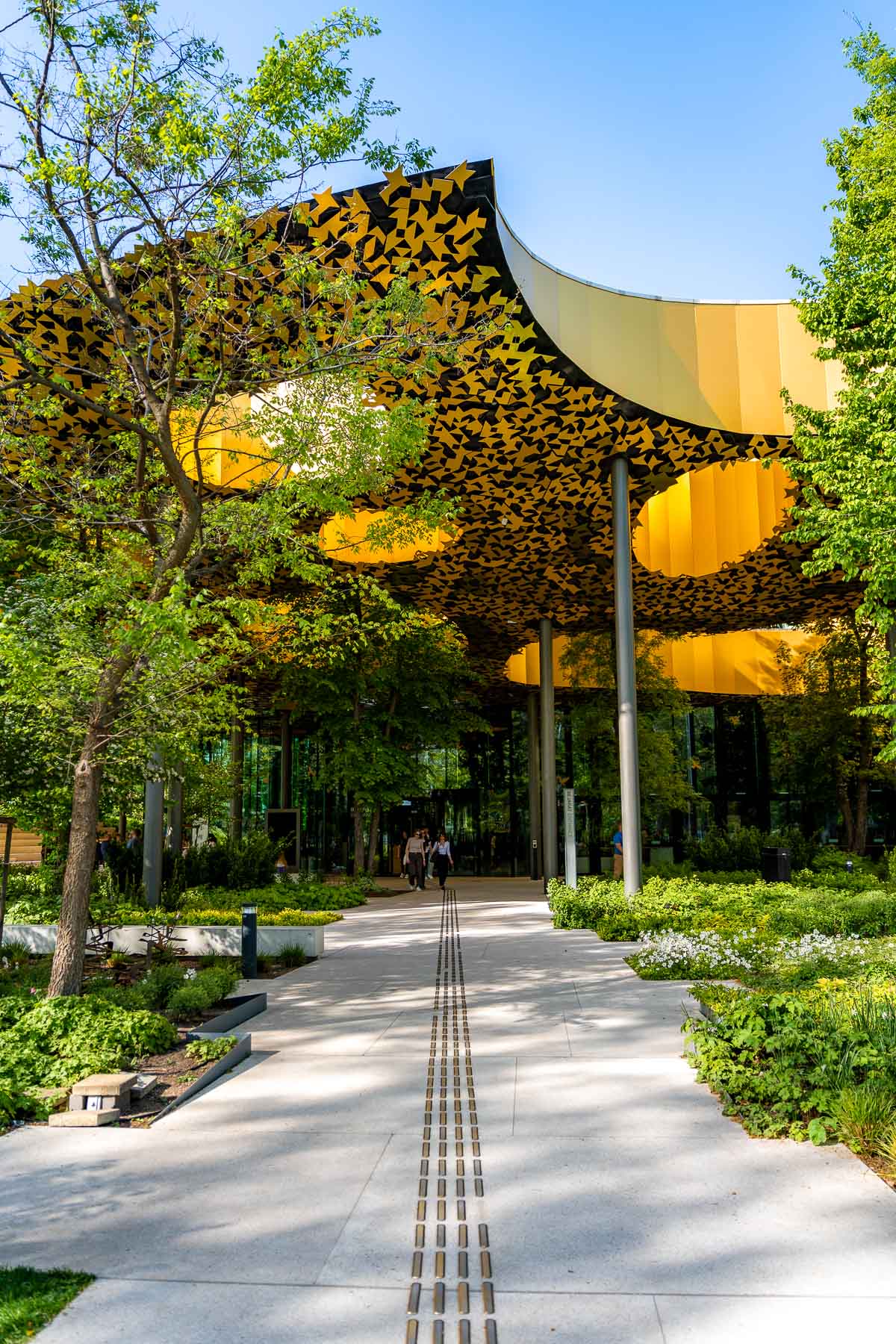
House of Music Hungary 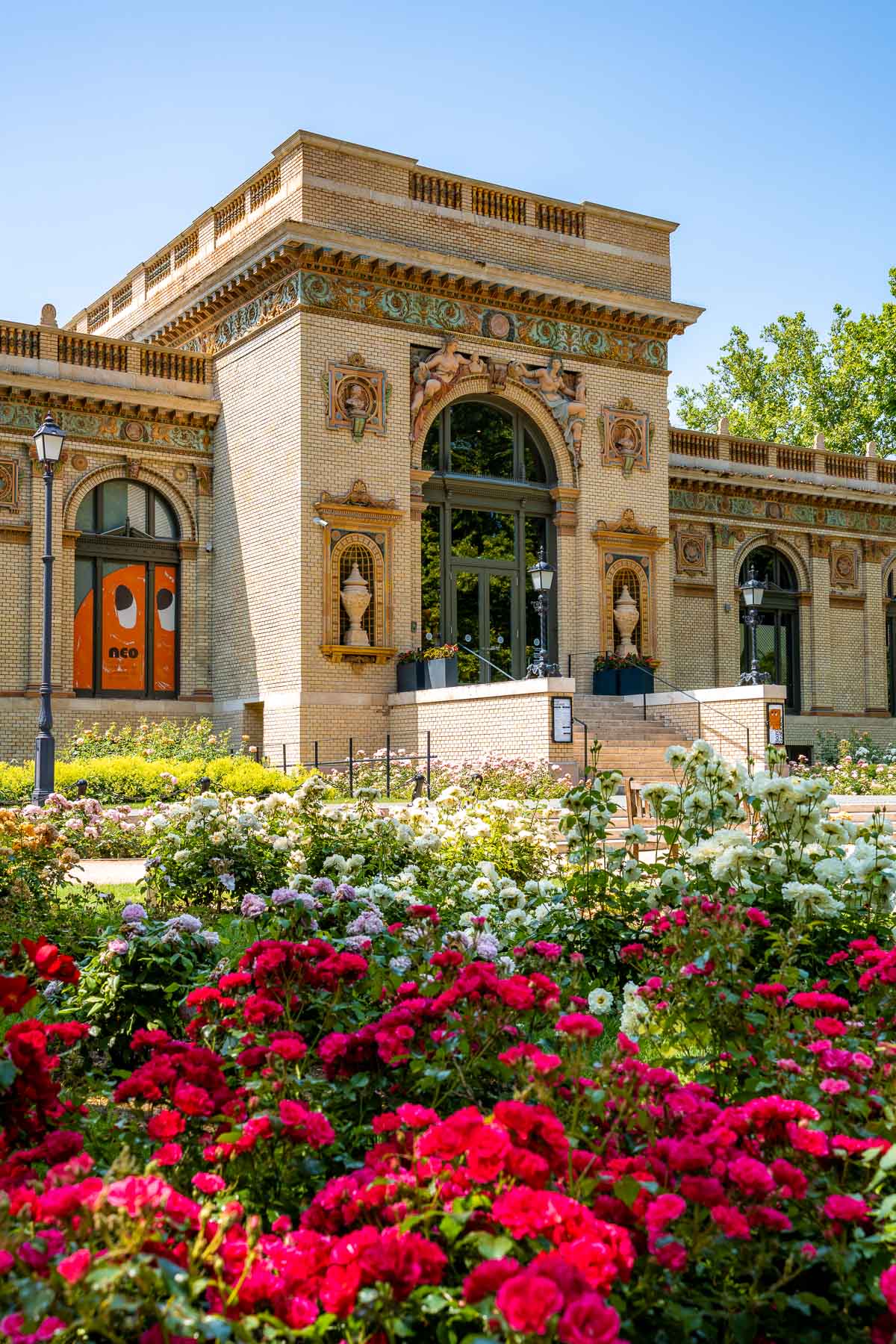
House of the Hungarian Millennium 
Heroes Square
House of Terror
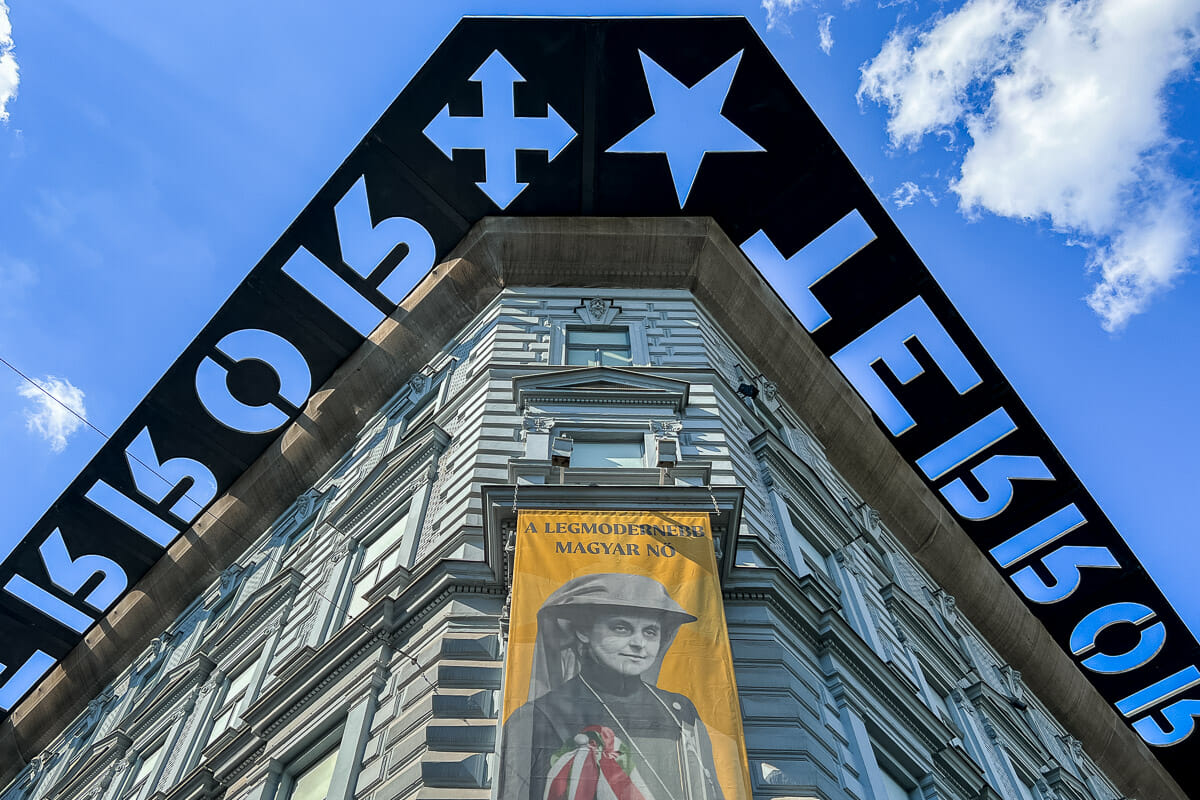
Walking down Andrássy Avenue, you’ll eventually reach the House of Terror, one of the most powerful and thought-provoking museums in Budapest.
The building itself has a heavy past. During World War II, it served as the headquarters of the Arrow Cross Party, and later it became the base of the communist secret police. Today, the museum documents the brutal regimes that shaped Hungary in the 20th century.
Inside, the exhibitions focus on the fascist and communist dictatorships, the victims, and the everyday realities of life under oppression. Some sections are intense and emotionally heavy, especially the basement prison cells.
Plan to spend around 1.5 to 2 hours here if you want to see it properly. It’s not a light visit, but it provides important historical context that helps you understand Hungary beyond its architecture and thermal baths.
If you prefer something lighter, you can simply admire the exterior and continue along Andrássy Avenue, but for history lovers, this is one of the most impactful stops in the city.
Hungarian State Opera
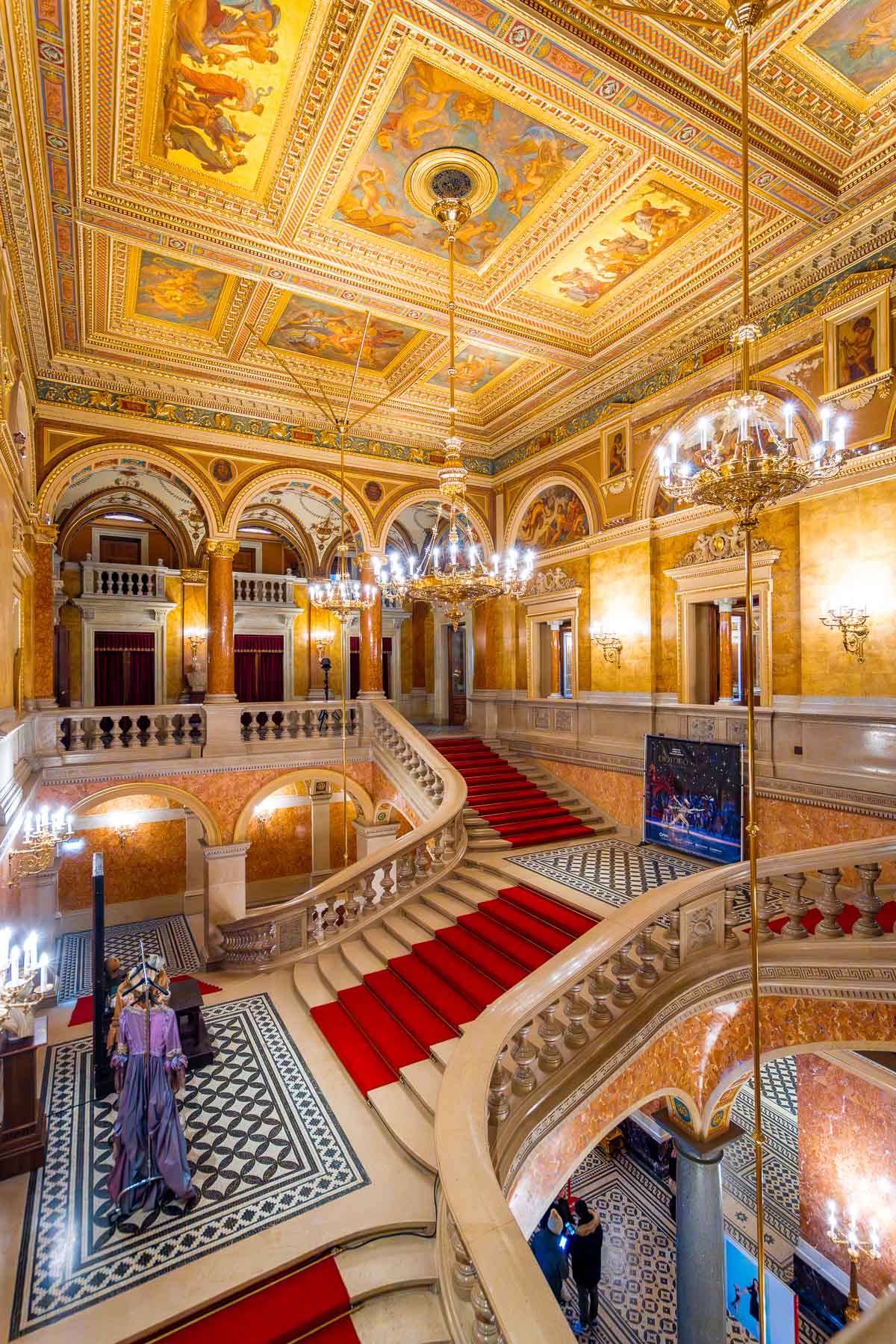
Further along Andrássy Avenue, you’ll reach the Hungarian State Opera, one of the most stunning buildings in Budapest.
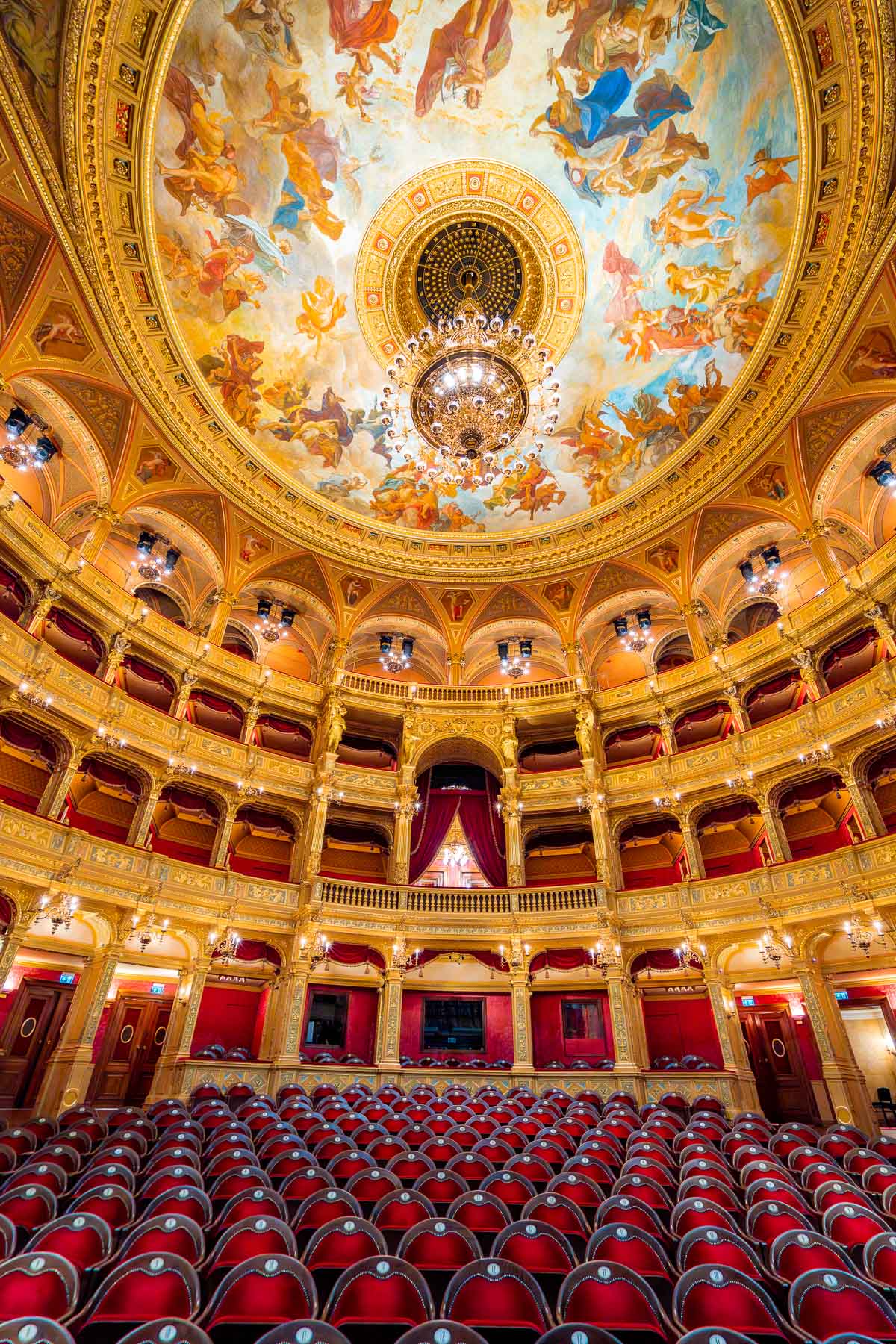
Opened in 1884 and designed by architect Miklós Ybl, the Neo-Renaissance opera house is considered one of the city’s architectural highlights. The entire building was recently renovated, and it looks absolutely beautiful both inside and out!
I highly recommend joining a guided interior tour. Tours run three times a day and give you access to the grand staircase, the richly decorated auditorium, and several beautifully restored halls. The interior is genuinely gorgeous, with marble columns, frescoes, chandeliers, and intricate details everywhere you look.
Of course, you can also book an evening performance if you’re interested. Just keep in mind that tickets can be quite expensive and popular shows often sell out months in advance.
360 Bar
To end the day, head up to 360 Bar for sunset views over Budapest.
Located on Andrássy Avenue, this rooftop bar offers panoramic views across the city, including St. Stephen’s Basilica and the Buda hills in the distance. As the name suggests, you get a full 360-degree perspective, which makes it one of the best rooftop spots in Budapest.
The vibe here is more casual compared to some of the hotel rooftops in the city. It’s a great place to relax with a cocktail after a full day of sightseeing. They also have a proper food menu, so it works well for dinner too if you’d like to stay longer.
In the colder months, they set up heated igloos on the rooftop, which makes it a fun experience year-round. I recommend making a reservation in advance, especially in summer, as rooftop spots in Budapest fill up quickly.

Day 4
New York Cafe
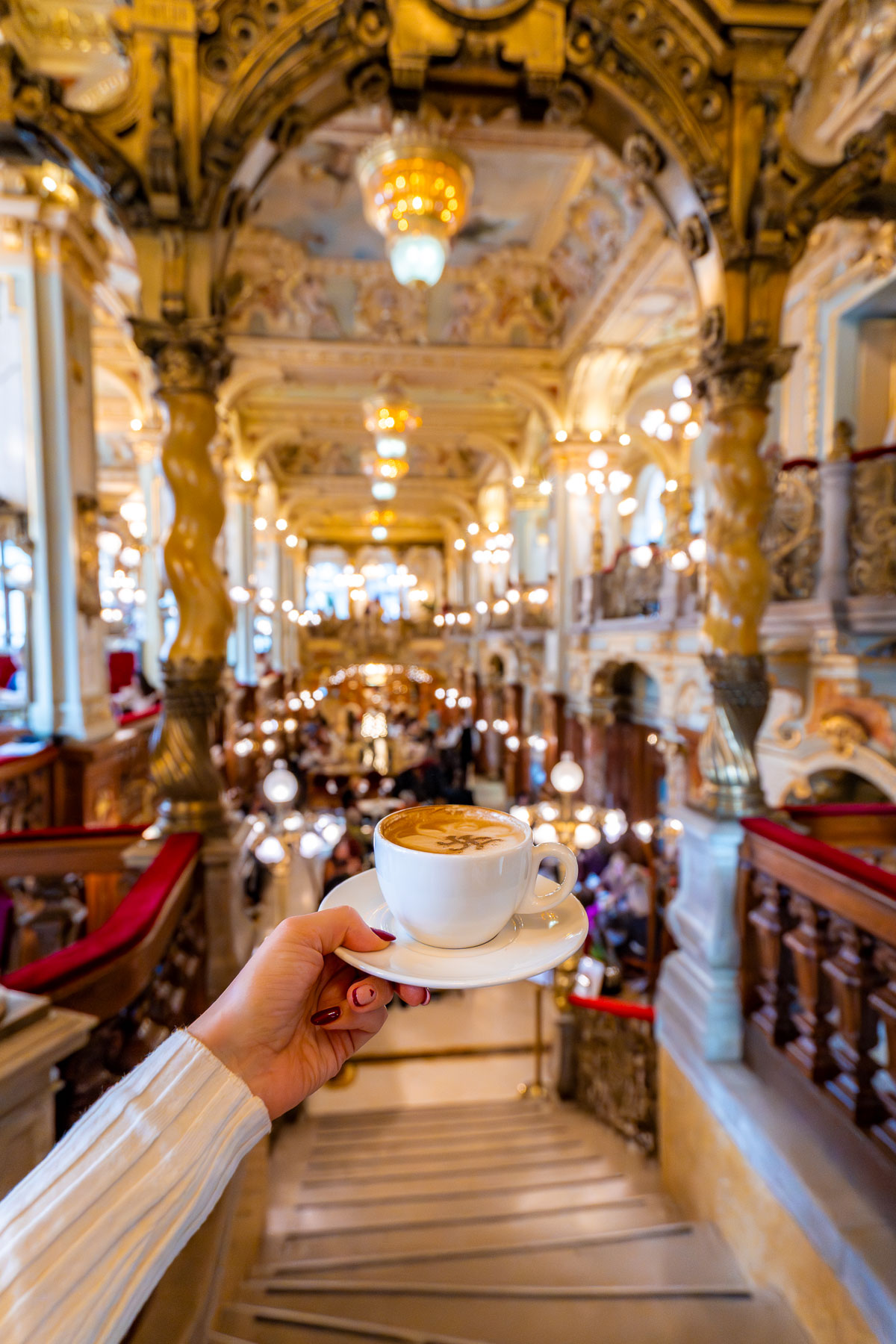
Start your final day in Budapest at New York Café, often described as one of the most beautiful cafés in the world.
Opened in 1894, this grand coffee house was once a meeting place for writers, poets, and intellectuals. Today, it’s famous for its ornate interior, with gilded ceilings, marble columns, crystal chandeliers, and frescoes covering almost every surface. It’s the kind of place where you’ll want to look up constantly!
Yes, it’s very touristy. And yes, there’s often a line. But if it’s your first time in Budapest, it’s still worth experiencing at least once! Try to arrive right when it opens to avoid the longest queues.
You can come for coffee and cake, but they also serve a full breakfast and brunch menu. Just keep in mind that prices are higher than average, as you’re paying for the setting as much as the food.

Hungarian National Museum
About a 20-minute walk from New York Café, the Hungarian National Museum offers a deeper look into the country’s history.
Founded in 1802, the museum is housed in a grand Neoclassical building and covers everything from early Hungarian tribes to the 20th century. If you’re interested in understanding the broader historical context of what you’ve seen over the past few days, this is the place to do it.
That said, this stop is more history-focused and less visually dramatic than some of the other landmarks in Budapest. If you’re short on time or not particularly interested in detailed exhibitions, you can simply admire the exterior and the museum gardens instead.
For history lovers, it’s a meaningful addition to your 4 day Budapest itinerary and helps tie together many of the stories behind the city.

Metropolitan Ervin Szabo Library
A few minutes from the Hungarian National Museum, you’ll find one of the most underrated interiors in Budapest: the Metropolitan Ervin Szabó Library.
The library is housed inside the former Wenckheim Palace, and stepping inside feels more like entering a historic mansion than a public reading room. Ornate ceilings, carved wood paneling, chandeliers, and grand mirrors give the space a distinctly aristocratic atmosphere.
That said, not the entire library looks like this. To see the most beautiful rooms, head up to the Wenckheim Palace wing on the fourth floor. This is where you’ll find the grand historic halls that everyone photographs!
You don’t need to be a library member to visit these rooms. There’s a small entrance fee for tourists, and you can freely wander through several of the palace spaces. It’s usually much quieter than the more famous landmarks in Budapest, which makes it a calm and elegant stop.
If you enjoy beautiful interiors and want something slightly less obvious than the main tourist sights, this is a lovely addition to your 4 day Budapest itinerary.


Central Market Hall
Central Market Hall is the largest and most famous market in Budapest. If you’re curious about Hungarian food, this is the best place to see everything in one spot.
On the ground floor, you’ll find fresh produce, meats, cheeses, pickles, and lots of paprika. The upstairs level is more focused on souvenirs and ready-to-eat food like lángos. It’s usually busy around lunchtime, so expect crowds.
You don’t need a long visit here. Even 30 to 45 minutes is enough to walk through and get a feel for it.
If you’d like a more structured introduction to Hungarian cuisine, this is also a great place to join a food tour. A guided tour explains what you’re seeing and includes tastings of local dishes and drinks, which makes the experience much more meaningful.

Liberty Bridge
From Central Market Hall, walk straight toward Liberty Bridge and cross over to the Buda side.
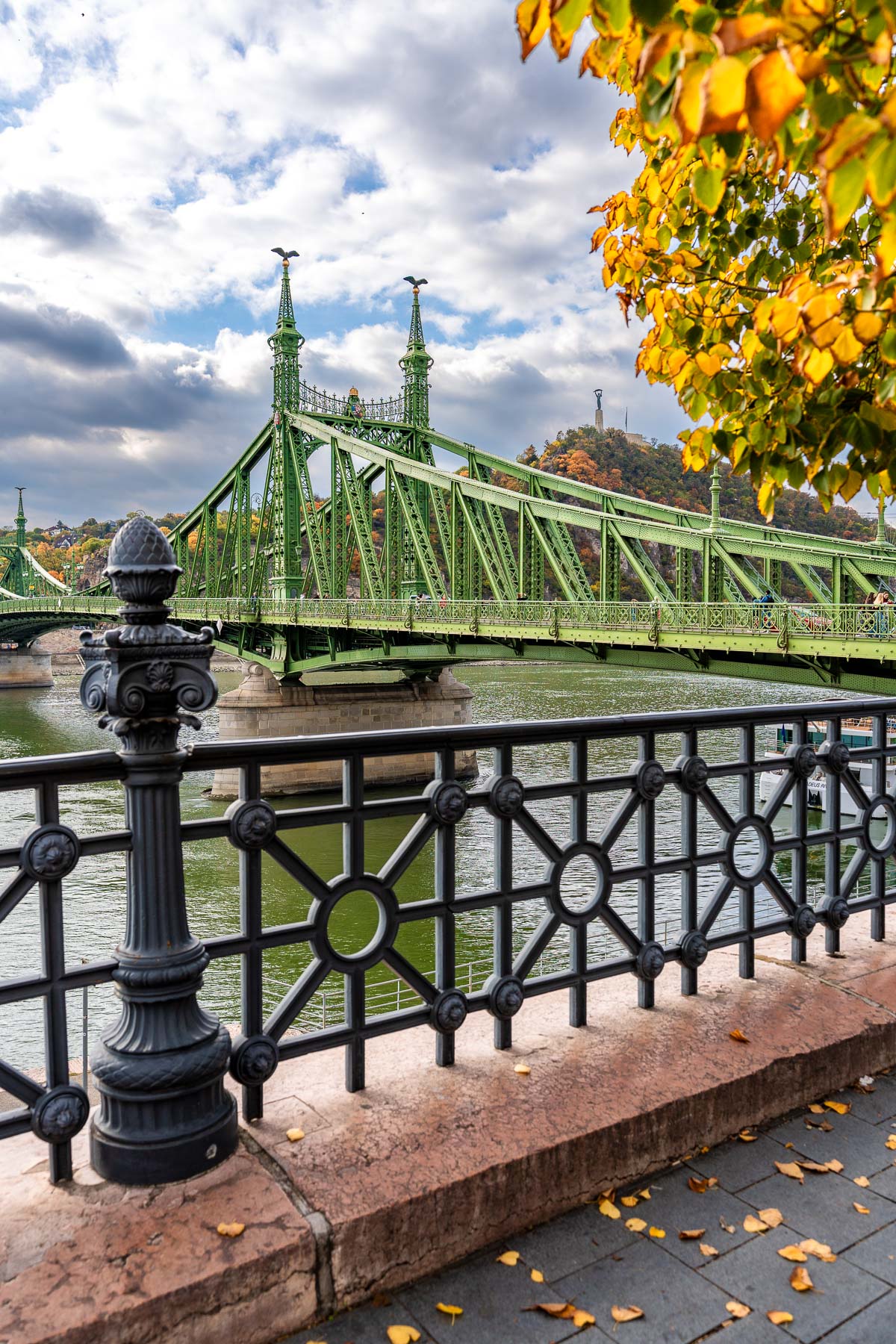
Out of all the bridges in Budapest, I think this one is the prettiest, and it’s definitely one of my favorites. The green steel structure, decorative details, and smaller scale make it feel more intimate than the Chain Bridge.
Take your time walking across and look back toward the Pest side for a nice view of the market hall and the river. On the other side, you’ll be right at the foot of Gellért Hill, which is your final stop of the day.
Gellert Hill
Finish your 4 days in Budapest strong with one last panoramic view from Gellért Hill!
Reaching the top definitely feels like a bit of a workout. The climb takes around 15 to 20 minutes, and it’s uphill the whole way, but it’s absolutely worth it. There are several paths leading up, and you’ll get beautiful glimpses of the Danube and the bridges as you climb.
Along the way, you can also visit the Gellért Hill Cave, a small chapel carved into the rock. It’s an interesting and lesser-known stop that adds a bit of variety before continuing up to the main viewpoint.
At the top, you’ll find the Liberty Statue and sweeping views over both Buda and Pest. You can clearly spot the Parliament, the Chain Bridge, St. Stephen’s Basilica, and much of the route you’ve covered over the past few days.
If you can time your visit for sunset, even better. The light over the river and the city is beautiful at this time, and it makes for a perfect final moment in Budapest.


Useful Info for Visiting Budapest
Where to stay in Budapest
Budapest might look large on the map, but most of the main sights are surprisingly close to each other. For a first visit, you’ll want to stay somewhere central so you can walk to most attractions without relying too much on public transport.
The Danube divides the city into Buda and Pest, but the classic city center is on the Pest side. Districts V, VI, and VII are the most convenient for sightseeing, restaurants, and nightlife, and they’re generally the best areas to stay in Budapest if it’s your first time in the city.
If you’d like a more detailed breakdown of neighborhoods, pros and cons, and hotel recommendations, make sure to check out my full where to stay in Budapest guide.
Below, you’ll find some of the best hotel options in the city center, depending on your budget.
- Luxury: Matild Palace (read our full review here)
- Mid-Range: Hotel Moments Budapest
- Budget: T62 Hotel

How to get to Budapest
Budapest is served by Liszt Ferenc International Airport, located about 16 km southeast of the city center.
The easiest way to reach downtown is by bus. The most convenient option is the 100E Airport Express, which runs directly between the airport and Deák Ferenc Square, right in the center of the city. It’s fast, simple, and ideal if you’re staying in District V, VI, or VII.
Keep in mind that the 100E requires a special airport bus ticket. Regular BKK tickets and Budapest travel cards are not valid on this line.
Another option is bus 200E, which takes you to Kőbánya-Kispest metro station, the end of metro line M3. From there, you can continue into the city by metro. For 200E, a regular BKK ticket or travel pass is valid, which makes it a more budget-friendly choice.
Best time to visit Budapest
Budapest is a true year-round destination, and the best time to visit really depends on what you’re looking for.
Spring and early fall are ideal if you want pleasant weather with fewer crowds. Spring in Budapest, especially the second half of April and May are especially beautiful, with blossoms all around the city. September and the first half of October are also great, with mild temperatures and colorful leaves in the parks.
Summer brings long, sunny days and a lively atmosphere. It’s perfect for sitting on terraces, attending festivals, and enjoying rooftop bars, but it can get very hot, particularly in late July and August. This is also peak tourist season, so expect bigger crowds and higher prices.
Winter is colder and often grey, although temperatures are usually manageable if you dress in layers. Snow is rare and doesn’t tend to last long. That said, December has its own charm, thanks to the Christmas markets in Budapest and the festive atmosphere throughout the city.
No matter when you visit, 4 days in Budapest gives you enough time to experience both the highlights and the local side of the city.

Budapest in spring 
Budapest at Christmas
How to get around Budapest
Budapest is surprisingly walkable, especially if you’re staying in the city center. Most major attractions are located relatively close to each other, and if you follow this 4 day Budapest itinerary, you’ll see how easy it is to explore large parts of the city on foot.
That said, public transportation is excellent and easy to use. The system is operated by BKK and includes four metro lines, trams, and buses that connect all parts of the city efficiently.
You can buy single tickets or passes from ticket machines at metro stations. It’s best to purchase them in advance rather than on board. A 72-hour Budapest travel card is a convenient option if you plan to use public transport frequently, as it gives you unlimited access to most lines. Just note that it’s not valid for the 100E airport bus.
Taxis are also widely available throughout the city. If you want to use one, I recommend ordering through Bolt to avoid getting overcharged.





How many days would you suggest to stay in Budapest if we are very flexible with our time. 4, 6, 8…. 10
I think 4-6 days is plenty. If you have this many days, I would also include some day trips to places like Szentendre, Lake Balaton, etc.
Hi there, I like your Itinery & will use most of it as I am staying in Budapest in late May, coming from Australia, for 4 days but am planning on going to Szentendre for 1 of those days, so I wont do the Spa. My question for the expert is could I catch the 100 E bus ( I am a senior) & would I have far to walk with a suitcase, I am staying at the Mercure City Centre hotel, I think having to get off at Deak Ferenc Square, is that correct? Appreciate your help, Chiao Jen.
Hi Jen, thanks for your comment! Yes you are correct, the 100E is a direct line between the airport and Deak Ferenc Square. From there, it’s a 10-min walk to your hotel so I think it’s not that bad with a suitcase. Have fun in Budapest! 🙂