
The Ultimate 2 Week Germany Christmas Market Itinerary by Train
Visiting the Christmas markets in Germany had been on my bucket list for years, and once I finally did it, I understood why so many people rave about them! No one does Christmas markets quite like Germany.
From medieval town squares to large city setups with dozens of stalls, every stop feels different, and that variety is what makes this trip so special.
I recommend setting aside 2 weeks for this Germany Christmas market itinerary, as there’s a lot of ground to cover. This route includes Munich, Nuremberg, Frankfurt, Cologne, Hamburg, Berlin, and Dresden, with enough time in each place to enjoy the markets without feeling rushed.
You can do this itinerary either by train or by car, but we personally traveled by train and found it much easier. Not having to deal with rental cars, parking, or winter driving made the whole trip feel much more relaxed, especially on travel days.
Below, you’ll find an overview of the route, followed by a city-by-city breakdown of how to plan a Germany Christmas market itinerary by train in a way that actually works in real life.
Disclosure: This post contains a few affiliate links, which means I may receive a small commission, at no cost to you, if you make a purchase through my link.
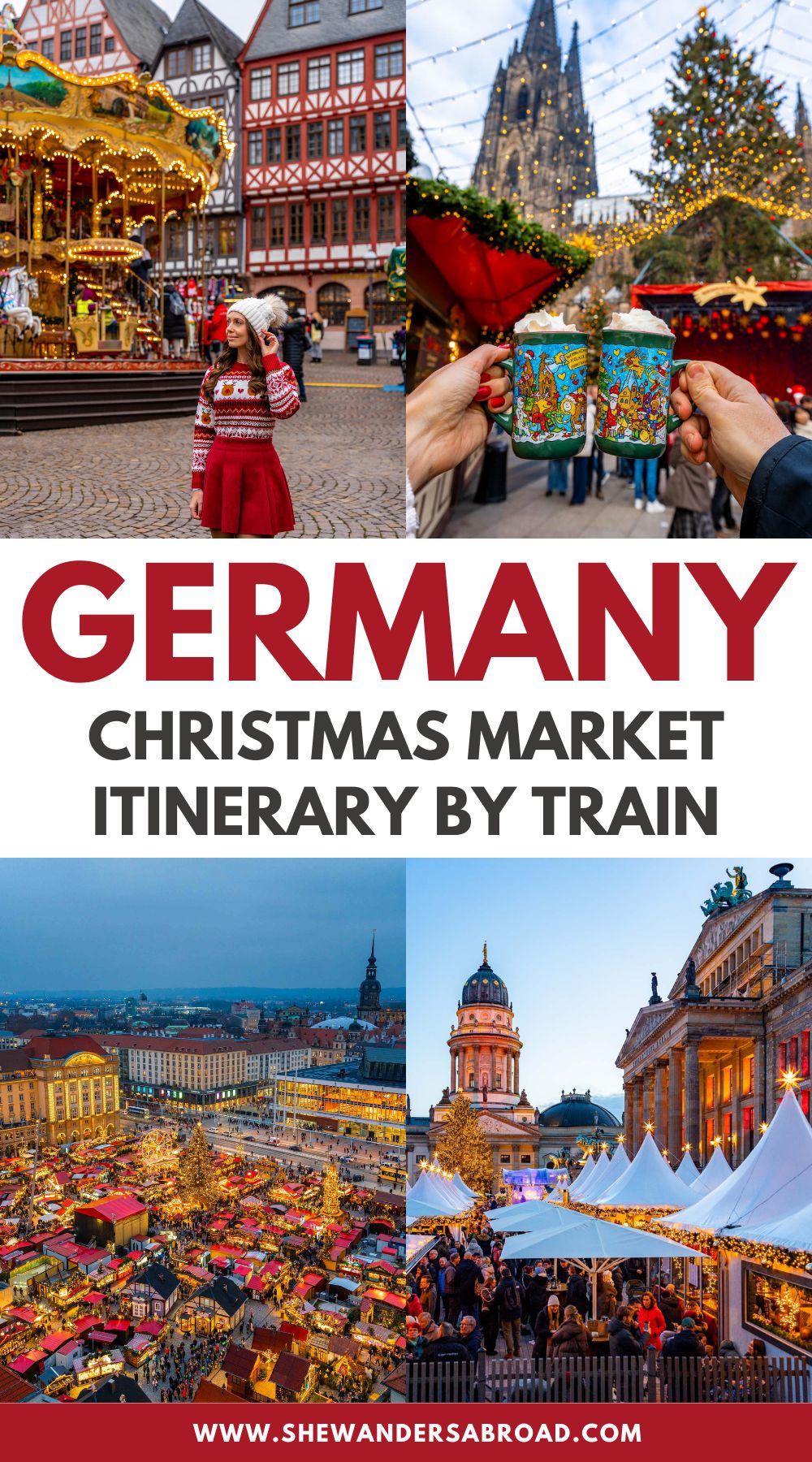
No time to read now?
Pin it for later!
Overview of Your Germany Christmas Market Itinerary
This 2-week Germany Christmas market itinerary follows a point-to-point route through some of the country’s best Christmas market cities, starting in southern Germany and working north and east.
I put this itinerary together with travel time and pacing in mind, based on what worked well for us during our own trip.
Arrival days and transfers are planned so most travel days still leave time to visit Christmas markets in the evening after checking in. As I mentioned, we did this trip by train, but it’s also totally doable by car, so you can choose whichever option works best for you.
Breakdown of the itinerary
- Day 1-2: Munich
- Day 3: Nuremberg
- Day 4-5: Frankfurt
- Day 6-7: Cologne
- Day 8-9: Hamburg
- Day 10-12: Berlin
- Day 13-14: Dresden
Booking trains for this itinerary
If you want to travel by train, there are a couple of different ways to book your tickets. If you want maximum flexibility, it’s worth looking into an Interrail or Eurail pass.
Interrail is available to European residents, while Eurail is for travelers visiting from outside Europe. So it’s essentially the same type of pass and just depends on where you’re coming from!
That said, we personally booked our train tickets separately for this trip, as the prices worked out better for us than buying a rail pass. We booked all of our tickets through Omio, which I really like for searching train routes in Europe.
Germany’s rail network is mainly operated by Deutsche Bahn, and we took Deutsche Bahn trains for most of the routes on this itinerary. On a few select routes, there’s also FlixTrain available. FlixTrain is usually cheaper, but it comes with fewer departures and less flexibility.
One thing to keep in mind is that Interrail and Eurail passes cover Deutsche Bahn trains, but FlixTrain is not included. If you end up using FlixTrain on some routes, booking tickets separately often makes more sense than getting a pass.
Below, I’ll share more specific train details for each route in the individual day sections, so you can decide what works best for your own trip.
Day 1-2: Munich
Munich is a great place to start this Germany Christmas market itinerary. It’s easy to arrive in, well-connected by train, and has several Christmas markets that are close enough to explore without constantly hopping on public transport.
How to get to Munich
Most travelers will arrive in Munich by plane, as Munich Airport is one of Germany’s main international hubs. From the airport, it’s easy to reach the city center by S-Bahn, with frequent connections to Munich Central Station and stops near the old town.
Munich is also very easy to reach by train if you’re already traveling within Germany or neighboring countries. Munich Central Station is a major rail hub with direct connections to cities like Vienna, Salzburg, and Zurich, which makes it a practical starting point for this itinerary.
If you’re planning to do this route by car, Munich is a convenient place to pick up a rental. I recommend checking Discover Cars to compare prices and find the best deals.
Even if you do have a rental car, you won’t really need it for Munich itself, as public transport is excellent and the Christmas markets are easy to get around on foot.
Where to stay in Munich
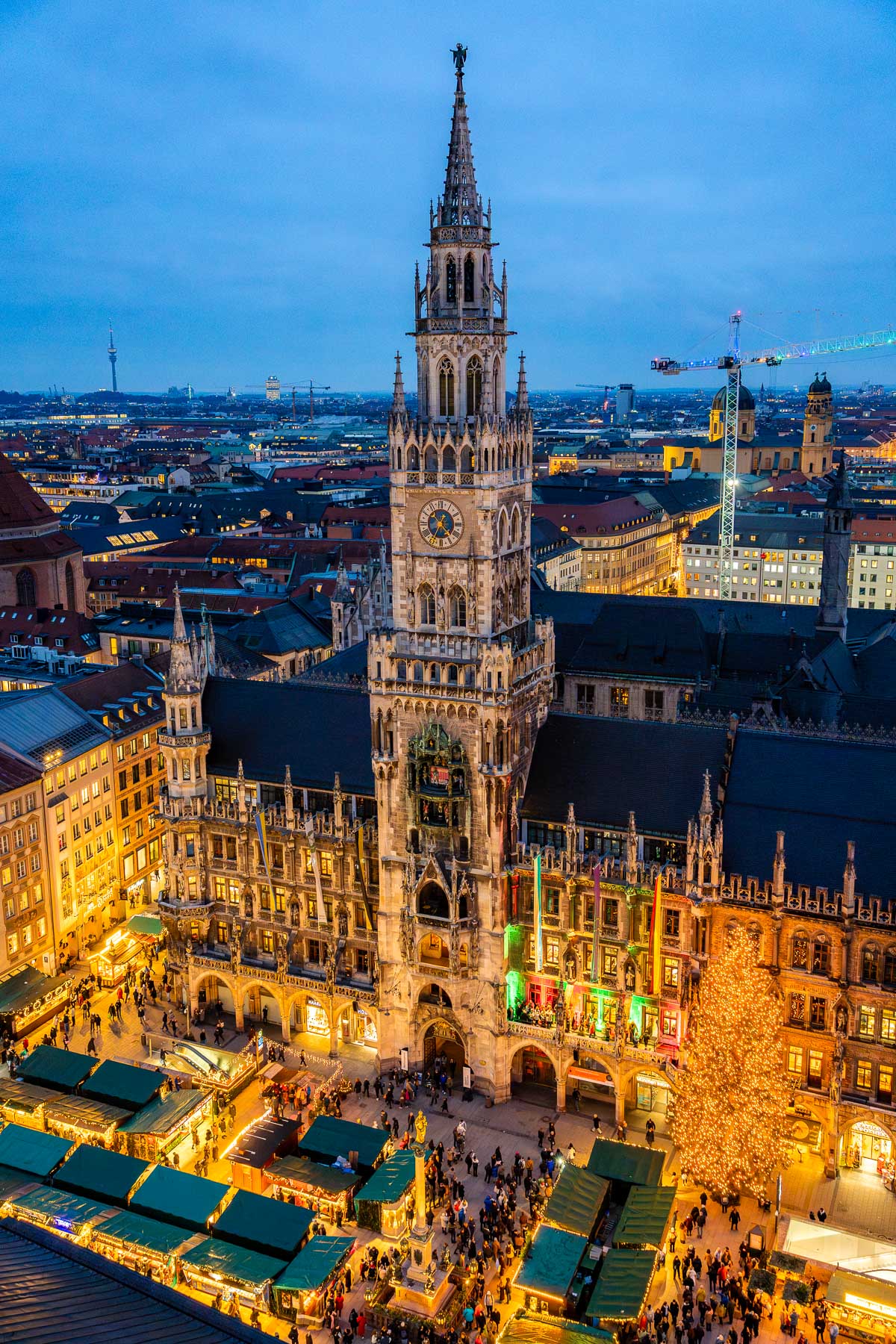
Staying close to the old town is the most convenient option if you want to prioritize the Christmas markets. Areas near Marienplatz put you within easy walking distance of several markets, which is especially nice in the evenings.
If you want something practical and well-connected, staying near Munich Central Station also works well.
Cocoon Hauptbahnhof is located right next to the train station and works well for an easy arrival and departure. For a more central option close to the old town, Mercure Hotel München Altstadt is a solid choice.
You’ll have to book three nights in Munich, which will give you enough time to explore Munich, and also take a day trip to Nuremberg.
What to do in Munich at Christmas
Depending on when you arrive, you’ll have around a day and a half to two full days to explore Munich, which is a great amount of time. The city is easy to get around, and several of the main Christmas markets are close enough to combine without much effort.
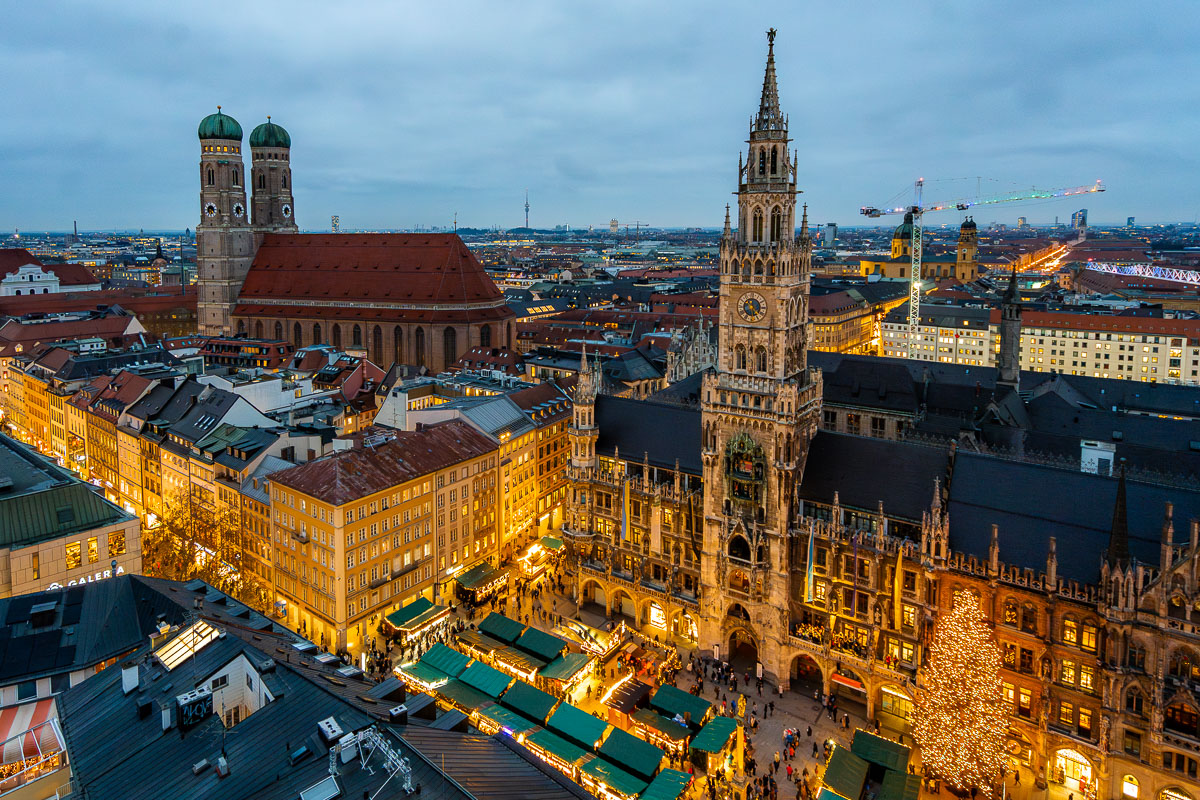
The most famous Christmas market is the one at Marienplatz, and it’s usually the first stop for most visitors. If you’re here in the evening, I highly recommend going up to St. Peter’s Church for a view over the square. It’s a bit of a climb, but seeing the market from above is well worth it!
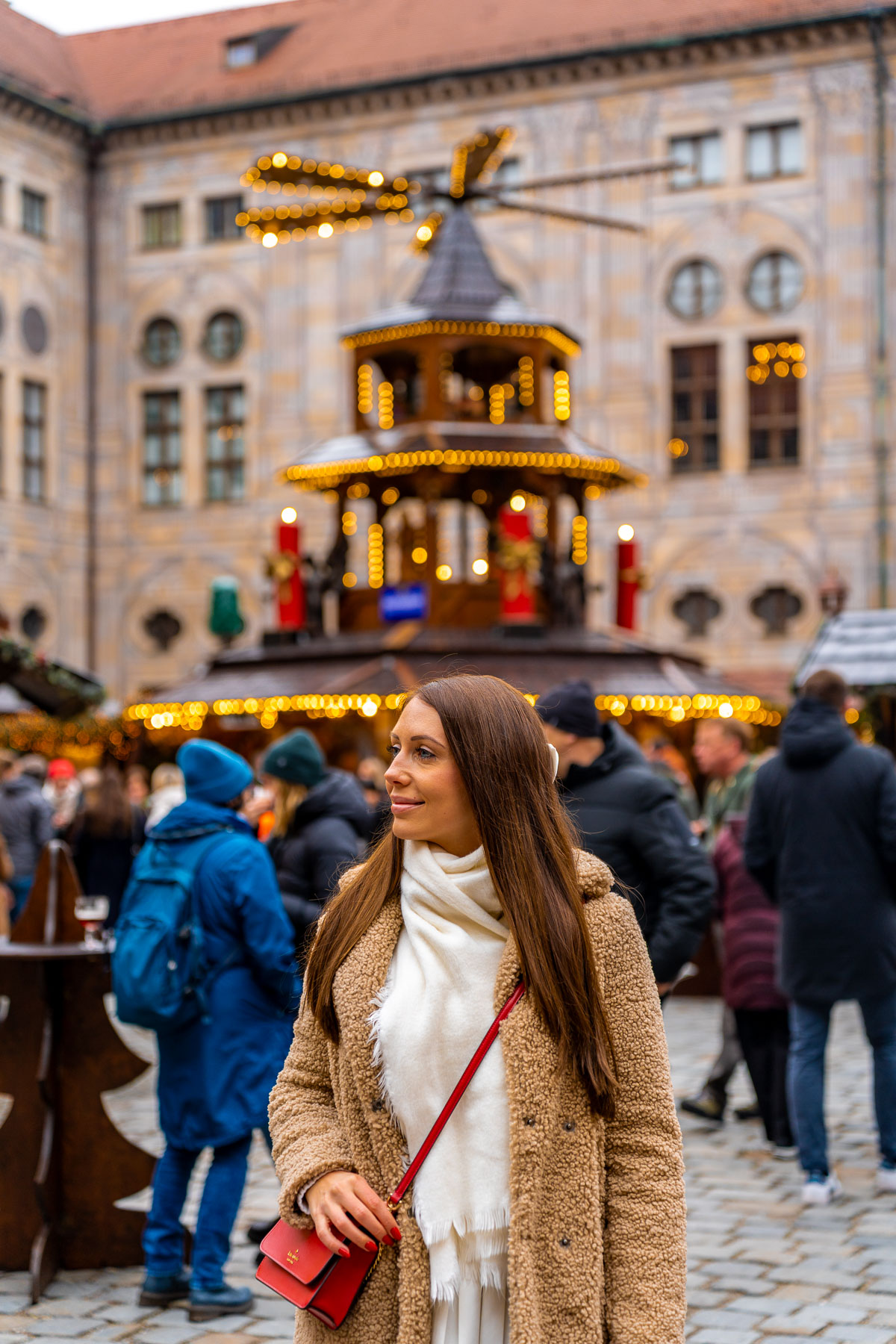
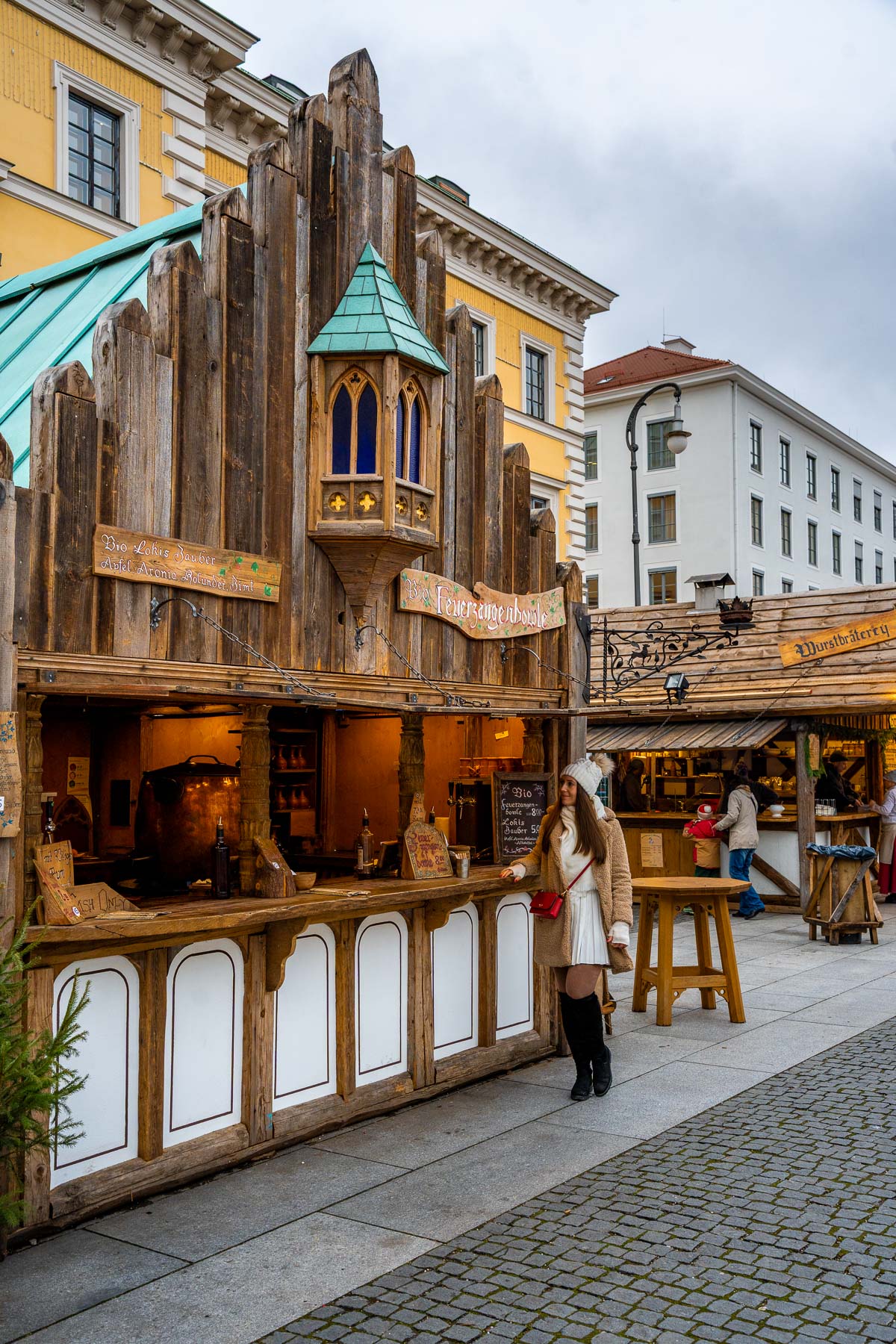
One of my favorite markets in Munich was the Christmas market at the Munich Residenz. The stalls were really cute, and I loved the setup in the courtyard! The medieval Christmas market is also nearby, and it’s worth stopping by if you’re already in the area.
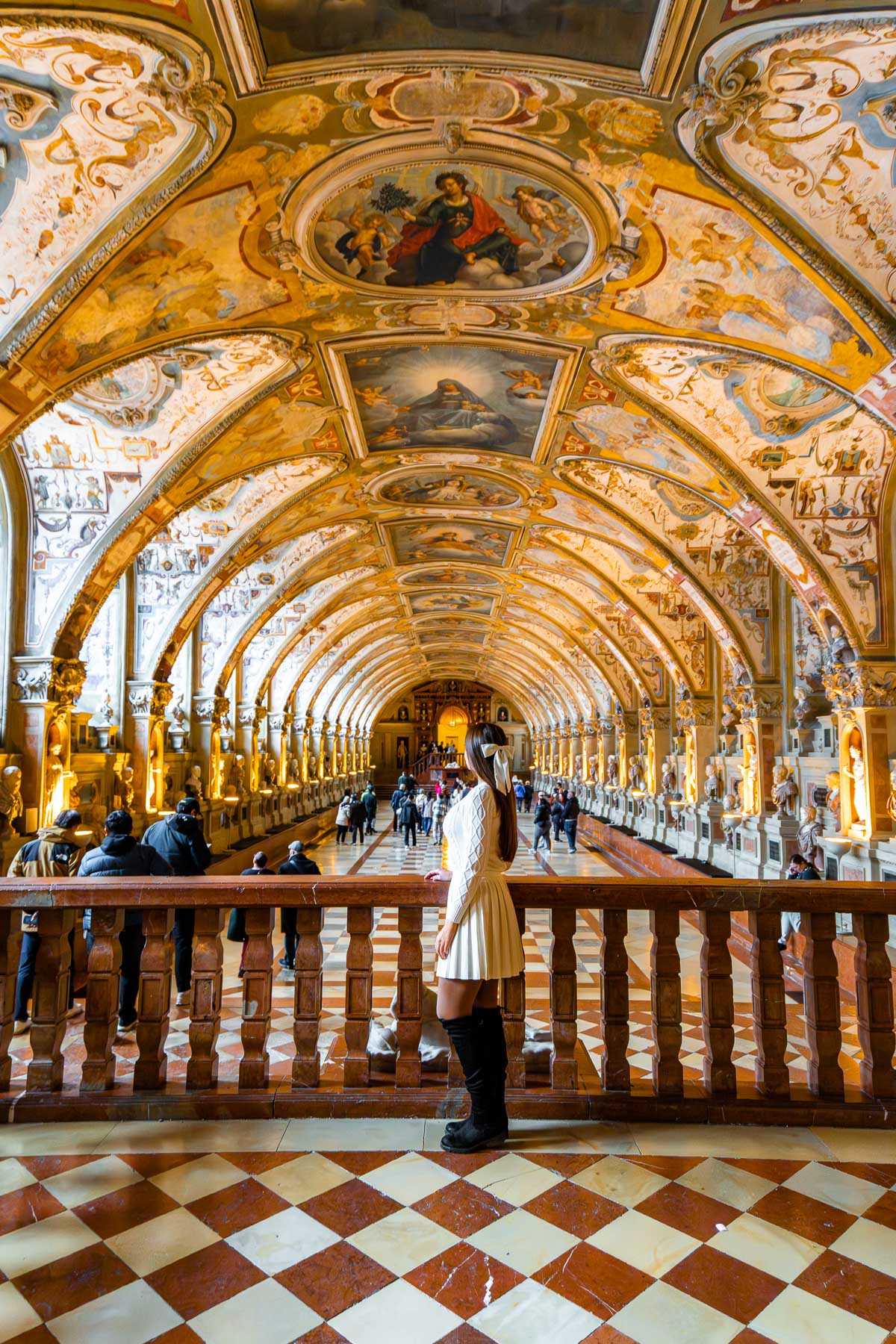
While you’re here, I’d also recommend visiting the Residenz Museum itself. It’s incredibly beautiful, especially the Antiquarium and the Ancestral Gallery.
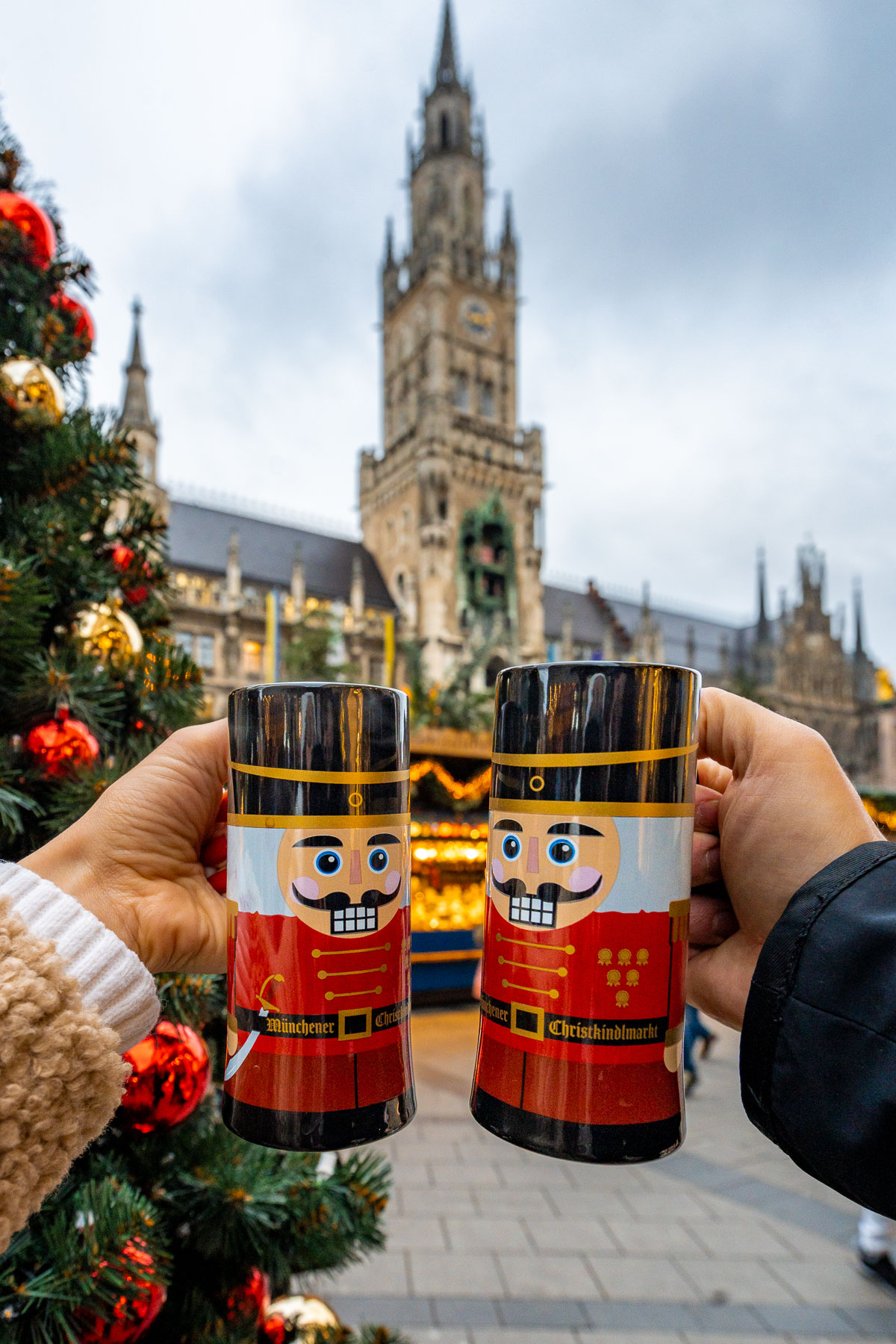
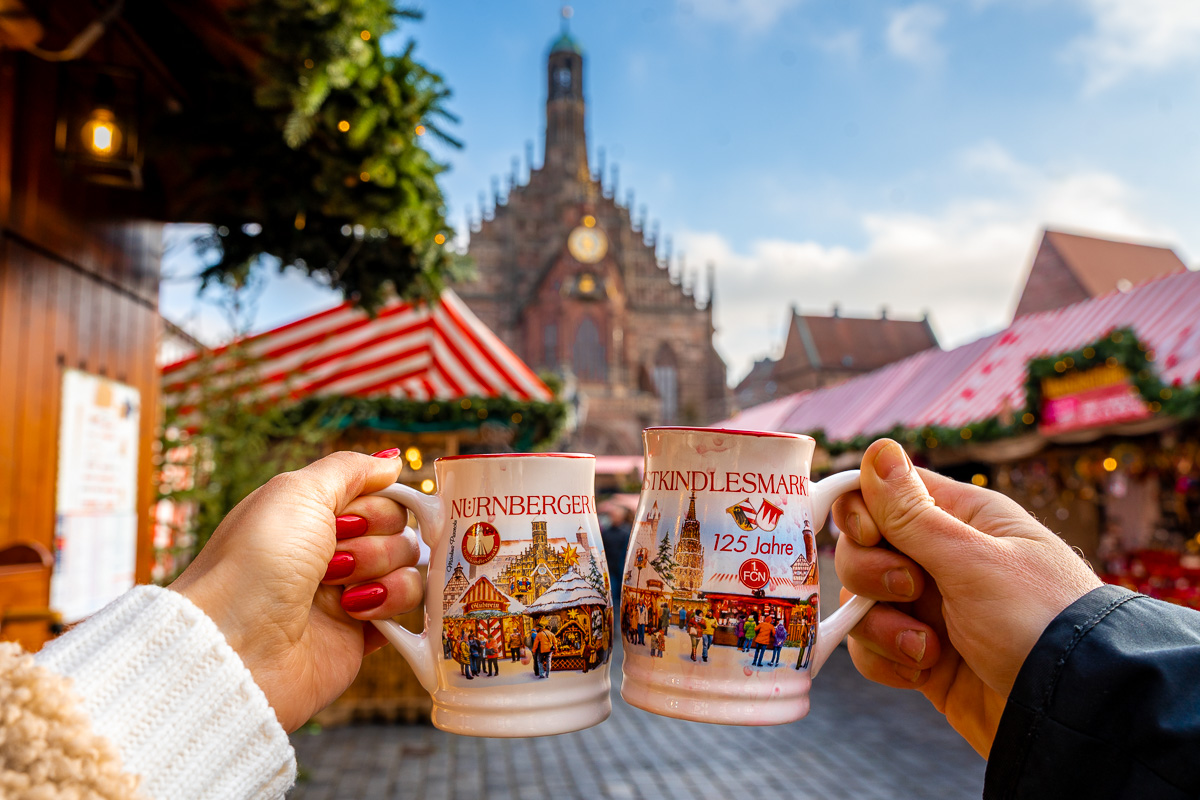
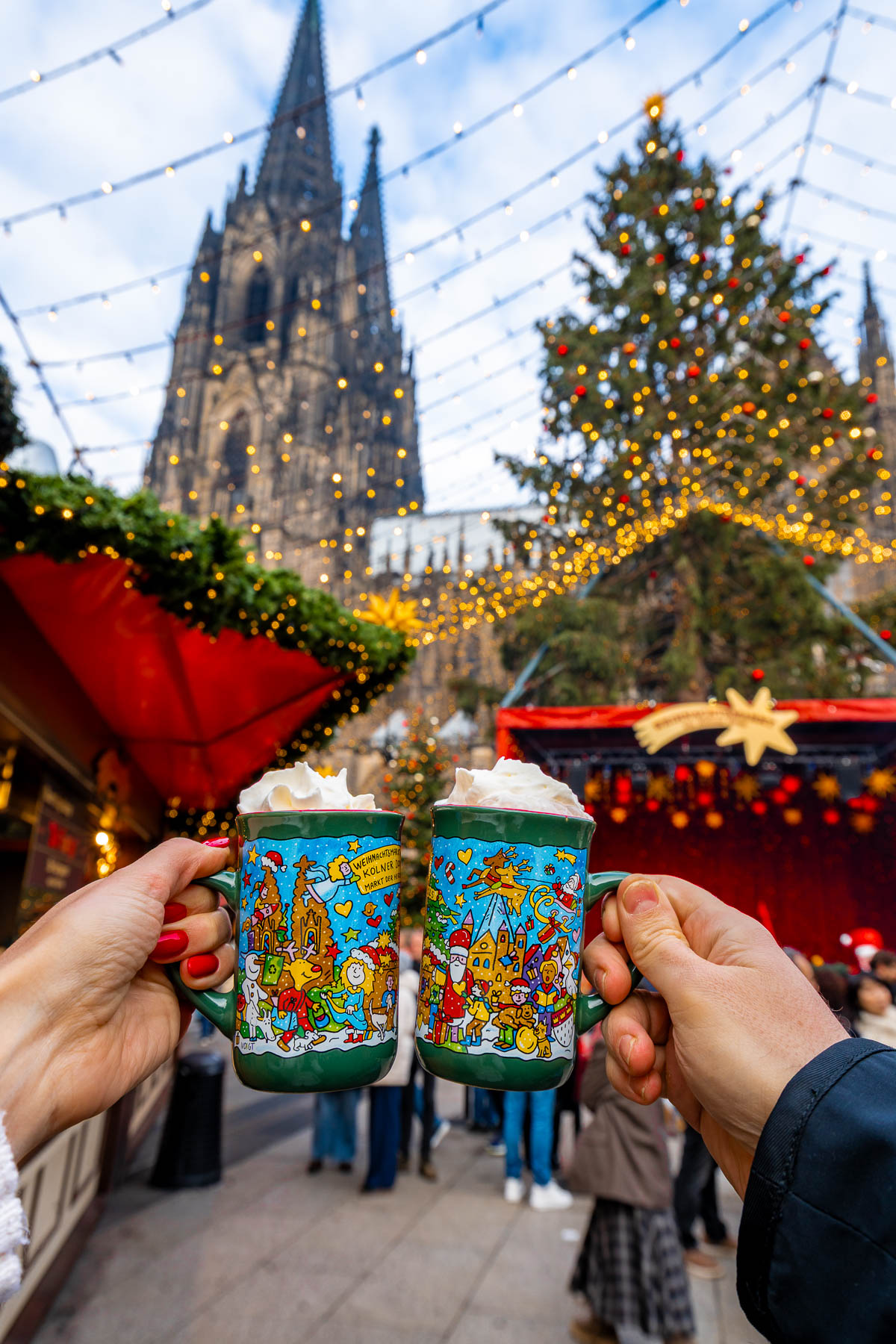
I think Munich also has the best selection of Christmas mugs, we saw at least ten different designs across the city! So if you’re planning to bring some home, this is a great place to do it. My personal favorite was the Nutcracker Soldier mug, which was super cute.
Related Post
Best Christmas Markets in Munich You Shouldn’t Miss
For more information about the best Christmas markets in Munich and how to plan your visit, check out my full guide.
Day 3: Nuremberg
While you could spend a night in Nuremberg, I personally think it works much better as a day trip from Munich. The city is fairly compact, very close by, and easy to see in one day, so packing up and changing hotels for just one night would feel like more hassle than it’s worth.
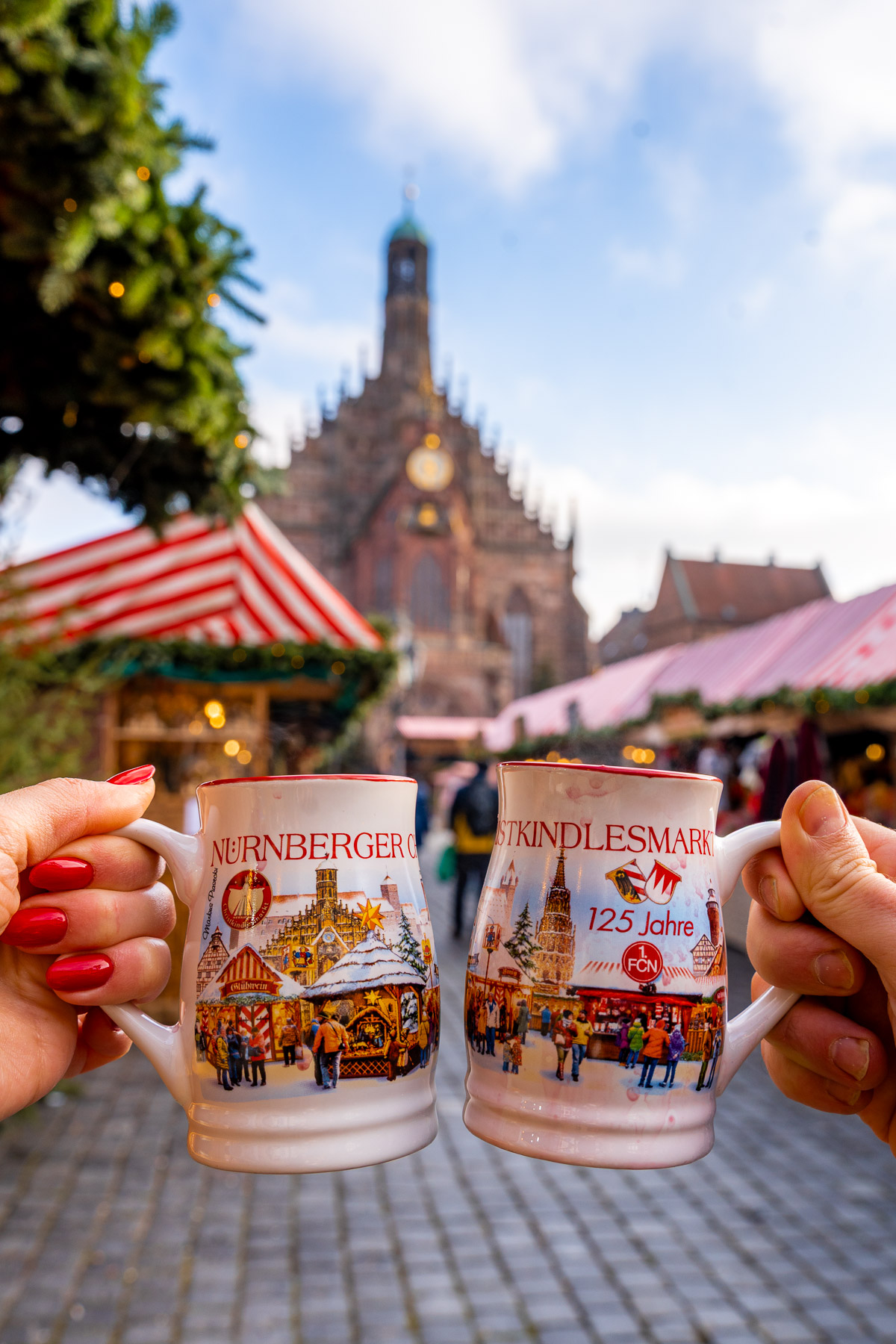
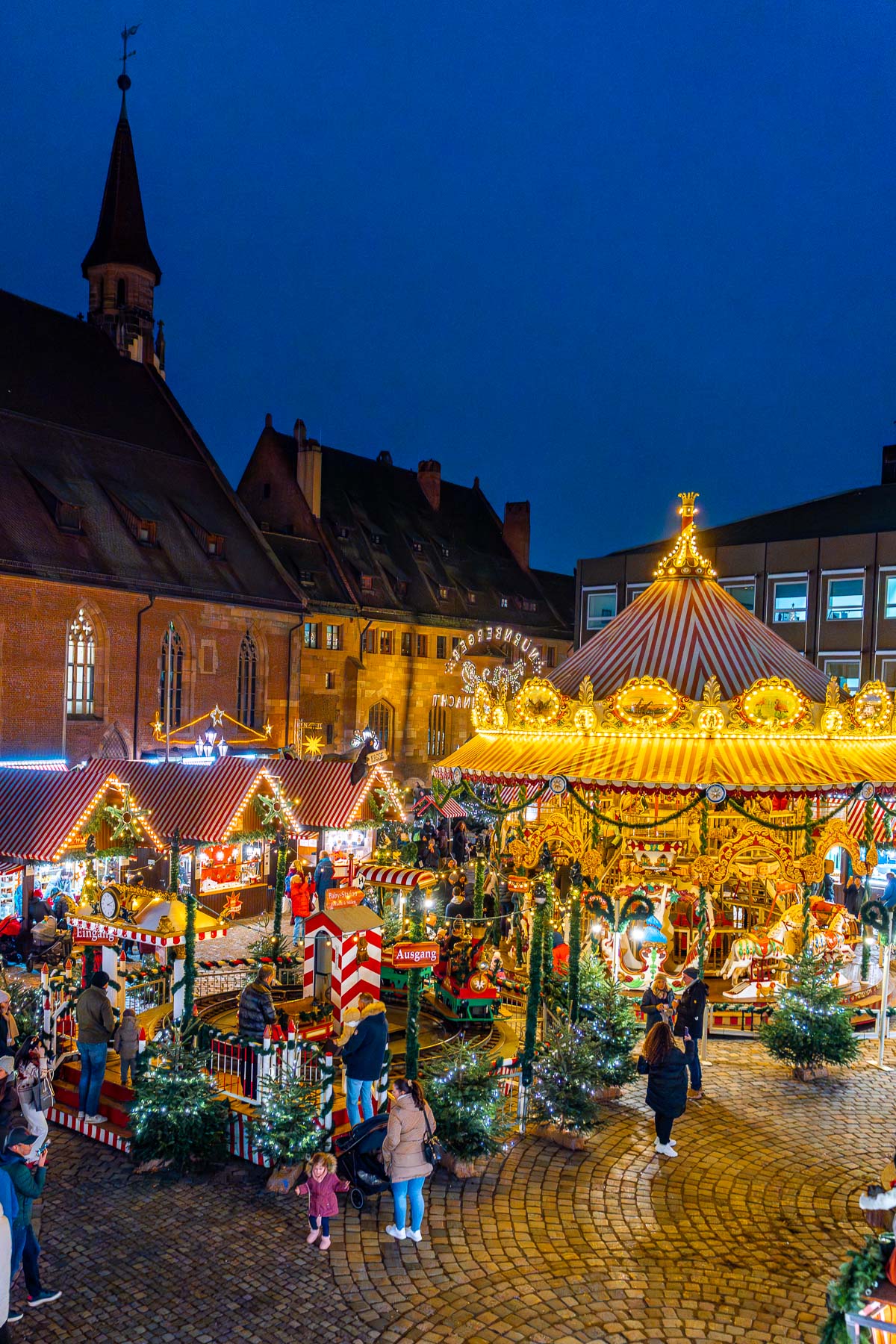
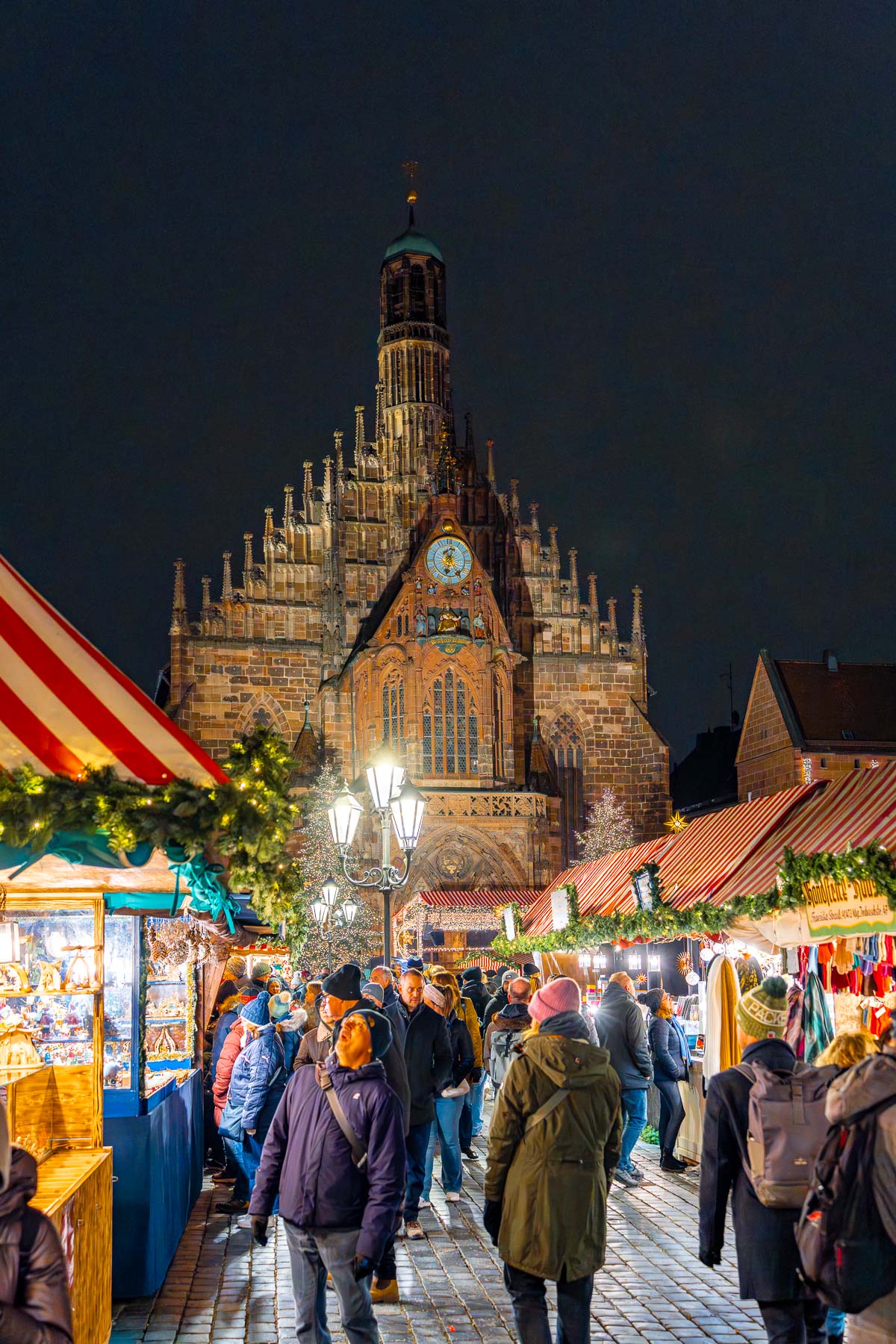
You can comfortably visit the Christmas markets, explore the old town, and be back in Munich the same evening without feeling rushed. It’s a long day, but a manageable one, and the Christkindlesmarkt is one of the most famous Christmas markets in Germany for a reason!
How to get to Nuremberg from Munich
Getting to Nuremberg from Munich is quick and straightforward by train, which is why it works so well as a day trip. Direct trains run frequently throughout the day, and the journey takes a little over an hour.
Since the Christmas markets in Nuremberg typically open around 10 am, I’d aim to arrive around that time. Taking an early morning train from Munich lets you enjoy the market during the day and stay long enough to see it again after dark.
Trains back to Munich run late into the evening, so there’s no need to rush your return. Booking tickets in advance can help with pricing, but this route is frequent enough to stay flexible if needed.
What to do in Nuremberg at Christmas
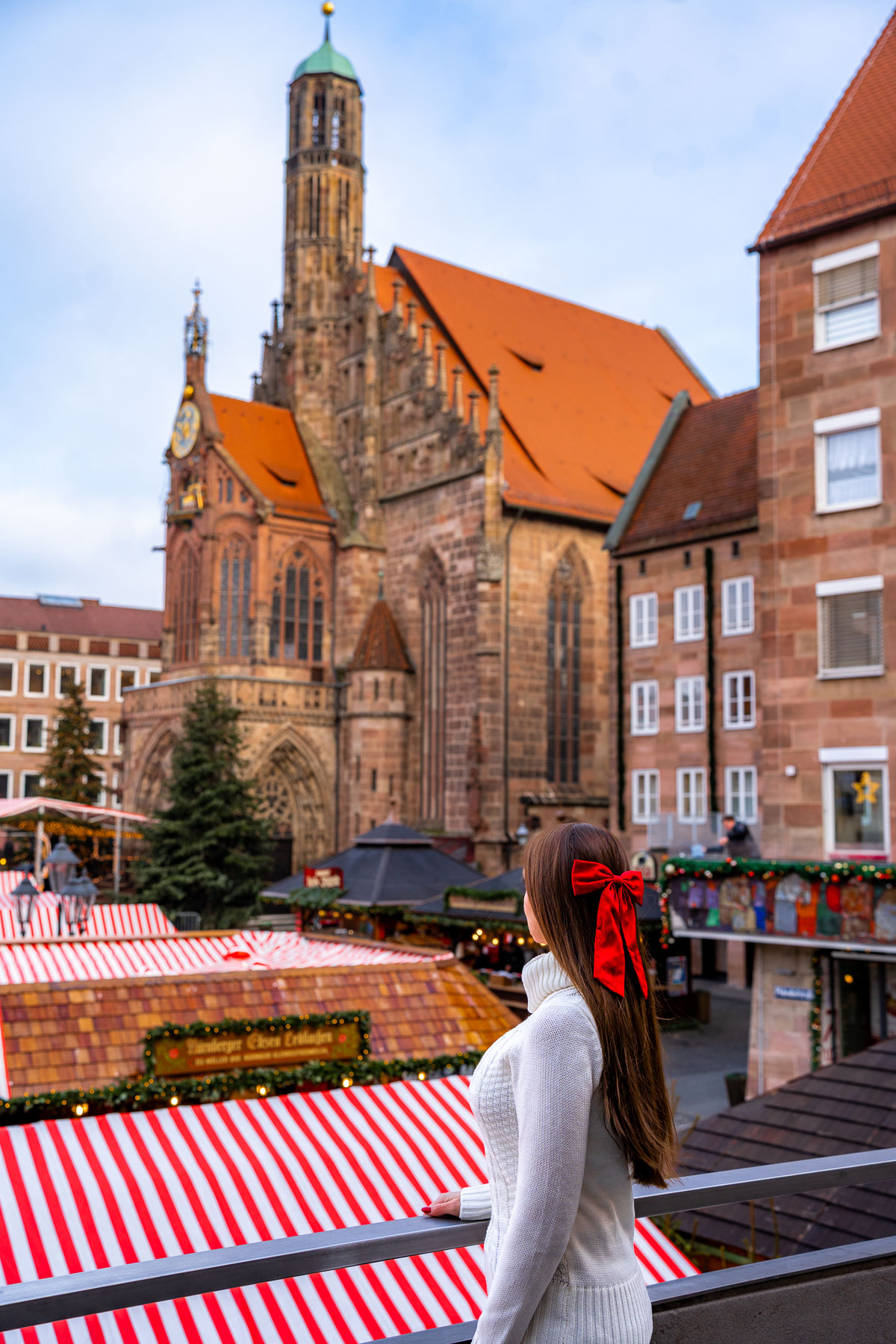
With just one day in Nuremberg, most of your time will be spent around the old town and the Christmas markets, all of which are easy to explore on foot.
The main Christkindlesmarkt on the Hauptmarkt is the highlight, but there are also a few smaller markets nearby, including the Original Regional Market, the Sister Cities Market, and the Kinderweihnacht Christkindlesmarkt, which are all worth a quick look.
While you’re in the area, don’t miss the huge Feuerzangenbowle cauldron near Fleischbrücke! It’s really cool to see in person, and I loved the drink itself too. I’d also recommend walking up toward the castle for views over the rooftops and making time for Weißgerbergasse, which is easily the prettiest street in Nuremberg.
Food is a big part of the experience here. This is the place to try the original Lebkuchen, which ended up being one of my favorite Christmas market treats of the entire trip, along with the local Nürnberger Rostbratwurst.
Related Post
Best Christmas Markets in Nuremberg
Want to dive deeper? This guide covers the best Christmas markets in Nuremberg, plus practical tips to help you plan.
Day 4–5: Frankfurt
Frankfurt feels very different from the previous stops on this itinerary, and that’s part of what makes it so interesting! The mix of modern skyscrapers and a traditional old town creates a unique backdrop for the Christmas markets, especially in the evening when everything is lit up.
One of the things I liked most about Frankfurt is how spread out the markets are through the old town. It almost feels like the entire historic center turns into one long Christmas market, where one section flows straight into the next.
With two nights here, you’ll have enough time to wander through the markets, explore the old town, and still enjoy the city at a relaxed pace.
How to get to Frankfurt
Trains between Munich and Frankfurt run very frequently, usually about once an hour, and the journey takes around 3.5 hours on a direct high-speed train.
I recommend leaving Munich around 9 or 10 am, which gets you into Frankfurt by early afternoon. That gives you plenty of time to check into your hotel and still enjoy the Christmas markets that same day, followed by a full day to explore the city.
Since Frankfurt is a major transport hub for both trains and flights, booking tickets in advance is a good idea for better prices, especially if you’re traveling in December!

Where to stay in Frankfurt
For Christmas markets, staying in or near the Old Town is by far the best option. Most of the main markets are centered around Römerberg, and staying nearby makes it easy to explore everything on foot, especially in the evenings.
Two good options in the old town are Motel One Frankfurt-Römer for a more affordable stay and Steigenberger Icon Frankfurter Hof if you’re looking for something more upscale.
I’d strongly recommend avoiding the area around Frankfurt Central Station when choosing where to stay. I made the mistake of booking a hotel there for convenience, and I honestly wouldn’t do it again!
The area feels very sketchy, even during the day, and I often felt uncomfortable walking around. Staying in the Old Town is a much better experience overall and makes a huge difference, especially during a Christmas market trip.


What to do in Frankfurt at Christmas
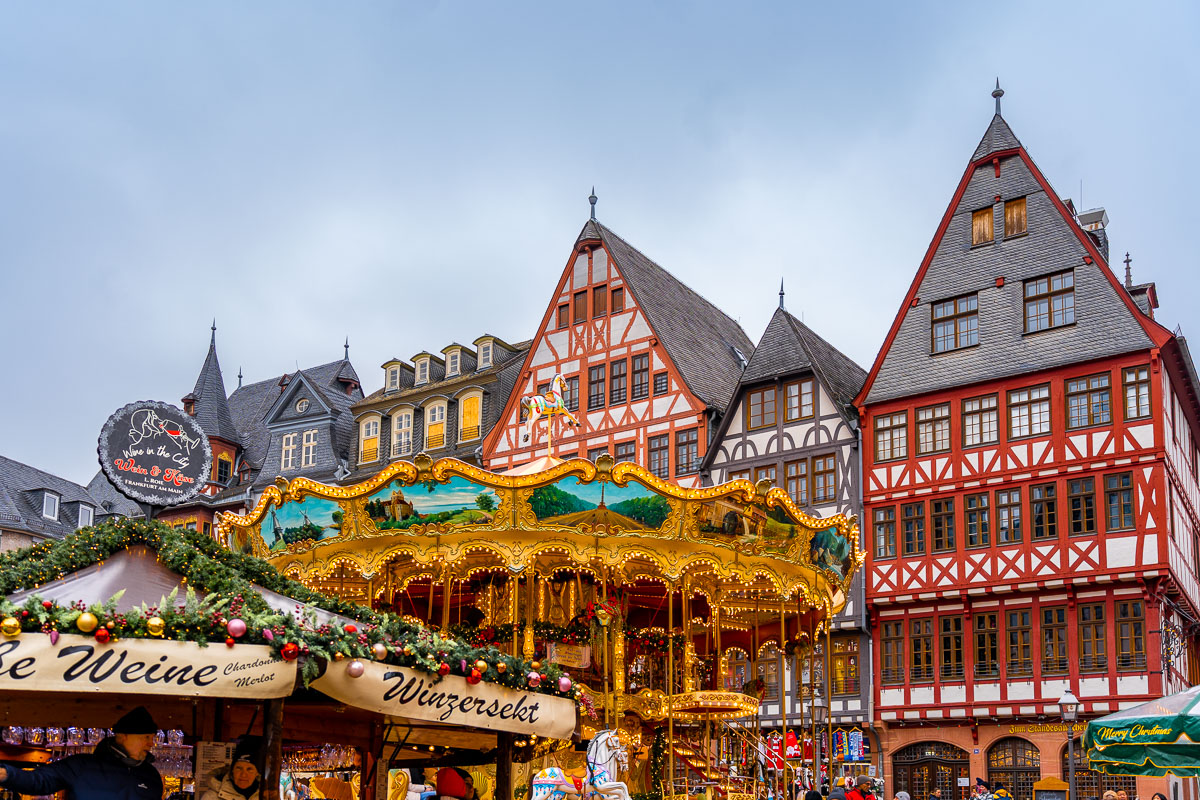
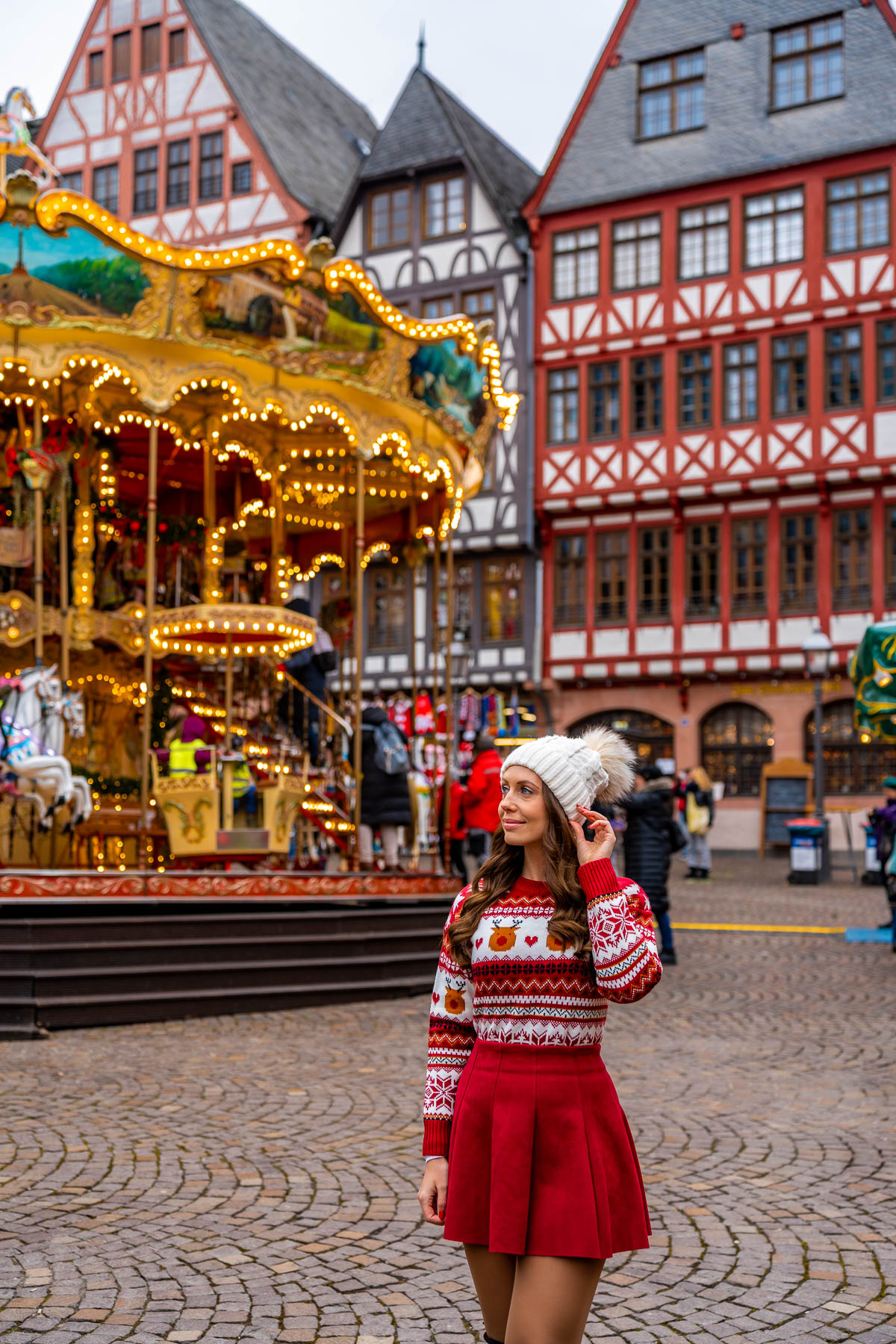
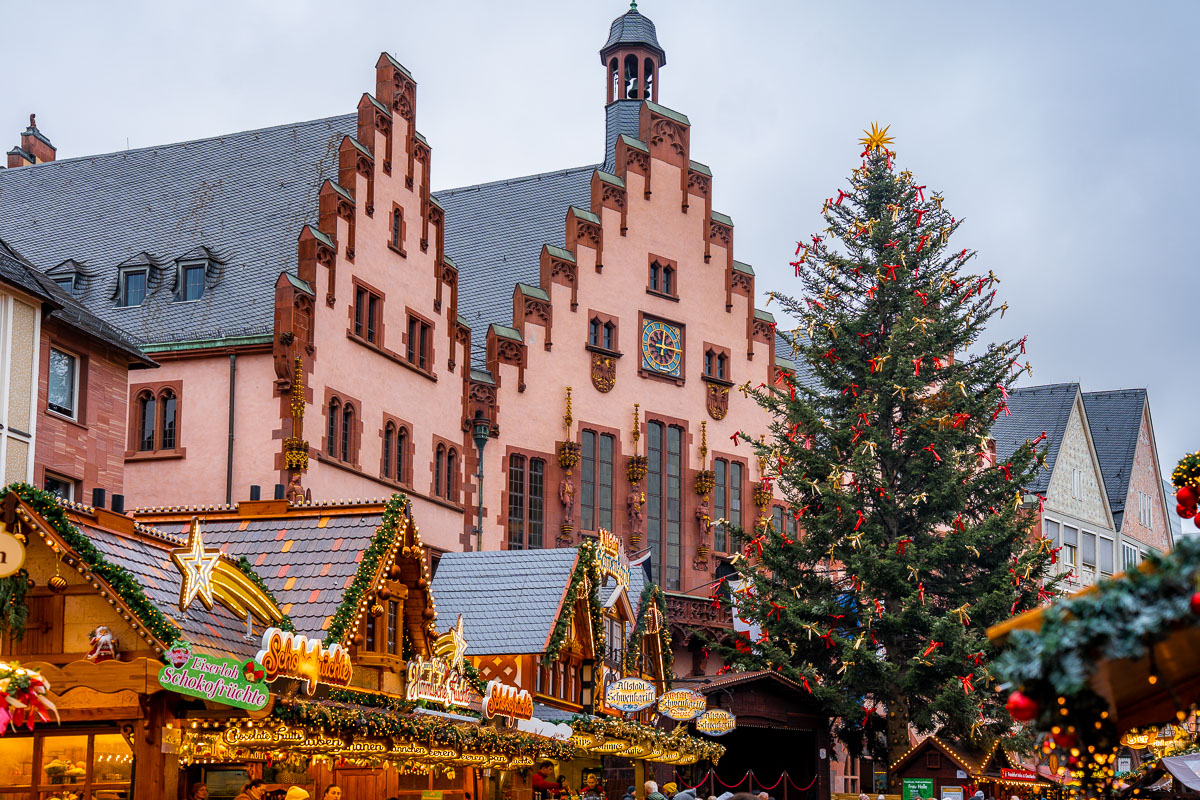
The Christmas market at Römerberg is by far the prettiest one in Frankfurt, and it ended up being one of my all-time favorite Christmas markets on this entire trip! The half-timbered houses around the square are incredibly cute, and the stall decorations here are also super nice.
What I liked about Frankfurt is that the markets don’t feel separated. From Römerberg, you can keep walking, and you’ll naturally run into more stalls around Paulsplatz, and along the river, so it almost feels like one long Christmas market rather than a few individual ones.
Frankfurt also has one of the most unique Christmas markets I’ve seen, set up on top of a parking garage. The setting is really unique, and since it’s higher up, it provides a great view of the skyscrapers.
If you want some views beyond the markets, going up the Main Tower is a great option for city views, and climbing the Frankfurt Cathedral tower also gives you a nice perspective over the old town.
A river cruise on the Main is another popular option if you want to see the city from a different angle, especially in the evening.

Related Post
Best Frankfurt Christmas Markets: A Complete Guide
For more information about where to stay in the Dolomites and the best hotel options, check out my full guide.
Day 6–7: Cologne
Cologne is often referred to as one of the best Christmas markets in Europe, and it’s an absolute must on any Germany Christmas market itinerary! The city has several large, well-known markets spread across different areas.
Each market has its own setting and theme, and they are truly unique. With two nights in Cologne, you can comfortably visit multiple markets without trying to squeeze them all into one evening.
How to get to Cologne
There are direct trains between Frankfurt and Cologne running frequently throughout the day, and the journey takes about an hour. Because it’s so quick, Cologne would technically also work as a day trip if you’re short on time and want to adjust the itinerary.
That said, I really recommend spending two nights here. Cologne has several Christmas markets, and they’re all quite different from each other, so having more time lets you enjoy them properly instead of trying to rush through everything in one evening.
Similar to Frankfurt, I’d plan to leave in the morning so you arrive in Cologne with most of the day ahead of you.
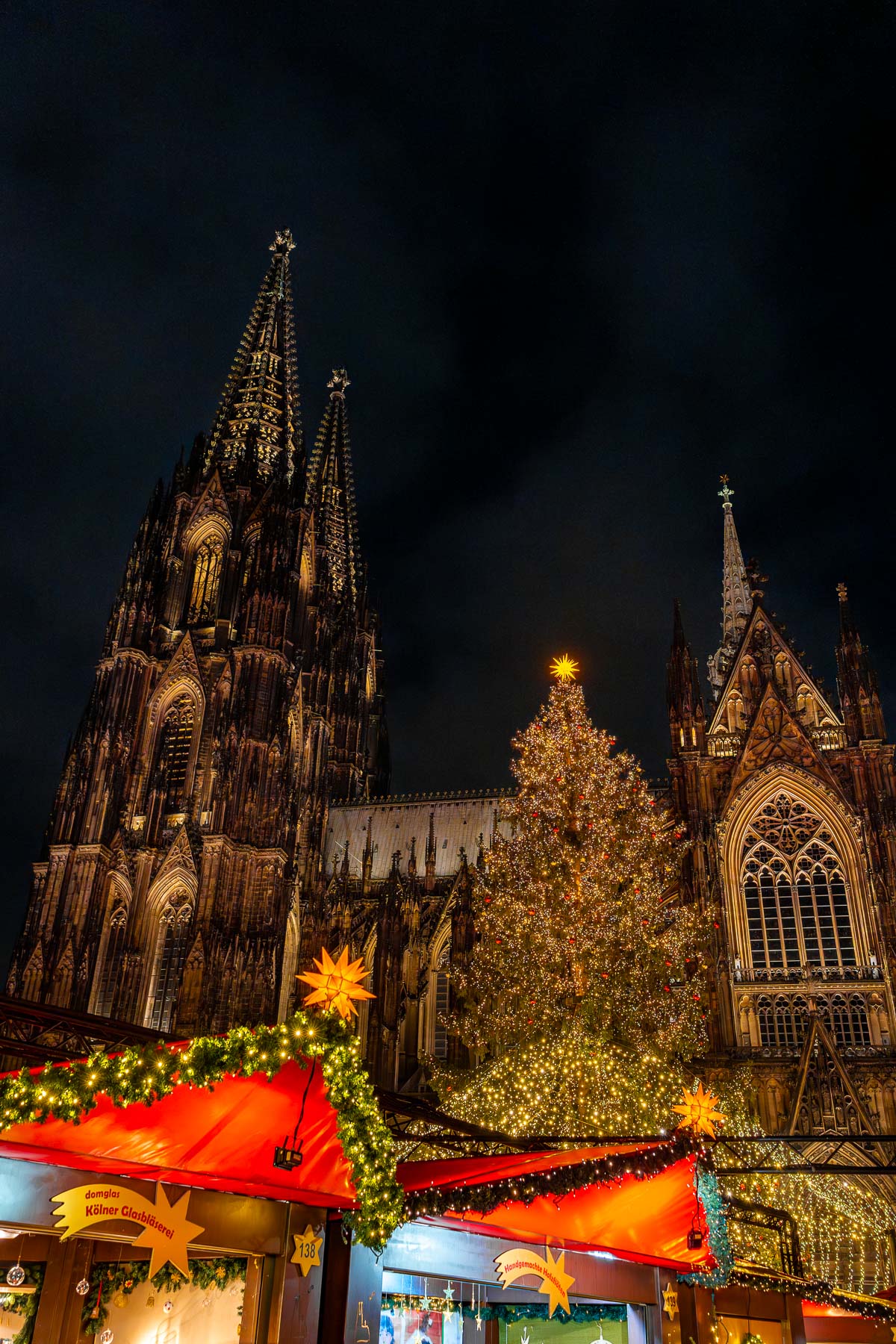
Cologne Central Station is located right next to the cathedral, which is incredibly convenient. I still remember stepping out of the station and suddenly seeing the cathedral right in front of us! It’s massive and such a cool first impression of the city.
💌 SAVE THIS POST
Where to stay in Cologne
For Christmas markets, staying near the cathedral and the old town is the most convenient option. Several of Cologne’s best Christmas markets are clustered around this area, so you can easily walk between them, especially in the evenings.
Hotels like Hotel Cologne Am Dom and Hilton Cologne are both well-located, making it easy to get around. If you’re looking for something more upscale, Excelsior Hotel Ernst am Dom is right next to the cathedral and one of the best located hotels in the city.
Staying close to Cologne Central Station also works very well here. Unlike Frankfurt, the area around the station feels safe and pleasant, and stepping out of the train with the cathedral right in front of you is a pretty unforgettable arrival.
What to do in Cologne at Christmas
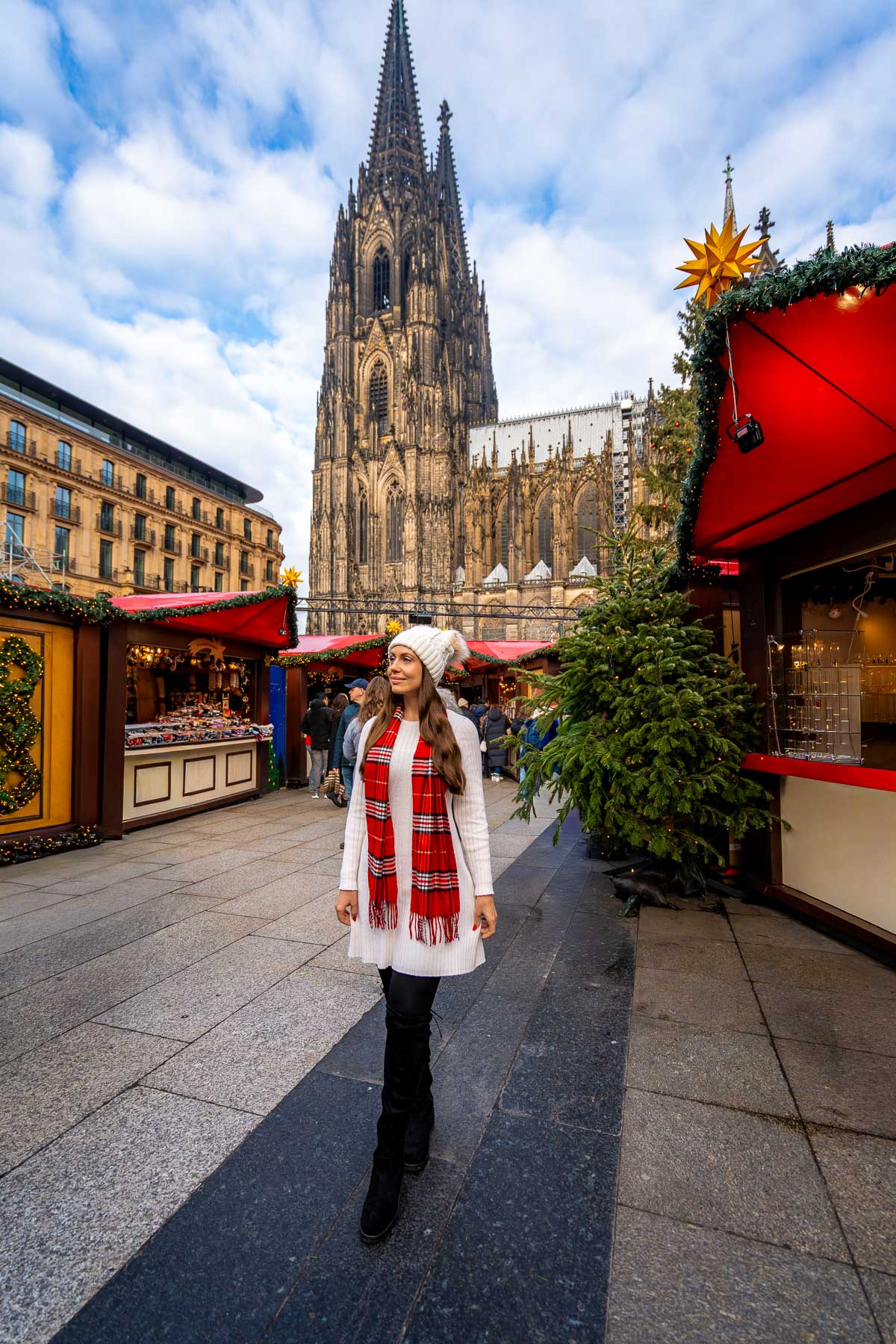
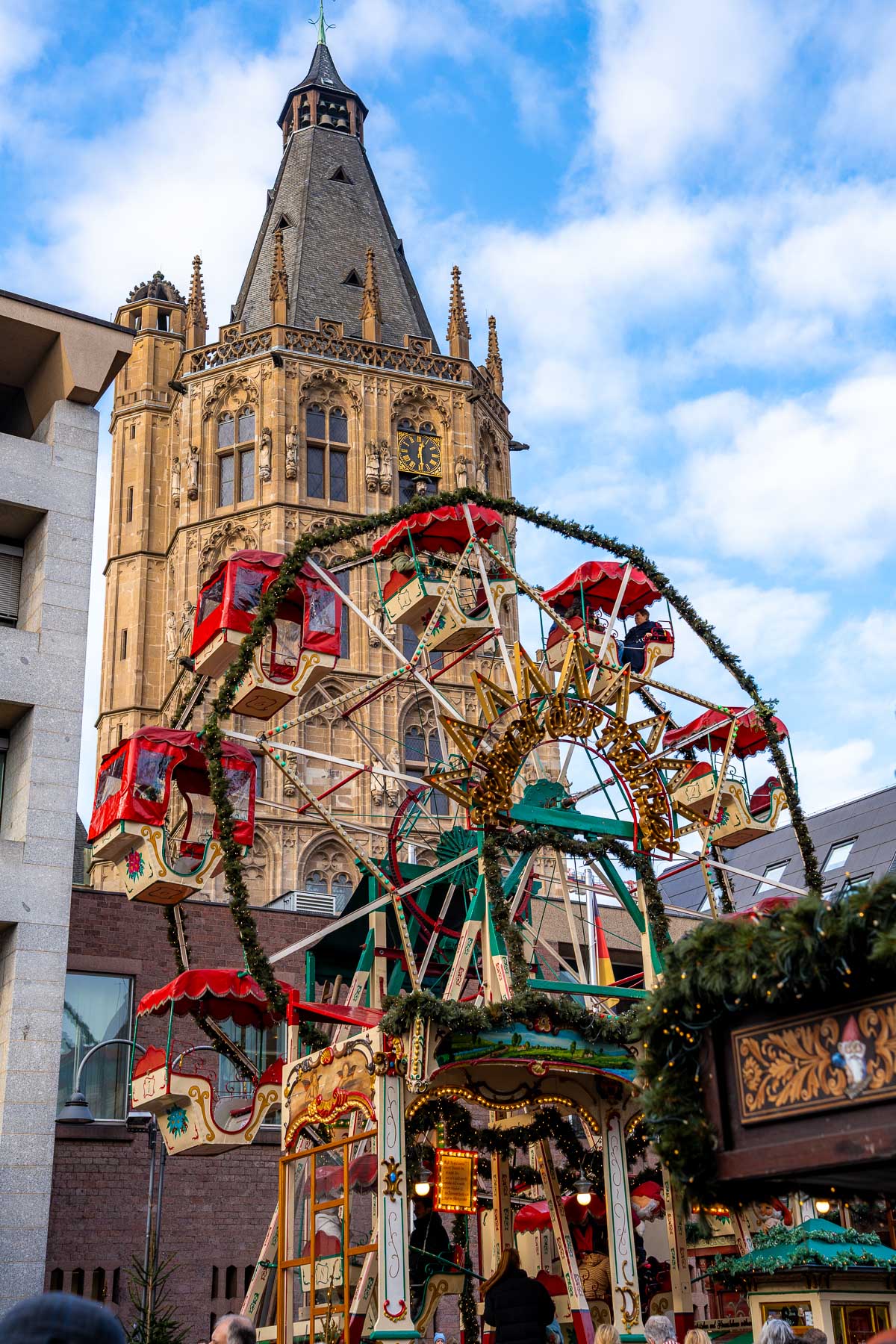
Cologne has several Christmas markets, and this is where taking things a bit slower really pays off. Each market has its own theme and setting, so it doesn’t feel repetitive, even if you visit more than one on the same day.
The Christmas market by the Cathedral is the most famous one and an obvious starting point, but it’s also the busiest.
One of my personal favorites was Heinzels Winter Fairytale, the gnome-themed market near Heumarkt. It’s huge, playful, and feels totally different from the more traditional setups.
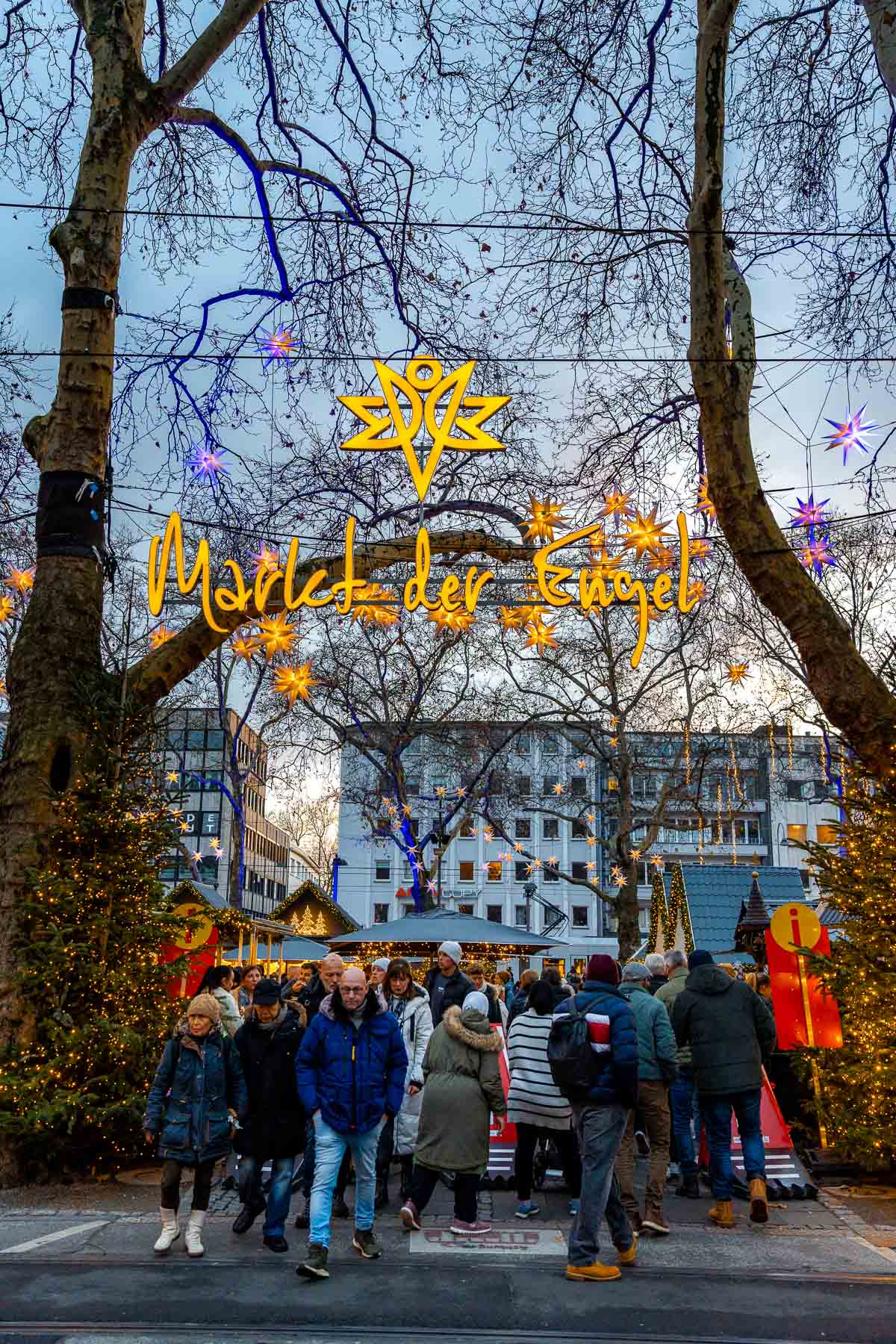
Another unmissable stop is the Market of Angels, which is especially beautiful after dark and has a more elegant feel compared to the others.
Beyond the markets, you obviously can’t skip visiting the Cologne Cathedral. Seeing it up close is impressive at any time of year, but it feels even more dramatic during the Christmas season.
For the best views over the city, head up to Cologne Triangle, which gives you an incredible perspective of the cathedral and the Rhine. A river cruise is also a popular option if you want to see Cologne from the water, especially in the evening.

Related Post
Best Christmas Markets in Cologne & Tips for Visiting
Check out my complete guide to Cologne’s Christmas markets, including the best markets and tips for visiting.
Day 8–9: Hamburg
When I was planning this Germany Christmas market itinerary, we almost left Hamburg out and only added it at the very last minute. I’m so glad we did, because it ended up being one of my favorites!
Hamburg is fairly compact when it comes to Christmas markets, so having one full day here is enough. If you plan to attend the Christmas parade, make sure one of your days falls on a Saturday.
How to get to Hamburg
The train journey from Cologne to Hamburg takes a little over four hours, which makes this the longest train ride on this Germany Christmas trip.
You have two options when it comes to train tickets. You can opt for a direct train with Deutsche Bahn. Trains run frequently, usually about once an hour, which gives you a lot of flexibility when choosing departure times.
Another option worth knowing about is FlixTrain, which is operated by FlixBus. It’s a fully functioning train and usually much cheaper than Deutsche Bahn, though the carriages are more basic and less comfortable.
The main downside is flexibility, as there are often only one or two departures per day, and sometimes none at all, so this option only works if the timing fits your plans.
Where to stay in Hamburg
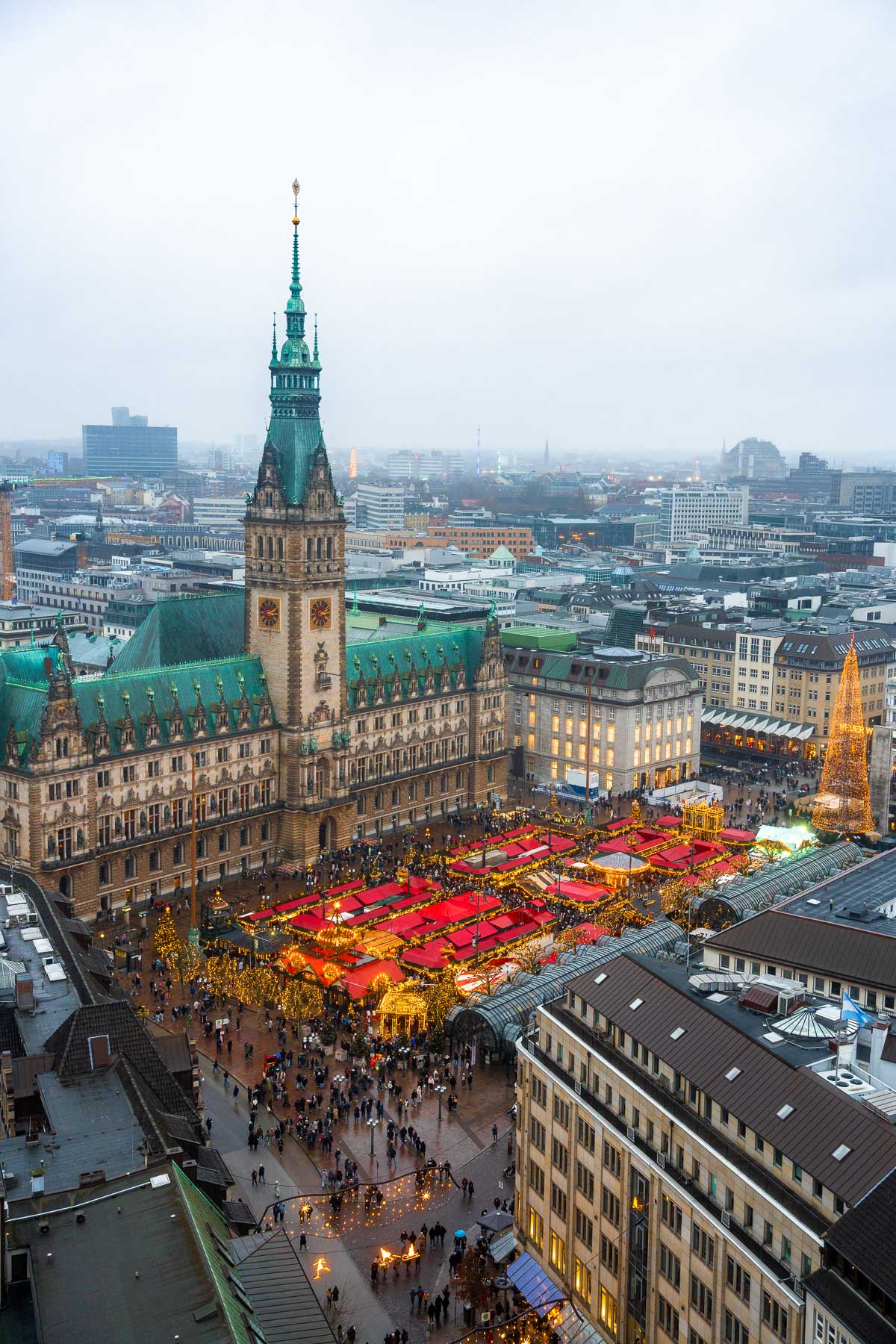
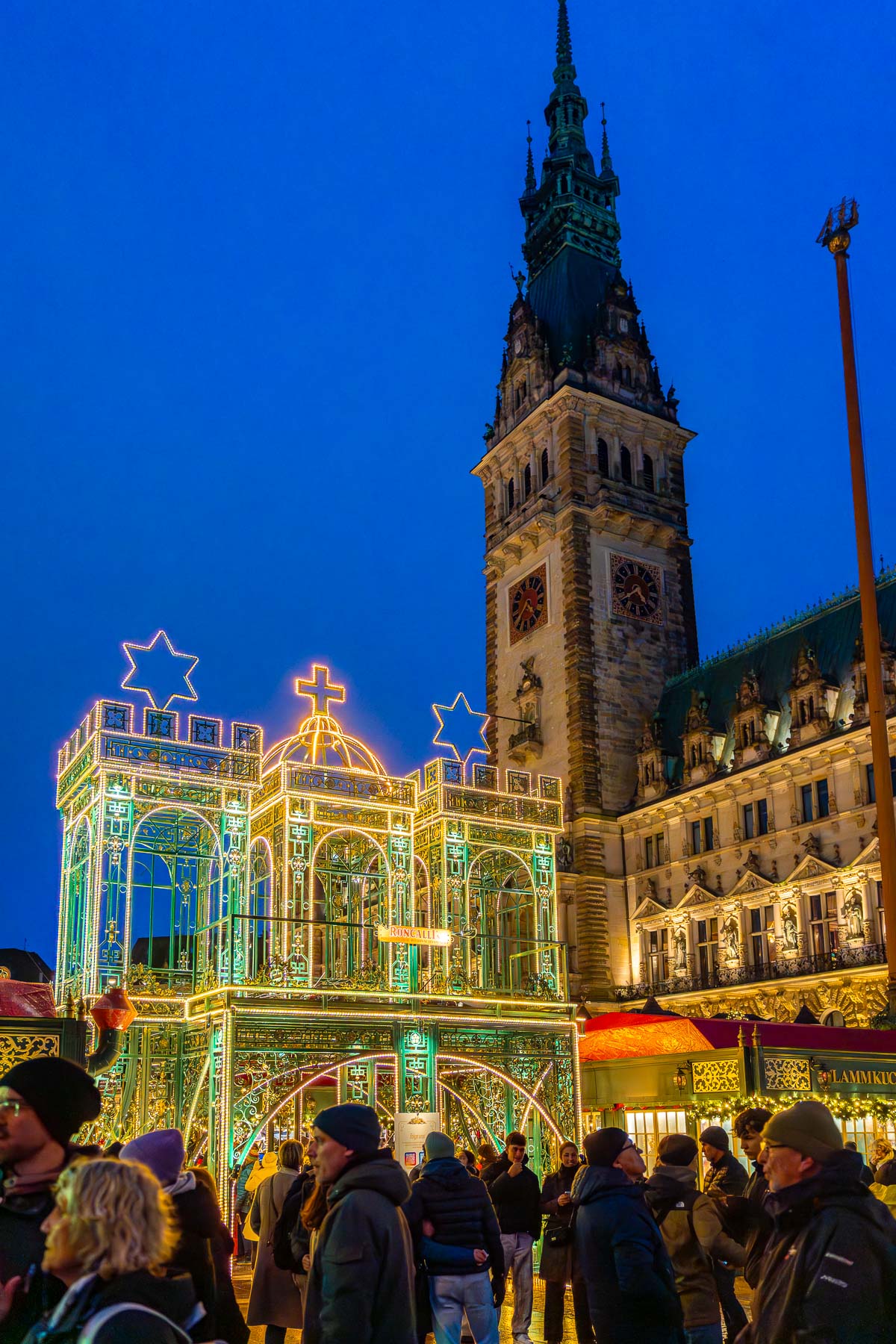
Hamburg is quite compact when it comes to Christmas markets, and most of the main ones are fairly close to each other. The main Christmas market at the Rathaus is only about a 10–15 minute walk from Hamburg Central Station, so it makes sense to stay somewhere between the two.
Choosing a hotel in this area keeps everything walkable and makes arrivals and departures easy, especially after a long travel day. Barceló Hamburg and Steigenberger Hotel Hamburg are both great options with convenient locations for exploring the markets and the city on foot.
What to do in Hamburg at Christmas
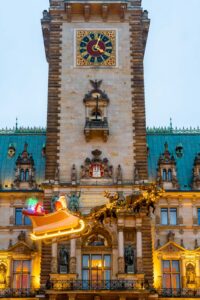
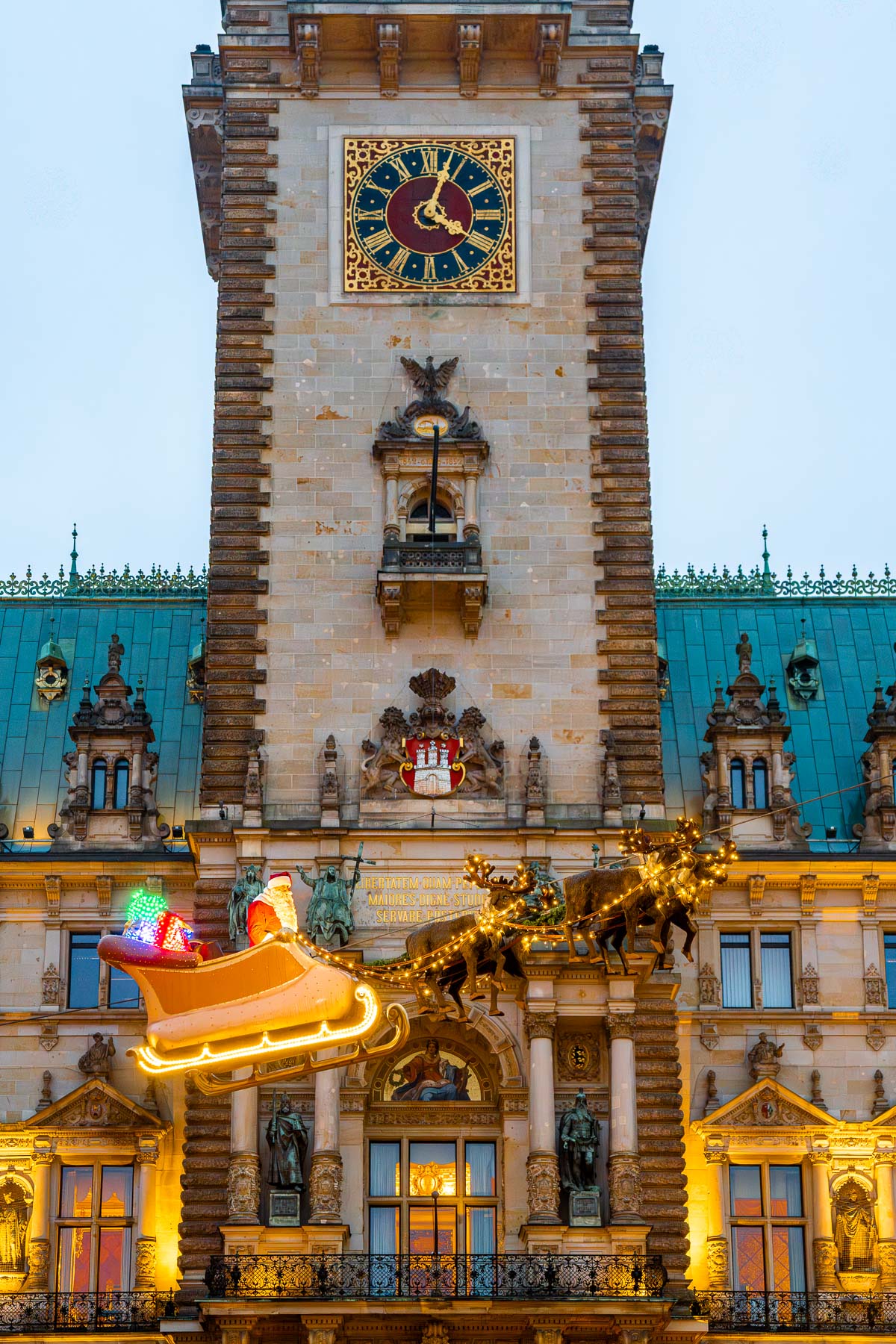
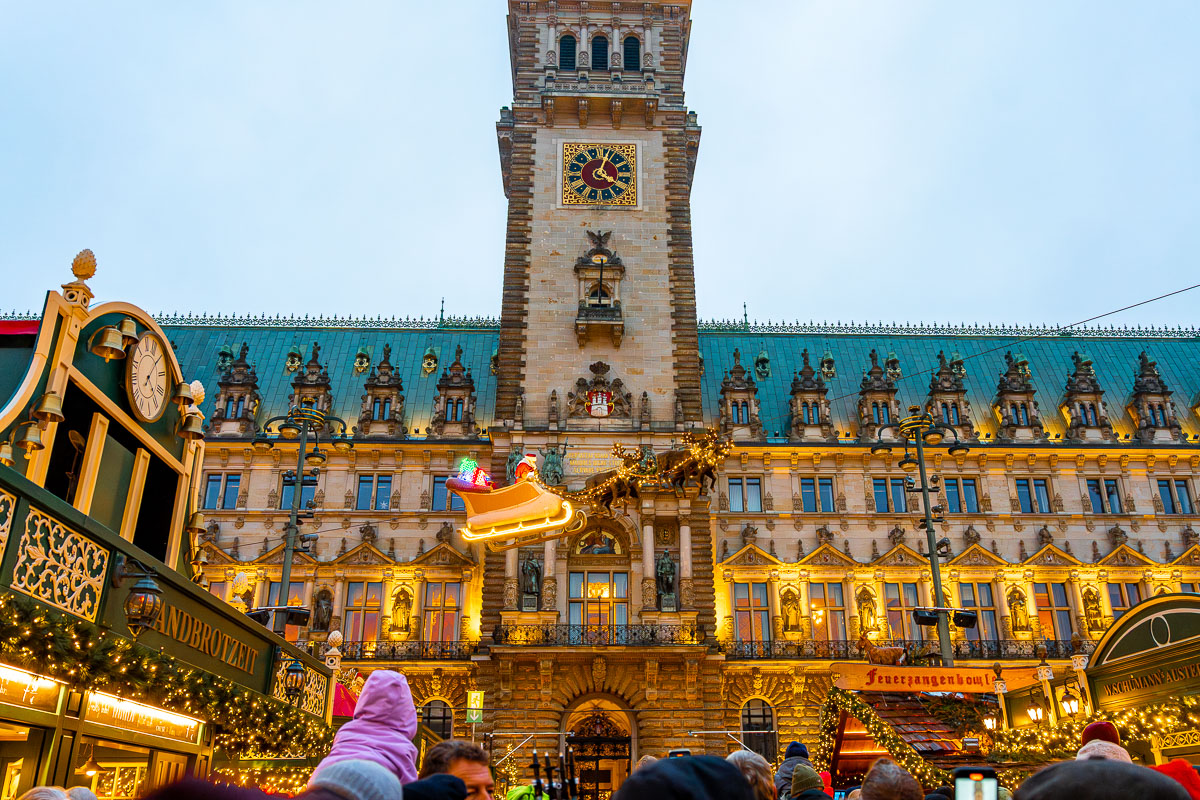
Did you know that Hamburg has a Flying Santa? That was actually the main reason I really wanted to include Hamburg in this Germany Christmas market itinerary, and it ended up being such a fun stop!
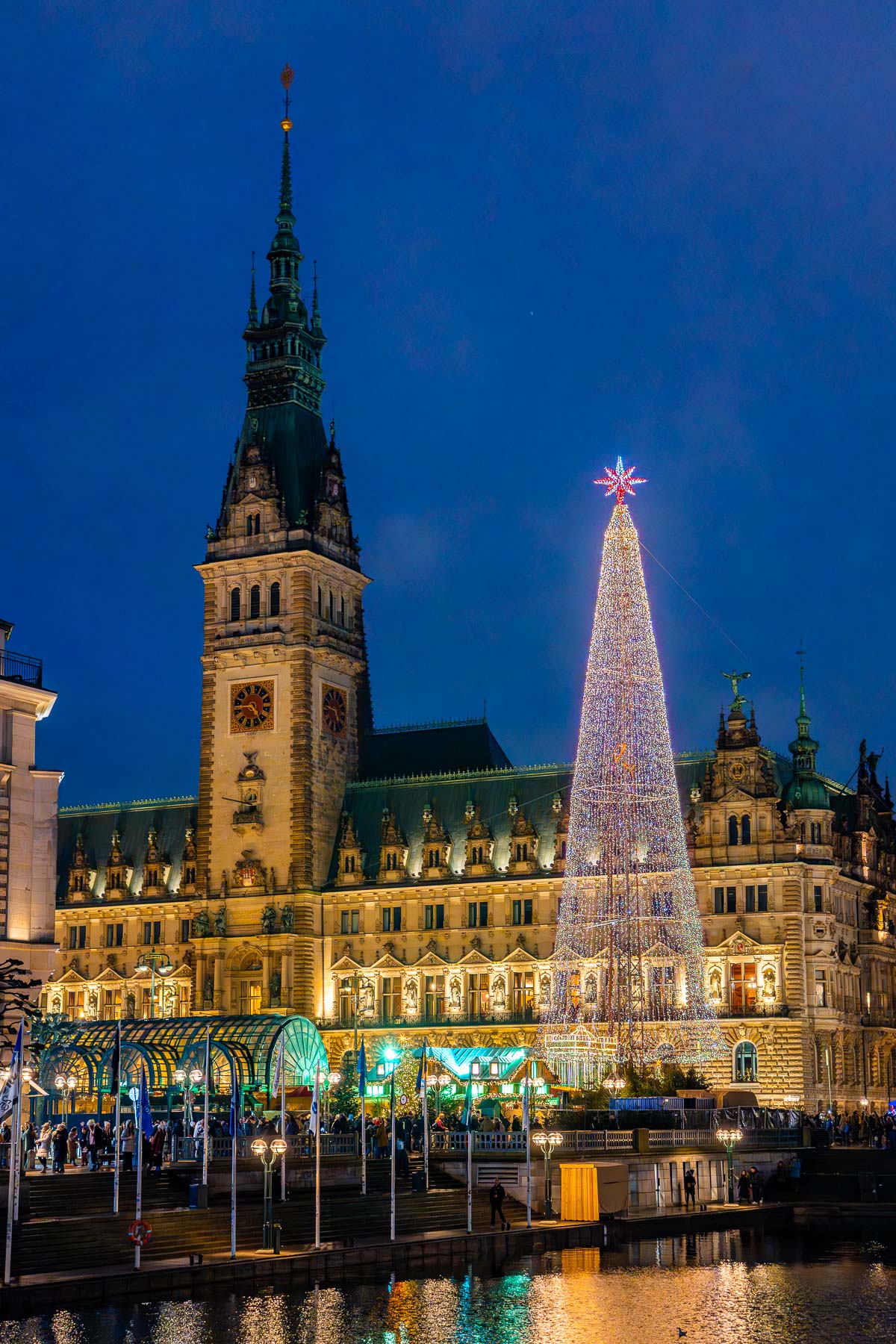
The Flying Santa takes place at the main Christmas market in front of the Rathaus, which is already a highlight on its own. The backdrop with the city hall is unbeatable, the stall decorations are beautiful, and there’s even a small toy train running in circles on top of the market stalls.
Just a few minutes’ walk away, the Christmas market at Jungfernstieg is another must-see. It’s more spread out, with white tents along the waterfront, and feels very different from the Rathaus market.
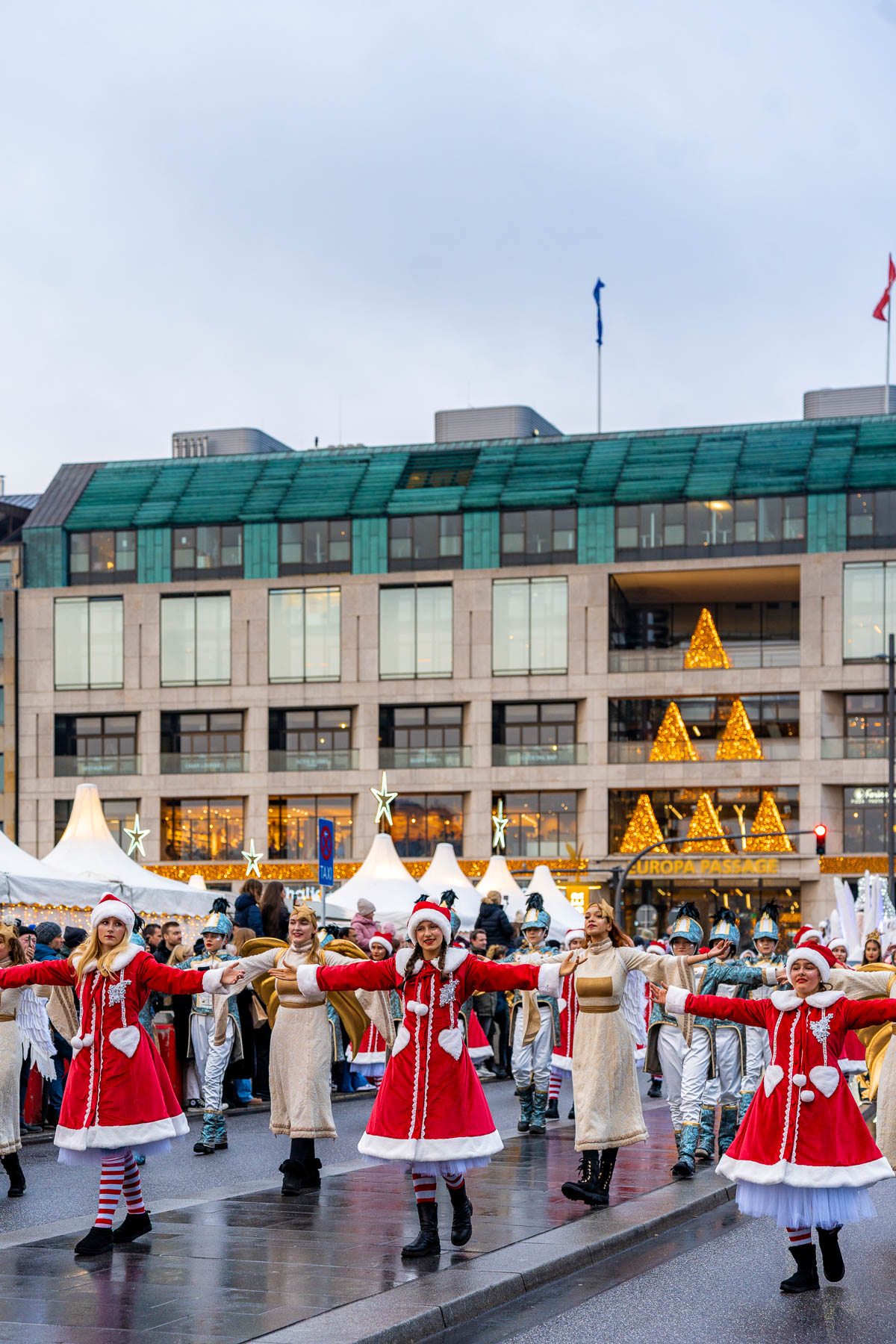
If you’re visiting on a Saturday, the Christmas parade is also worth planning around. It takes place on the four Saturdays leading up to Christmas and runs twice a day. I really loved this parade, and I was so glad we were there on a Saturday!
For something completely different, you can also check out the Santa Pauli Christmas market, which is the erotic Christmas market. It’s a bit outside the city center and definitely more cheeky than traditional, but if you’re curious, it’s a fun and unique option.
Related Post
Best Christmas Markets in Hamburg & Tips for Visiting
Discover the best Christmas markets in Hamburg and find out which ones are worth adding to your itinerary.
Day 10–12: Berlin
Berlin is massive, and when it comes to Christmas markets, it’s on a completely different scale than the other cities on this itinerary. The city has well over 80 Christmas markets spread across different neighborhoods, which is why it’s worth spending more time here.
How to get to Berlin
Trains between Hamburg and Berlin run very frequently throughout the day, and the journey usually takes around 2.5 to 3 hours, depending on the connection.
Most services are operated by Deutsche Bahn, but Hamburg to Berlin is also another route where FlixTrain is available. Compared to Cologne to Hamburg, FlixTrain runs more frequently on this route, which makes it a very good low-cost option if the timing works for you.
Where to stay in Berlin
For a Christmas market trip, staying in a central part of Berlin makes things much easier. A good base is the area roughly between Potsdamer Platz, Brandenburg Gate, and Alexanderplatz.
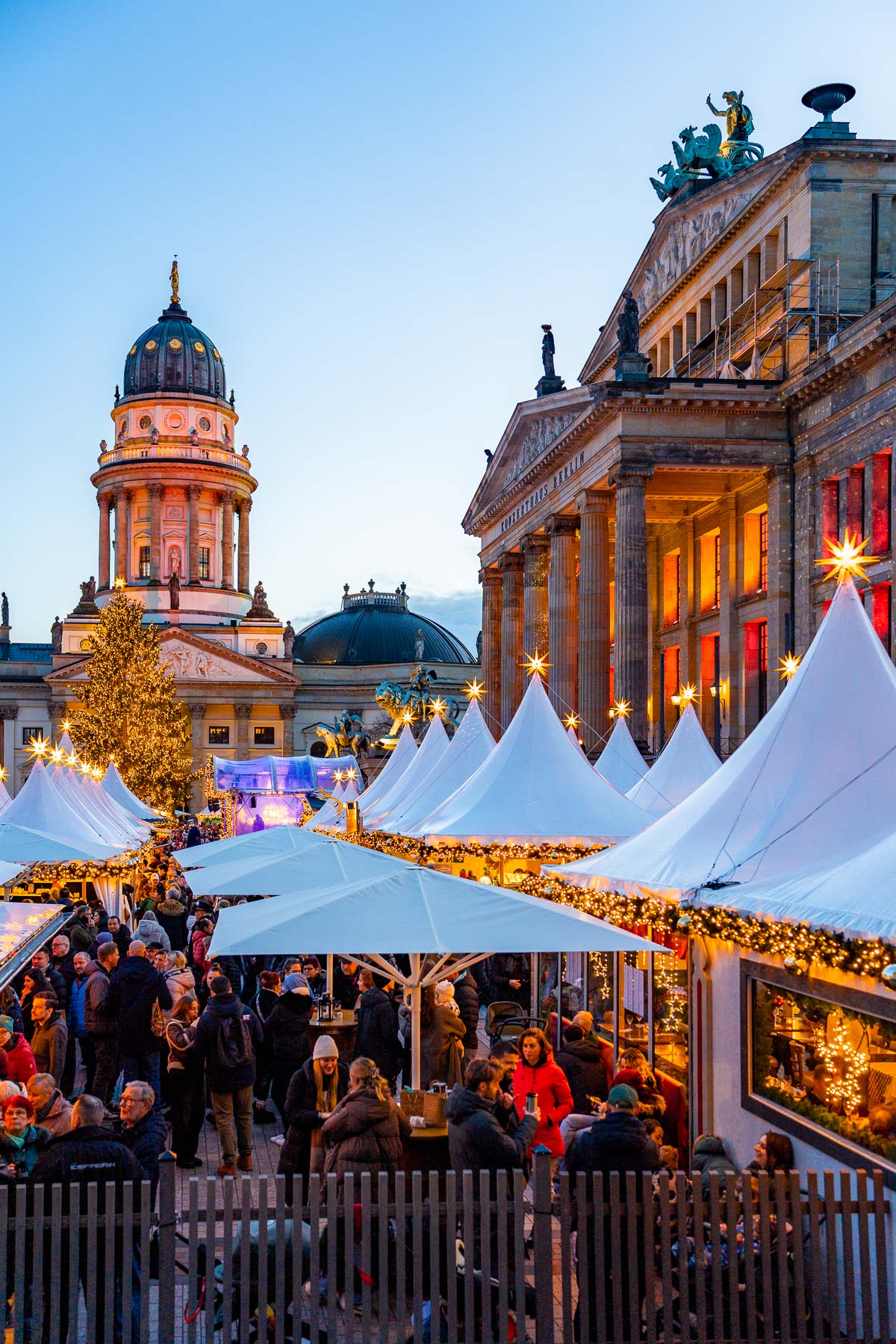
This location works particularly well if you want to visit markets like Gendarmenmarkt, Rotes Rathaus, and the ones around the Humboldt Forum without constantly relying on public transport. Being able to walk between a few key spots saves a lot of time in a city as large as Berlin.
ARCOTEL John F Berlin and TITANIC Gendarmenmarkt Berlin are both very centrally located and budget-friendly. If you’re looking for something more upscale, Hotel Adlon Kempinski Berlin is one of the city’s most famous hotels and has an unbeatable location next to the Brandenburg Gate.
No matter where you stay, proximity to a U-Bahn or S-Bahn station is important in Berlin. Distances add up quickly here, and having easy access to public transport makes getting around to different Christmas markets much smoother.
What to do in Berlin at Christmas
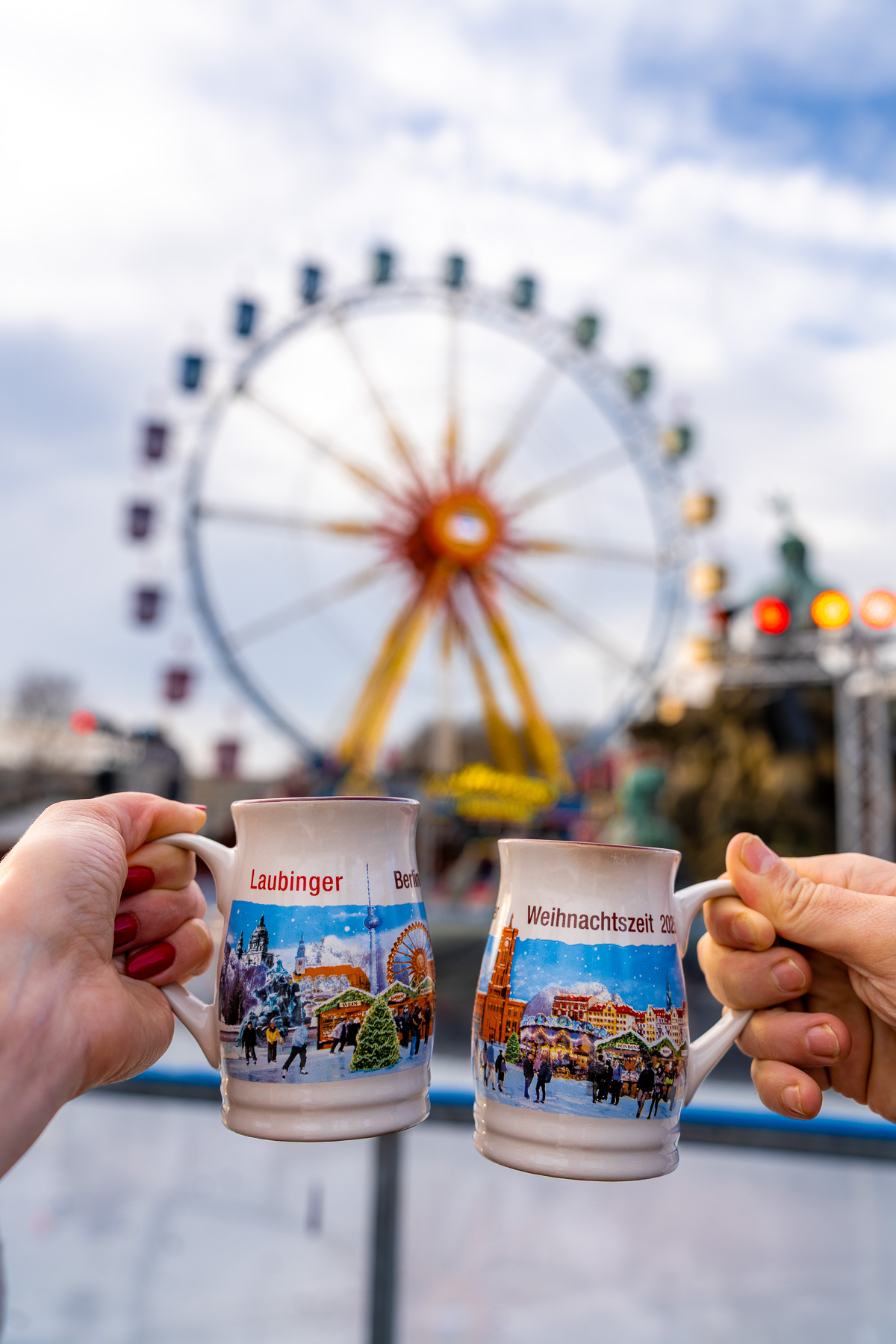
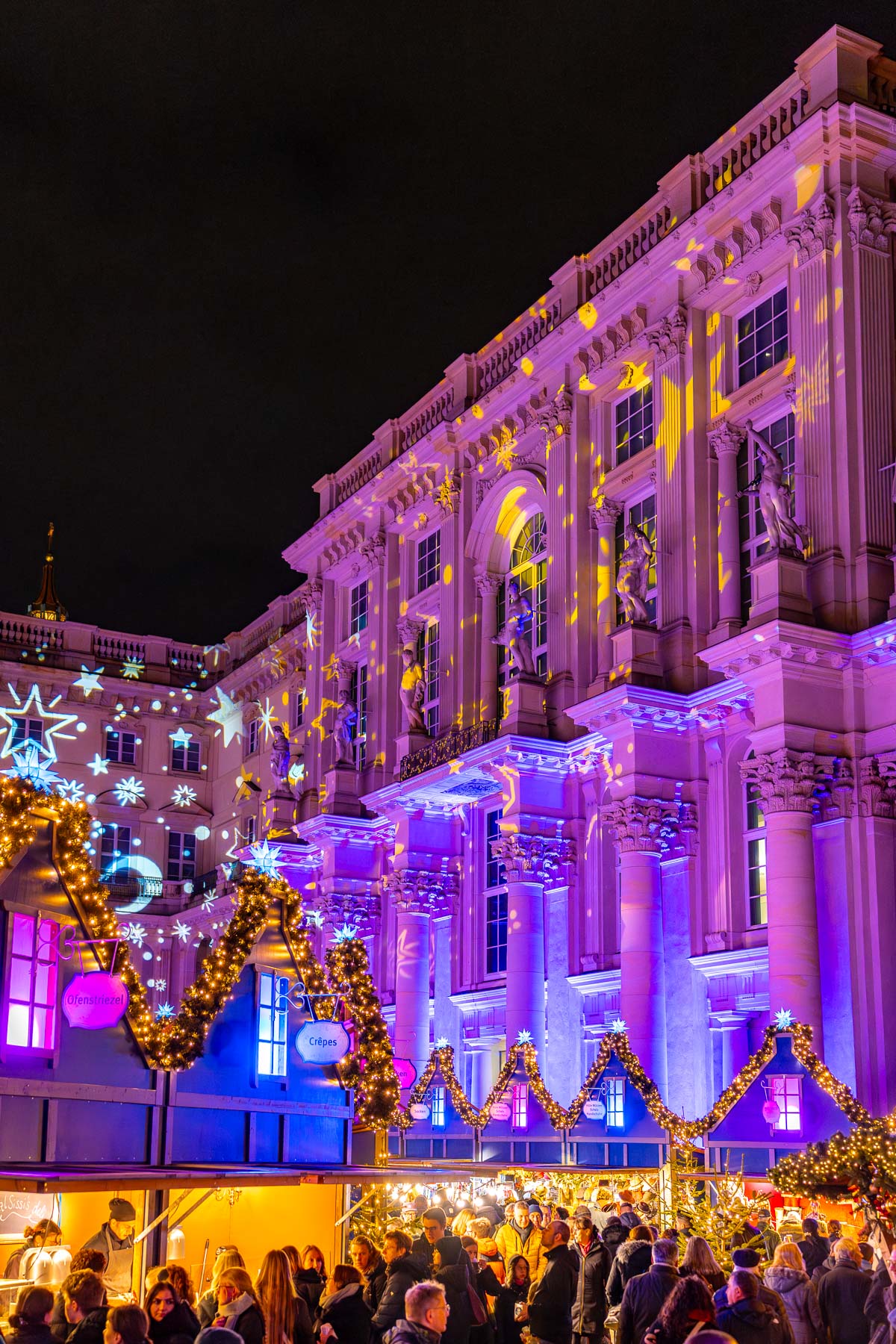
Berlin has an overwhelming number of Christmas markets, so the key here is not trying to see everything. With well over 80 markets across the city, it’s much better to focus on a few standouts and group them by area.
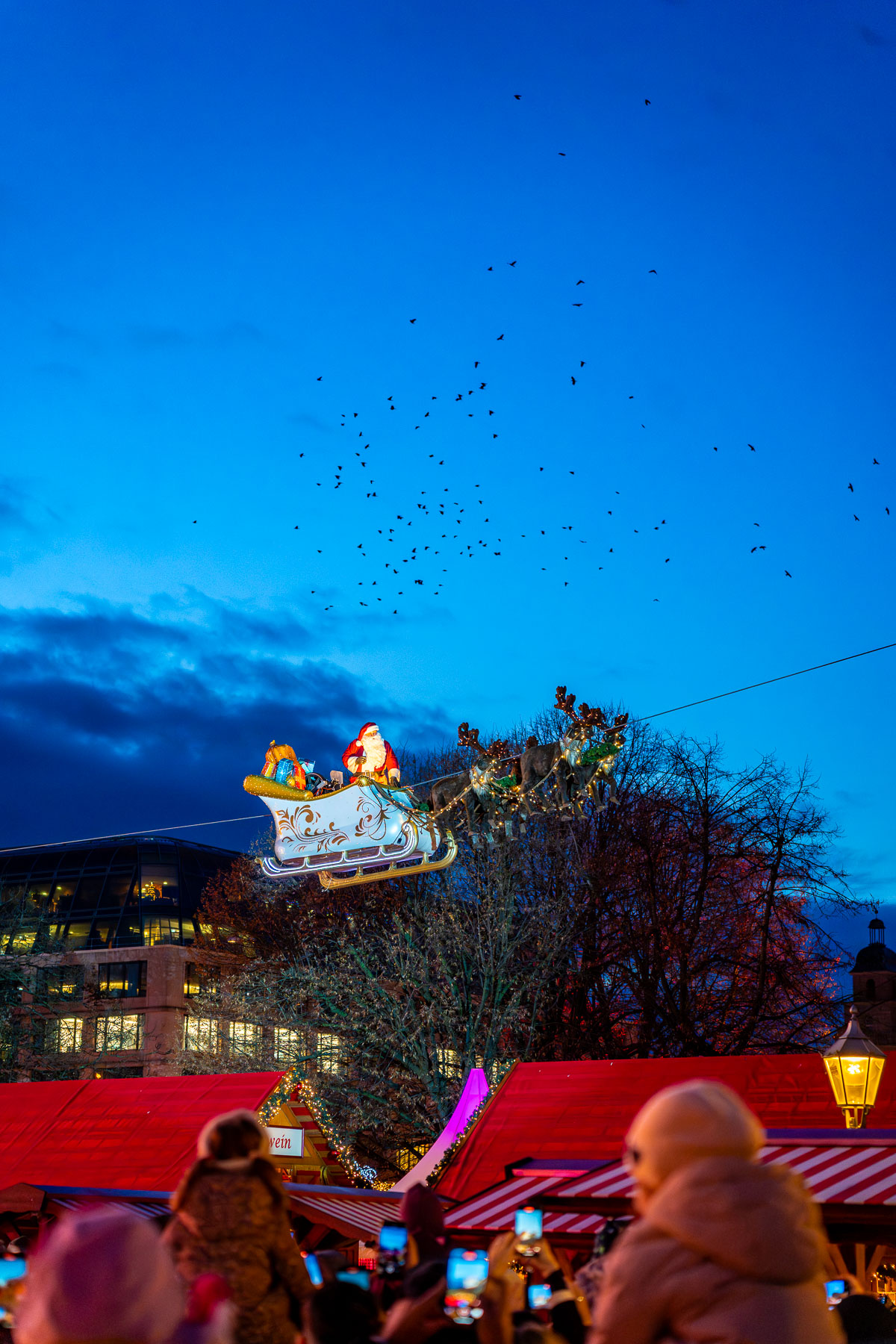
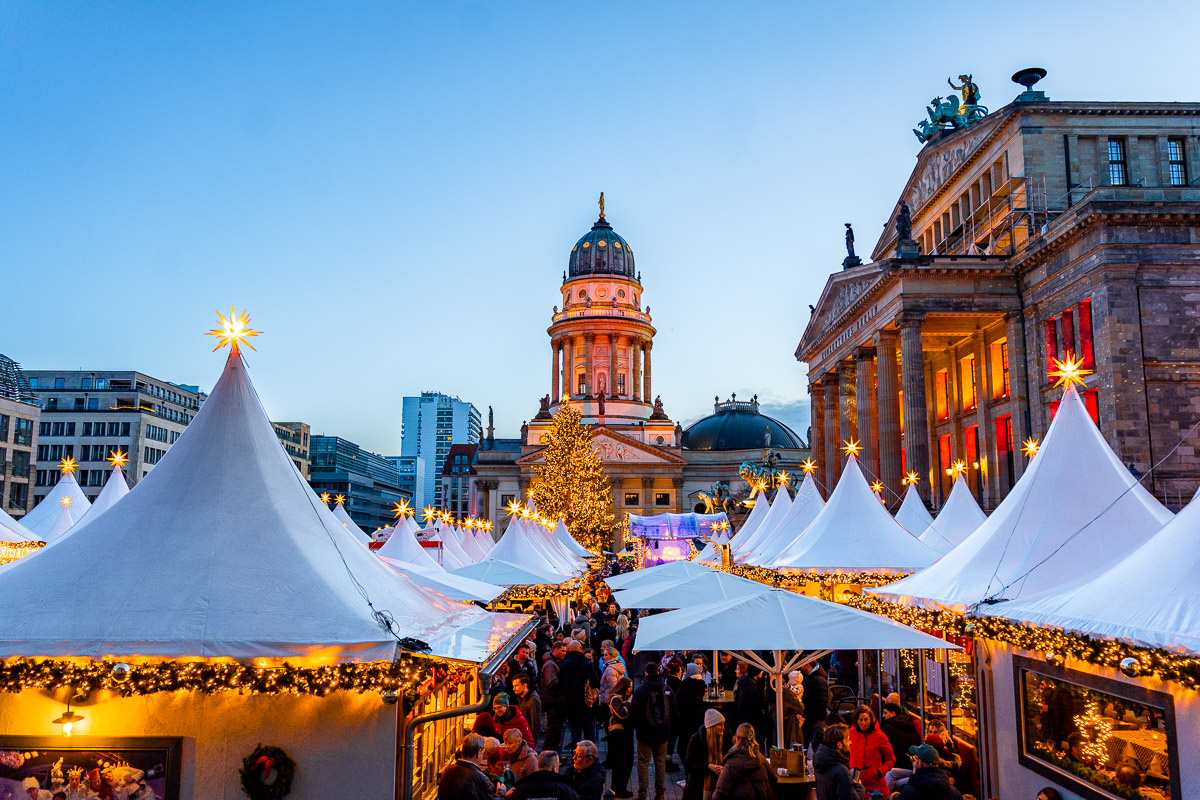
One of the most popular markets is at Gendarmenmarkt. It’s one of the prettiest settings in the city, and it was one of my favorites! Nearby, the Christmas market at Rotes Rathaus is another great stop, and it also has a Flying Santa, similar to Hamburg.
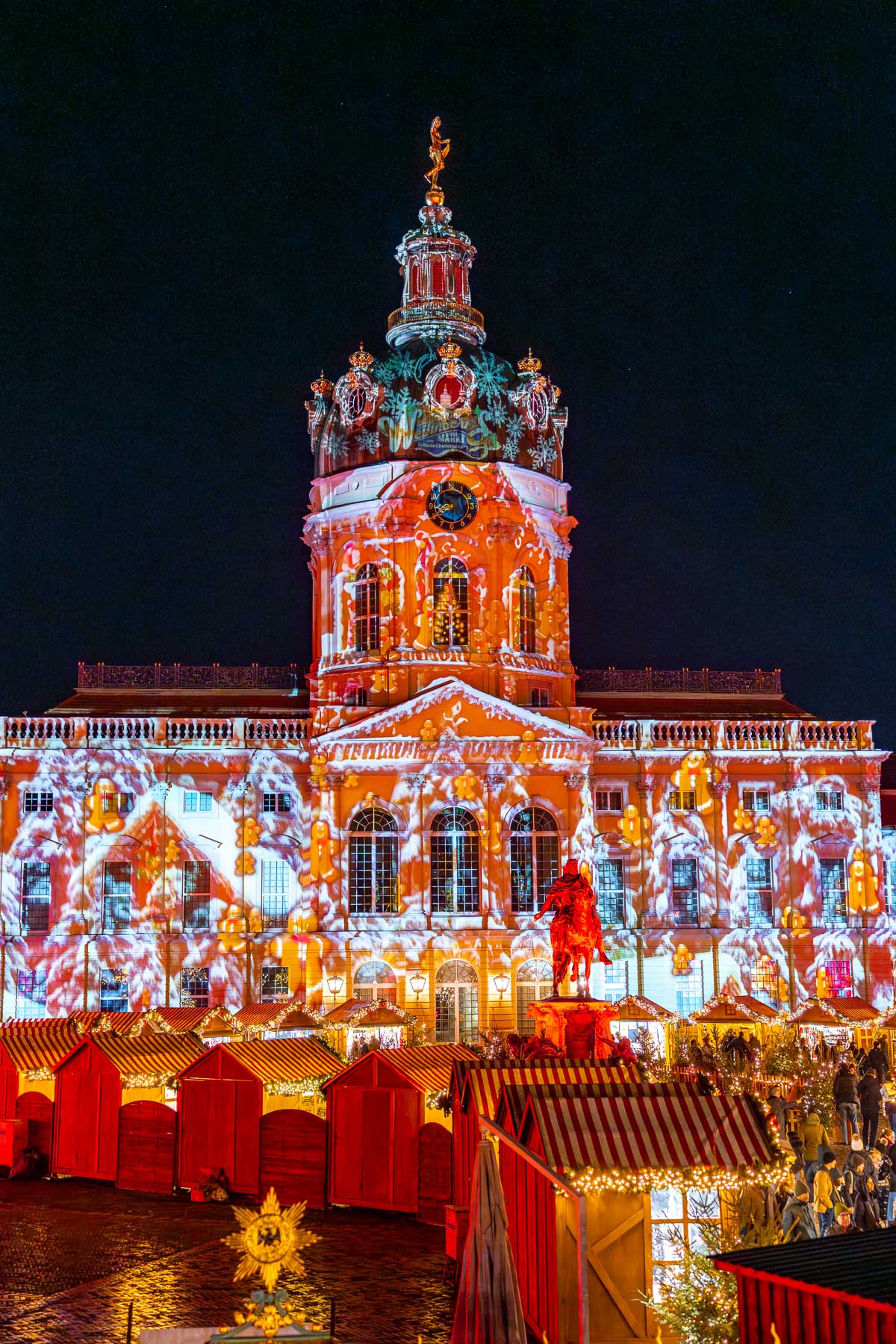
If you’re willing to move around a bit, the Christmas market at Charlottenburg Palace is absolutely worth it. The palace backdrop makes this one feel very special and different from the more central markets.
What I really loved about Berlin was the variety. Some markets feel traditional, others more modern or local, and no two really feel the same.
Berlin is spread out, so planning your days by area makes a big difference. Pick a few markets you really want to see, group them together, and leave room to just wander when you find something unexpected.
Related Post
Berlin Christmas Markets: The Ultimate Guide for Visiting
Want to learn more? Check out my guide to Berlin’s Christmas markets, including the best markets and tips for visiting.
Day 13–14: Dresden
Dresden is the final stop on this Germany Christmas market itinerary and a really strong one to end with! The city is known for having some of the oldest and most traditional Christmas markets in Germany, and the atmosphere here feels very different from the larger cities earlier in the trip.
How to get to Dresden
The train ride from Berlin to Dresden takes about 1.5-2 hours, and connections run frequently throughout the day. It’s a very easy transfer and one of the simplest travel days on the itinerary.
All trains on this route are operated by Deutsche Bahn, so there’s no need to compare different operators here. Leaving Berlin in the morning works well, as it gives you enough time to arrive in Dresden and still enjoy the Christmas markets later that day.
Where to stay in Dresden
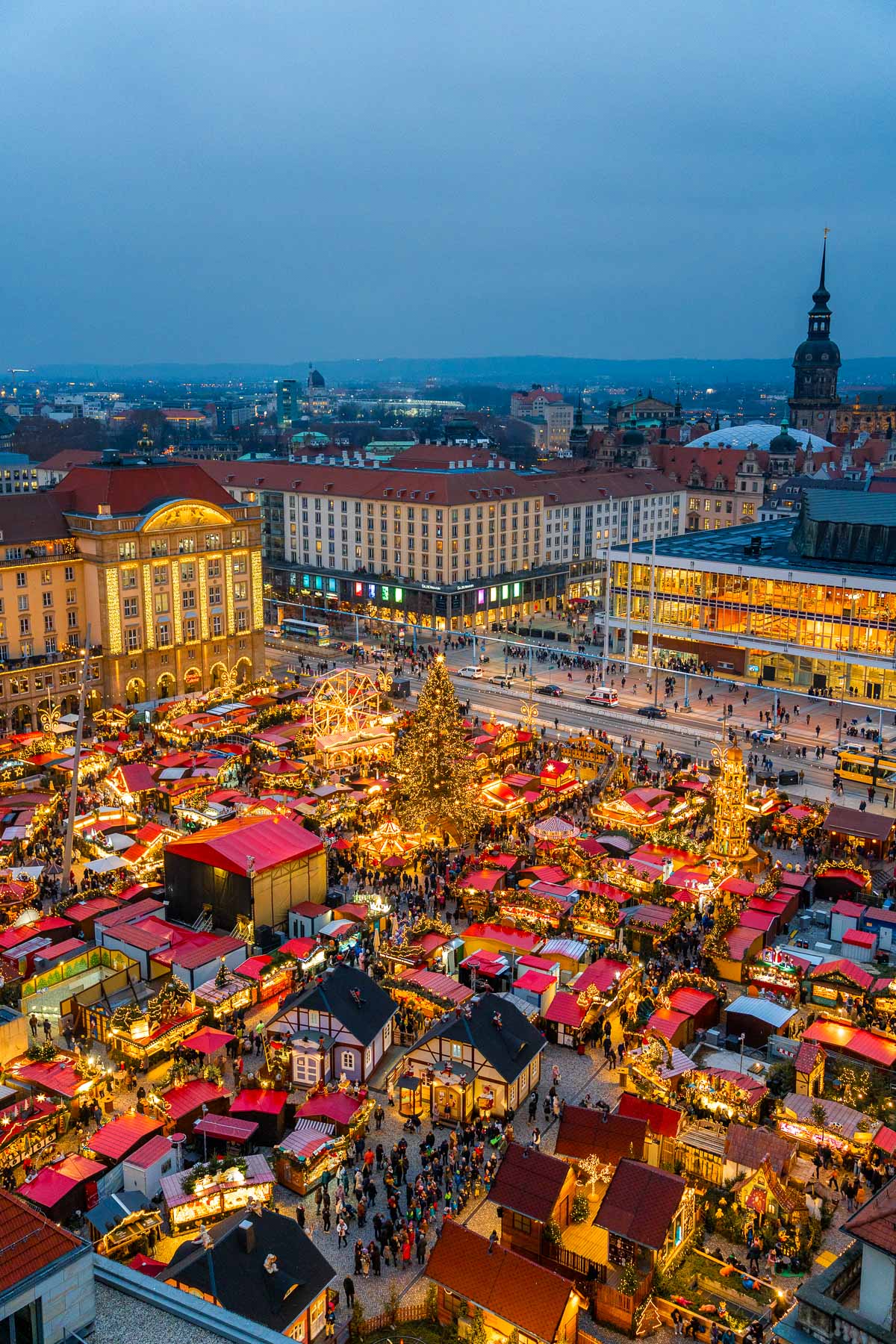
Dresden is one of the easiest cities on this itinerary when it comes to accommodation, simply because everything revolves around the Altmarkt area. If you stay here, you’ll be right in the middle of the Christmas markets and won’t need public transport at all in the evenings.
Star G Hotel Premium Dresden Altmarkt and NH Collection Dresden Altmarkt have excellent locations, and they both have a view of the Striezelmarkt right from the rooms.
For a more luxurious stay, Hotel Taschenbergpalais Kempinski is the top option in the city. It’s elegant, well located, and still close enough to walk to all the main Christmas markets without effort.
What to do in Dresden at Christmas
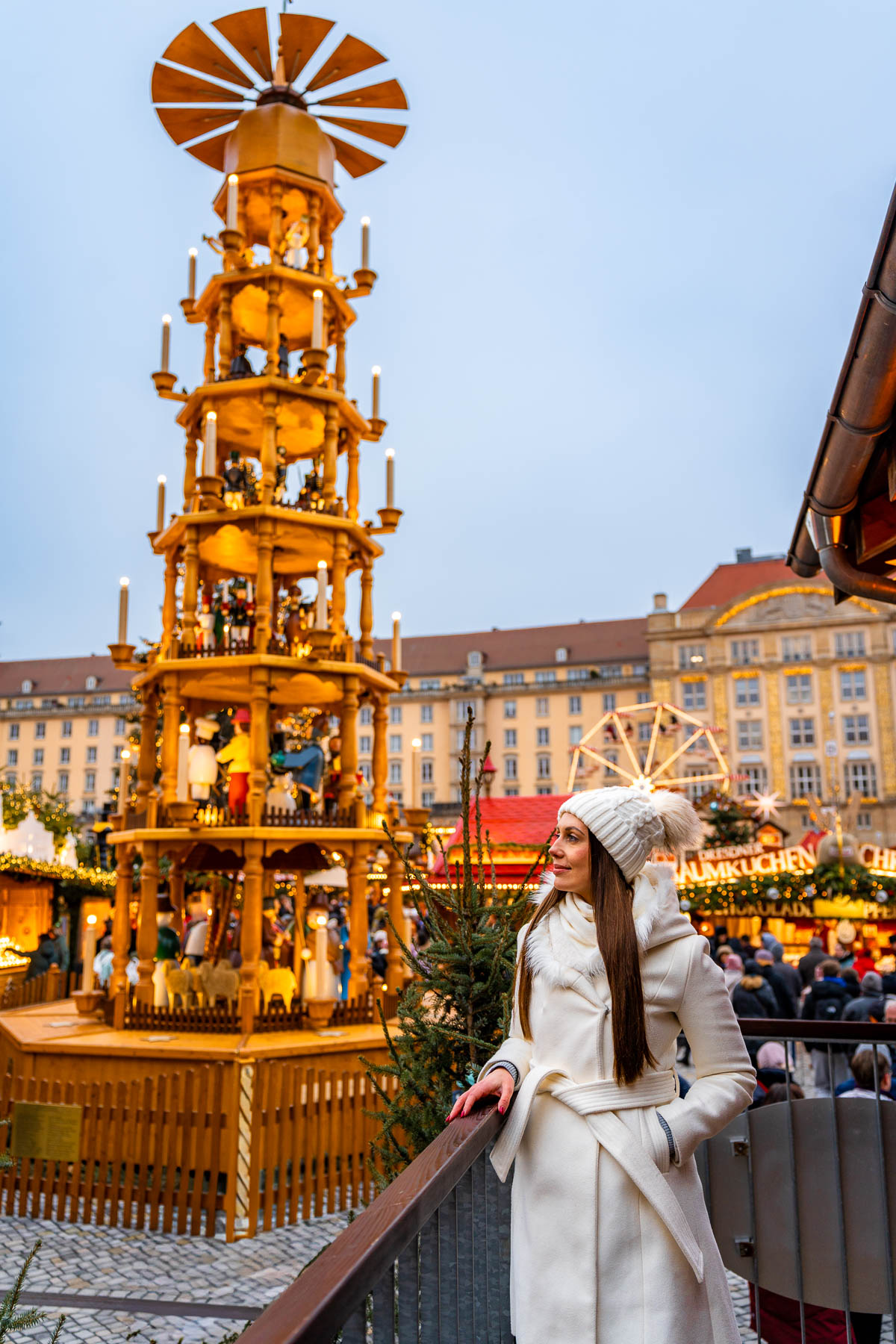
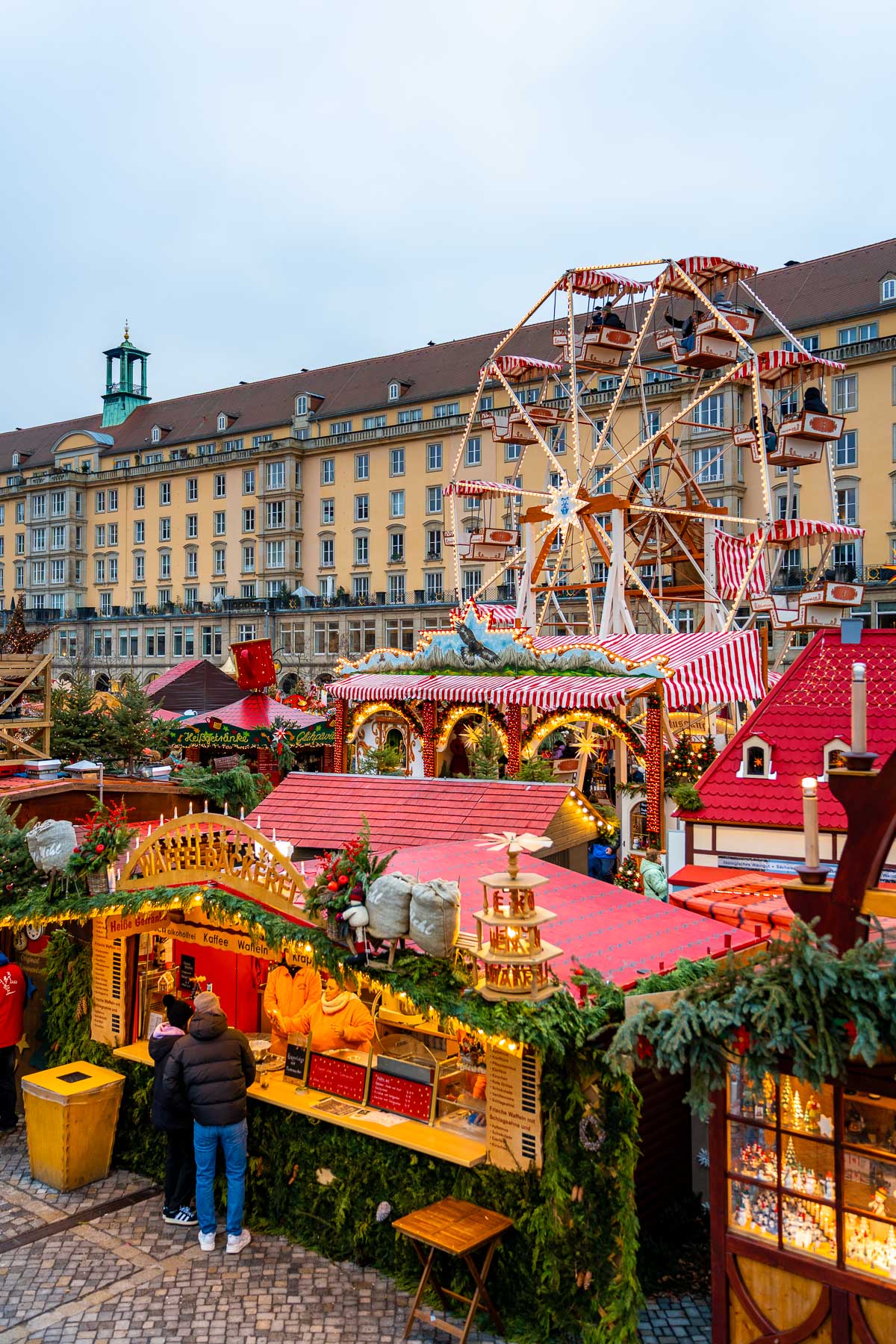
Dresden is all about tradition, and that’s exactly what makes it such a strong final stop. The Striezelmarkt on Altmarkt is the main highlight and one of the oldest Christmas markets in Germany.
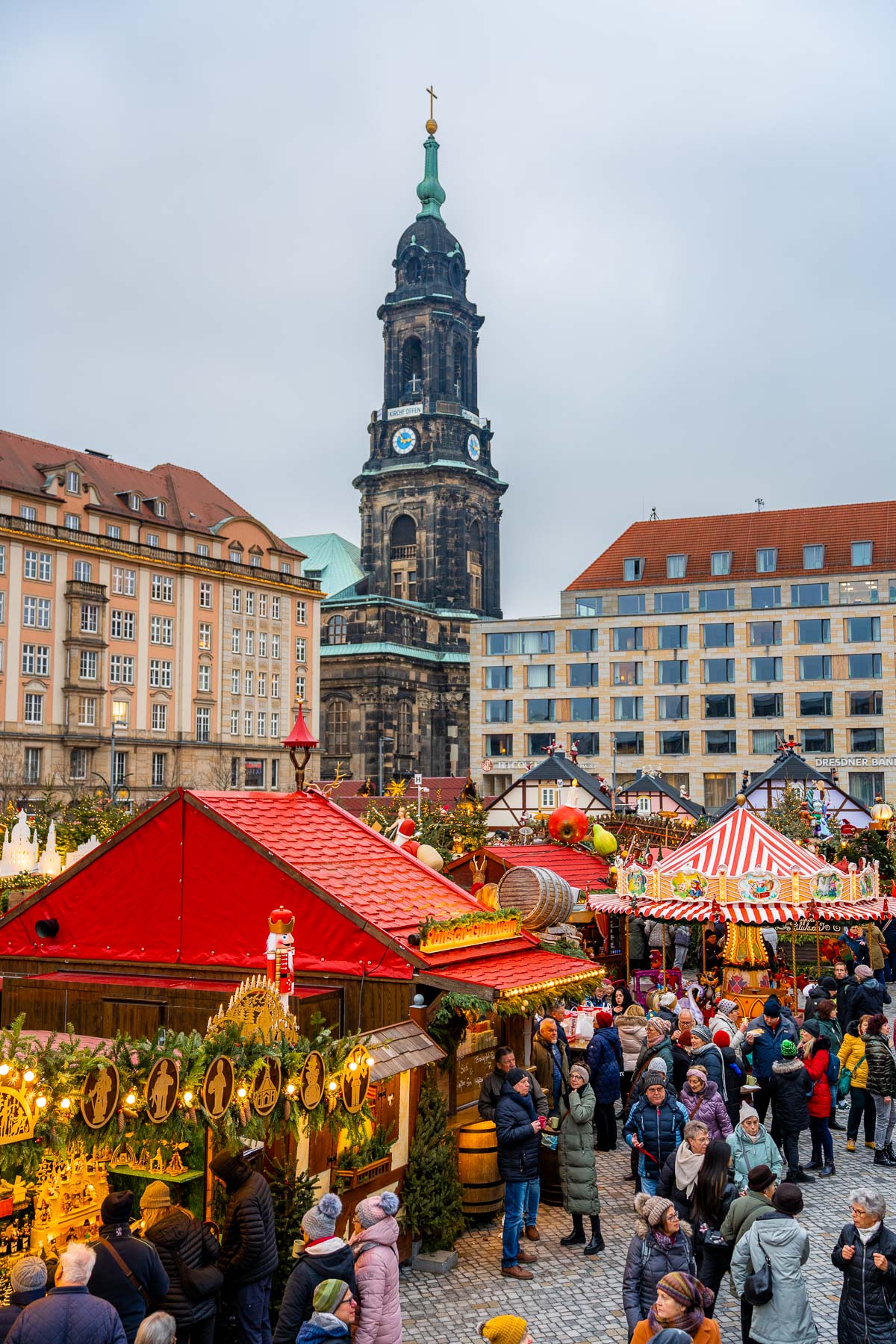
The stall decorations here are top notch, with a lot of attention to detail, and it really feels like no effort was spared when it comes to creating a festive setting. It was hands down one of my favorite markets in all of Germany!
For the best views of the Striezelmarkt, head up to Kreuzkirche, which offers an insanely beautiful view over the market.
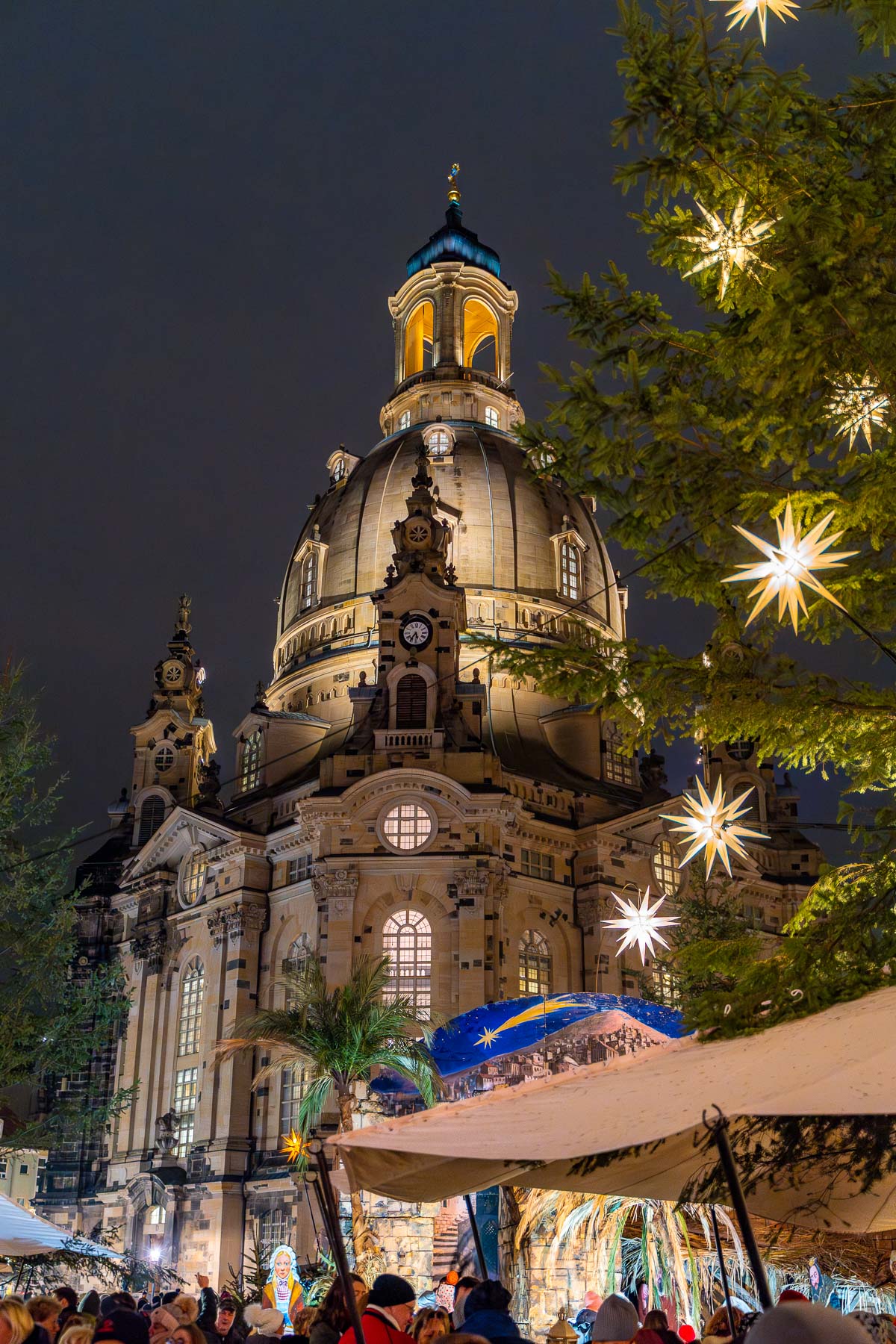
Just a short walk away, the Christmas market around the Frauenkirche is another must visit. The backdrop of the church makes this one especially beautiful, particularly after dark. For something completely different, the Stallhof Medieval Christmas Market is also worth checking out.
Beyond the markets, Dresden has a few standout sights that are easy to combine with a Christmas market visit. The Zwinger Palace is worth seeing even if you’re short on time, and Dresdner Molkerei Gebrüder Pfund is a unique stop if you want to see one of the most beautiful dairies in the world.

Related Post
Ultimate Guide to the Best Dresden Christmas Markets
Discover Dresden’s best Christmas markets, including the famous Striezelmarkt and other festive highlights around the city.