
The Perfect 3 Day Rome Itinerary for First-Timers
Planning your first trip to Rome and not sure how to plan your days? This 3 day Rome itinerary is meant to help you put everything together without getting overwhelmed.
Rome is packed with history, food spots, famous landmarks, and viewpoints, and it’s easy to feel like there’s too much to see. While it’s possible to see the main highlights of Rome in a day, spending three days in Rome gives you more breathing room to explore a bit deeper and enjoy the city beyond just the must-sees.
Below, you’ll find the itinerary broken down day by day with a clear flow, realistic timing, and walkable routes so you can actually enjoy your time in the city.
Disclosure: This post contains a few affiliate links, which means I may receive a small commission, at no cost to you, if you make a purchase through my link.
Quick Travel Planning Tips for Rome
🏨 Where to Stay: I recommend staying in Rome’s historic center, Trastevere, or Monti, for easy sightseeing and a great local atmosphere. Check availability at H10 Palazzo Galla or Hotel Damaso for an affordable, central stay with great views over the city.
⭐ Best Tours: Join a street food tour to try local favorites around the city, or book a pasta and tiramisu cooking class with wine for a hands-on experience.
🏛️ Tickets to Book in Advance: Book skip-the-line tickets for the Colosseum and the Vatican Museums, and reserve entry to the Borghese Gallery in advance, as all three can sell out.
🎟 Save Money on Tickets: If you plan to visit lots of attractions, the Omnia Vatican and Rome Pass can help you save money with bundled entry and public transport.
✈️ Airport Transfers: If you don’t want to deal with public transport after landing, you can arrange a private airport transfer straight to your hotel.
📱 Stay Connected: Use an eSIM from Airalo to stay online in Rome for maps, transport, and bookings without swapping SIM cards.
No time to read now?
Pin it for later!
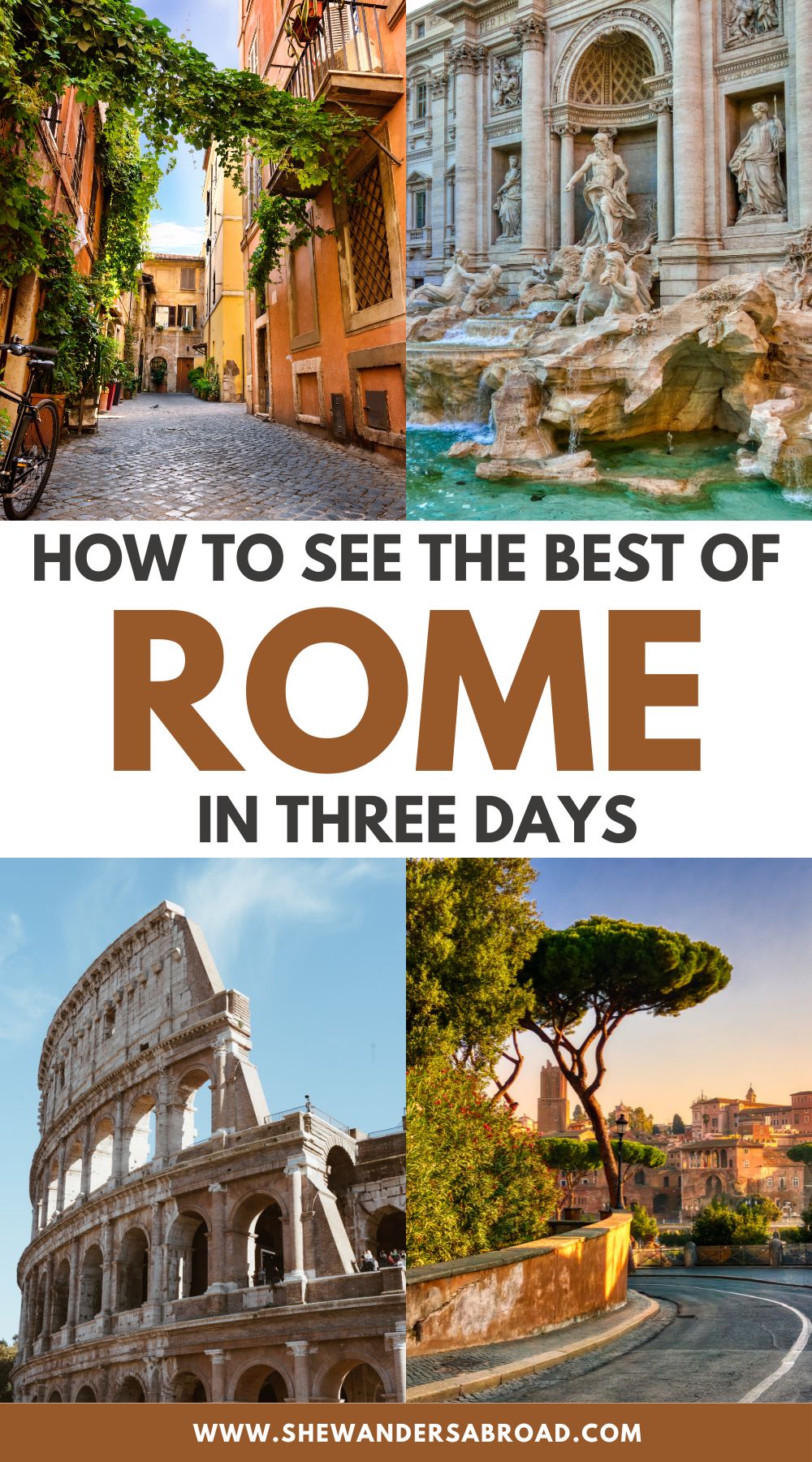
Overview of Your 3 Day Rome Itinerary
Breakdown of your 3 days in Rome
- Day 1: Colosseum, Arch of Constantine, Forum Romanum & Palatine Hill, Piazza Venezia, Altare della Patria, Campidoglio, Giardino degli Aranci
- Day 2: Trevi Fountain, Spanish Steps, Terrazza del Pincio, Borghese Gallery & Villa Borghese, Piazza del Popolo, Pantheon, Piazza Navona, Food tour
- Day 3: Vatican Museums, St. Peter’s Basilica, Castel Sant’ Angelo, Belvedere di Gianicolo, Trastevere
Map for your 3 day Rome itinerary
Below you’ll find a custom map with all the stops included in this 3 day Rome itinerary.
Each day is marked in a different color, so it’s easy to see how the route flows. Day 1 is marked in red, Day 2 in blue, and Day 3 in green, making it simple to follow what you’ll be visiting each day.
How to use this map: This map is fully interactive, so you can move around, zoom in/zoom out, and click on the icons. If you want to see a larger map, click on the bracket in the upper right corner. To see more details and the different layers, click on the tab in the upper left corner. If you want to save it for later, click on the star icon next to the name of the map. Then simply open Google Maps either on your desktop or phone, go to ‘Saved’/’Maps’, and open the map whenever you need it.
Day 1
Colosseum
Start your 3 day Rome itinerary at the Colosseum, the city’s most famous landmark.
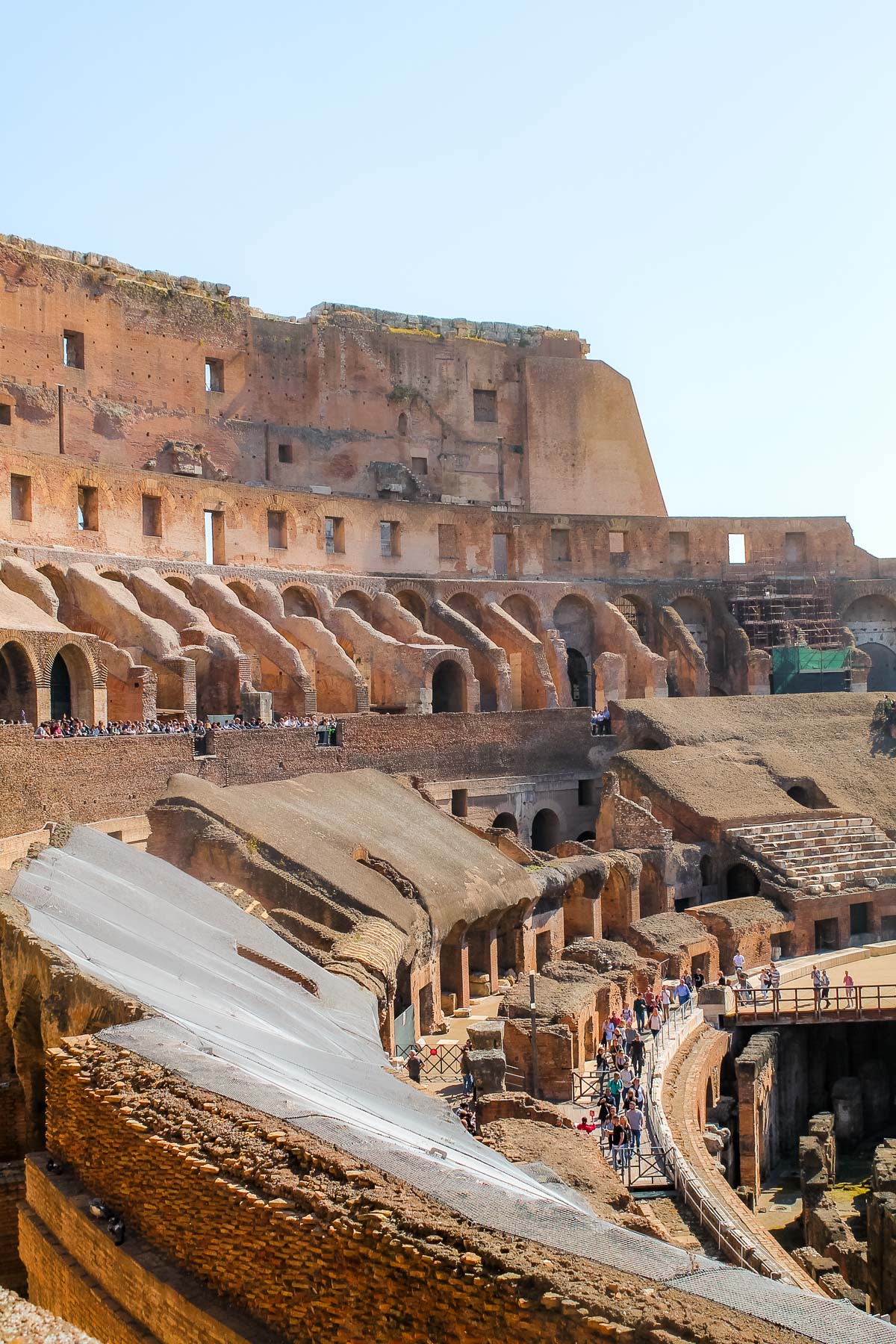
Built between 72 and 80 AD, the Colosseum once hosted gladiator fights and large public spectacles, with space for up to 50,000 spectators. Even today, it’s hard not to be impressed when you see it up close for the first time!
The Colosseum opens daily at 8:30 am, and getting here early is absolutely key. This is one of the busiest attractions in Rome, and lines can get insanely long as the morning goes on. If you can, aim to arrive at least 20 to 30 minutes before opening time.
It’s also one of the best photography spots in Rome, so if you want to take some great photos with fewer people around, arriving before opening makes a huge difference.
Because the Colosseum is so popular, I highly recommend booking your tickets in advance, especially in the peak season. A standard ticket includes access to the Colosseum, Roman Forum, and Palatine Hill, which makes it easy to continue straight on with your day.
If you want more context and don’t feel like navigating everything on your own, a guided tour with skip-the-line access can save time and add a lot of insight. There’s also the option to visit the underground and arena floor, but this requires a special ticket or tour.


Arch of Constantine
The Arch of Constantine sits right next to the Colosseum, so it’s an easy stop right after your visit. It’s free to see and only takes a few minutes to walk around and admire up close.
Built in AD 312, the arch commemorates Constantine the Great’s victory at the Battle of Milvian Bridge. It’s the largest surviving Roman triumphal arch, and the carvings and reliefs are worth a closer look, especially around the three main arches.
If you’re doing a Colosseum and Roman Forum tour, you can quickly swing by the arch either before your meeting time or once the tour ends, since you’ll already be in the area.

Forum Romanum & Palatine Hill
After the Colosseum, continue on to the Roman Forum and Palatine Hill using the same ticket. These two sites sit right next to each other and are best explored together.
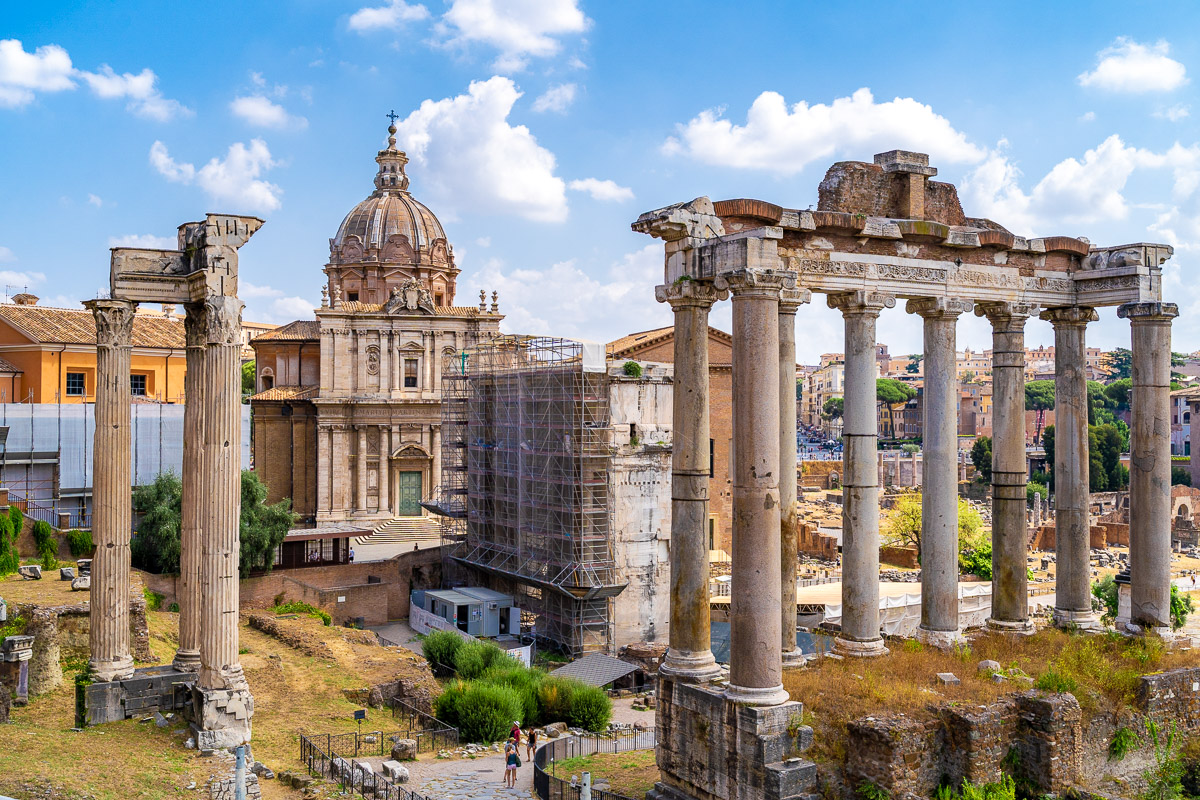
The Roman Forum was once the heart of daily life in Ancient Rome. This is where political meetings, religious ceremonies, public speeches, and celebrations all took place.
As you walk through the ruins, you’ll pass former temples, government buildings, and wide paths that were once packed with people going about their day.
Rising just behind the forum, Palatine Hill is one of the oldest parts of Rome and one of the Seven Hills of the city. According to legend, this is where Romulus and Remus were raised, and it later became home to emperors and wealthy Roman families.
Even if history isn’t usually your thing, Palatine Hill is still worth the climb. The views from the top stretch over the Roman Forum, the Colosseum, Circus Maximus, and several of Rome’s historic hills, making it one of the best viewpoints of the day.
If you’ve booked a guided tour, both the Roman Forum and Palatine Hill are included, so all you need to do is follow along and take it all in.
Piazza Venezia & Altare della Patria
Piazza Venezia is one of the busiest and most chaotic spots in Rome, but you’ll likely pass through it anyway as you move on from the Colosseum area. Several major roads meet here, and the square opens up to one of the most recognizable landmarks in the city.
Right in the middle of the piazza stands the Altare della Patria, also known by its nicknames “the Wedding Cake” or “the Typewriter.” The monument was built in honor of Italy’s first king and those who served the country, and it’s hard to miss thanks to its sheer size and bright white stone.
You can walk up the main staircase for free after a quick security check and enjoy a nice view over the city.
If you want to go higher, there’s also an elevator that takes you to the top observation deck for a full 360-degree view. There’s an extra fee for this, but I can absolutely recommend going up because the views are just fantastic from above!


Campidoglio
From Piazza Venezia, it’s only a short walk to Campidoglio, which sits on Capitoline Hill, one of Rome’s Seven Hills.
You can walk a couple of minutes from the Altare della Patria to the Cordonata Capitolina, a beautiful staircase that leads you to Campidoglio. The staircase is lined with majestic statues and, along with the square itself, was designed by Michelangelo.
Campidoglio is also home to the Capitoline Museums, which house classical sculptures and Renaissance artworks. I haven’t included a museum visit here in this 3 days in Rome itinerary, as Day 1 is already quite full, but it’s something you could add if art museums are high on your list.
What I do recommend, however, is to walk around to the back of the square. From here, you get a fantastic view over the Roman Forum, and it’s one of the easiest viewpoints to add without any extra effort.

Campidoglio 
Punto Panoramico del Foro Romano
Giardino degli Aranci
Wrap up the first day of your 3 day Rome itinerary at Giardino degli Aranci, a small park on Aventine Hill that’s perfect for slowing things down. The gardens are lined with orange trees and paths that lead to a viewpoint overlooking the city.
From Campidoglio, it’s about a 15–20 minute walk to reach the gardens. Along the way, you’ll pass the Mouth of Truth, which is easy to see from the outside even if you don’t stop.
The attraction itself closes before 6 pm, so you may not have time to go inside anyway, but it’s still worth a quick look as you pass by.
It’s a bit of an uphill walk to reach the gardens, but nothing too intense, and the views at the top make it worth the effort.


If you’re already in the park, it’s worth taking a short walk to the Aventine Keyhole. To be honest, I didn’t really know what to expect the first time, and I kind of panicked when Google Maps led me to what looked like a dead-end street.
Then I realized that what I was looking for was literally a keyhole on a large green door! When you look through it, you get a perfectly framed view of St. Peter’s Basilica in the distance. I really wished I could have gone inside the gardens behind the door, but they’re closed to the public.

This is the door you’re looking for 
View through the keyhole
Dinner
For your first dinner in Rome, I recommend staying in Centro Storico, especially if you’re already tired after a long sightseeing day. It’s an easy area to reach, full of atmosphere in the evening, and works well no matter where you’re staying.
Restaurants here do lean more touristy, but there are still some really solid spots if you know where to go. My personal favorite is Cantina e Cucina. It has a cozy, vintage feel and serves classic Roman dishes that are consistently good.
One big reason I love ending the night here is dessert. Right next door is Two Sizes, which easily has some of the best tiramisu in the city! They do the classic version as well as a few fun variations, such as pistachio, peanut butter, and strawberry.
They are so good that we legit went back for another round every day during our 3 days in Rome. No exaggeration!

Cantina e Cucina 
Two Sizes
Day 2
Trevi Fountain
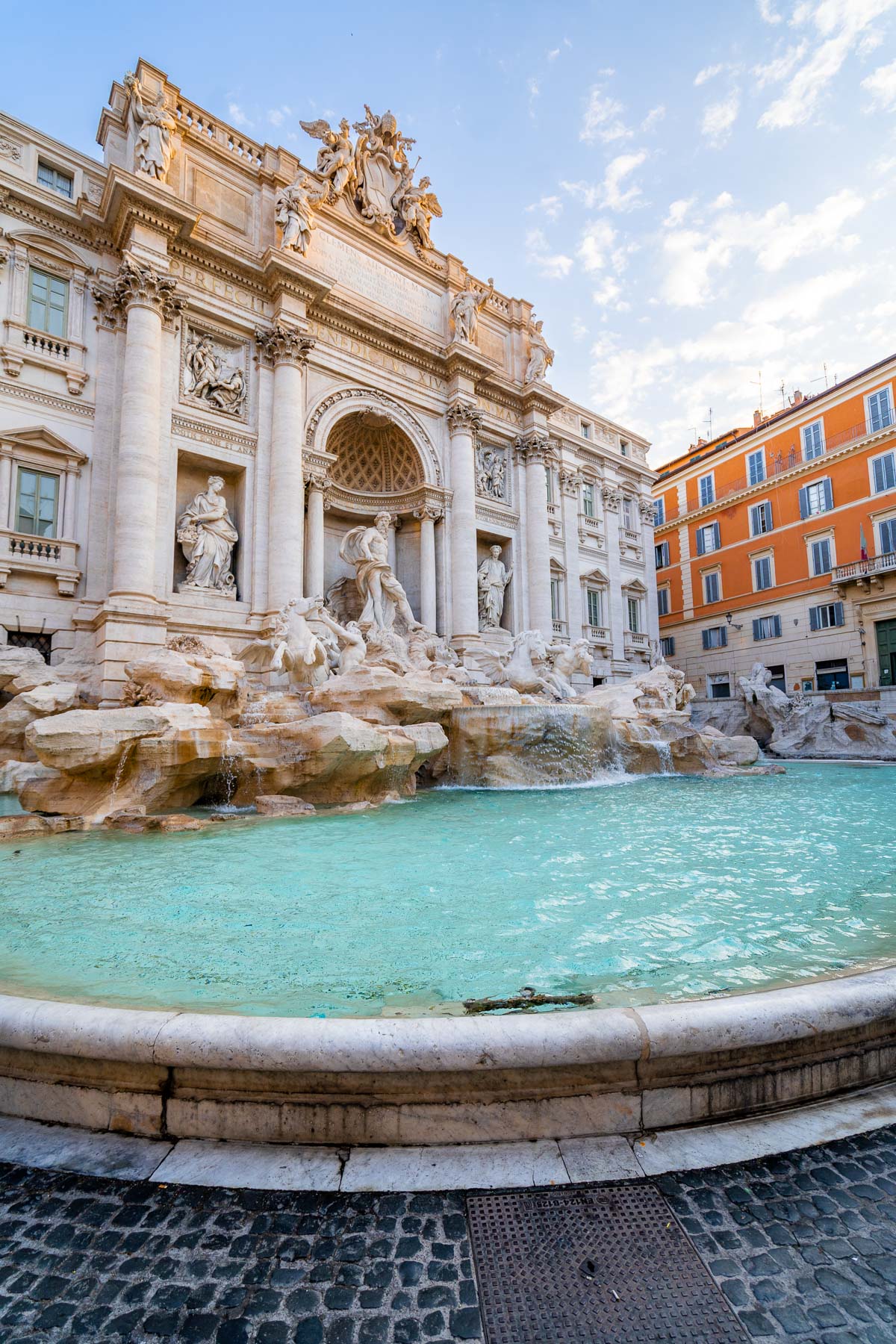
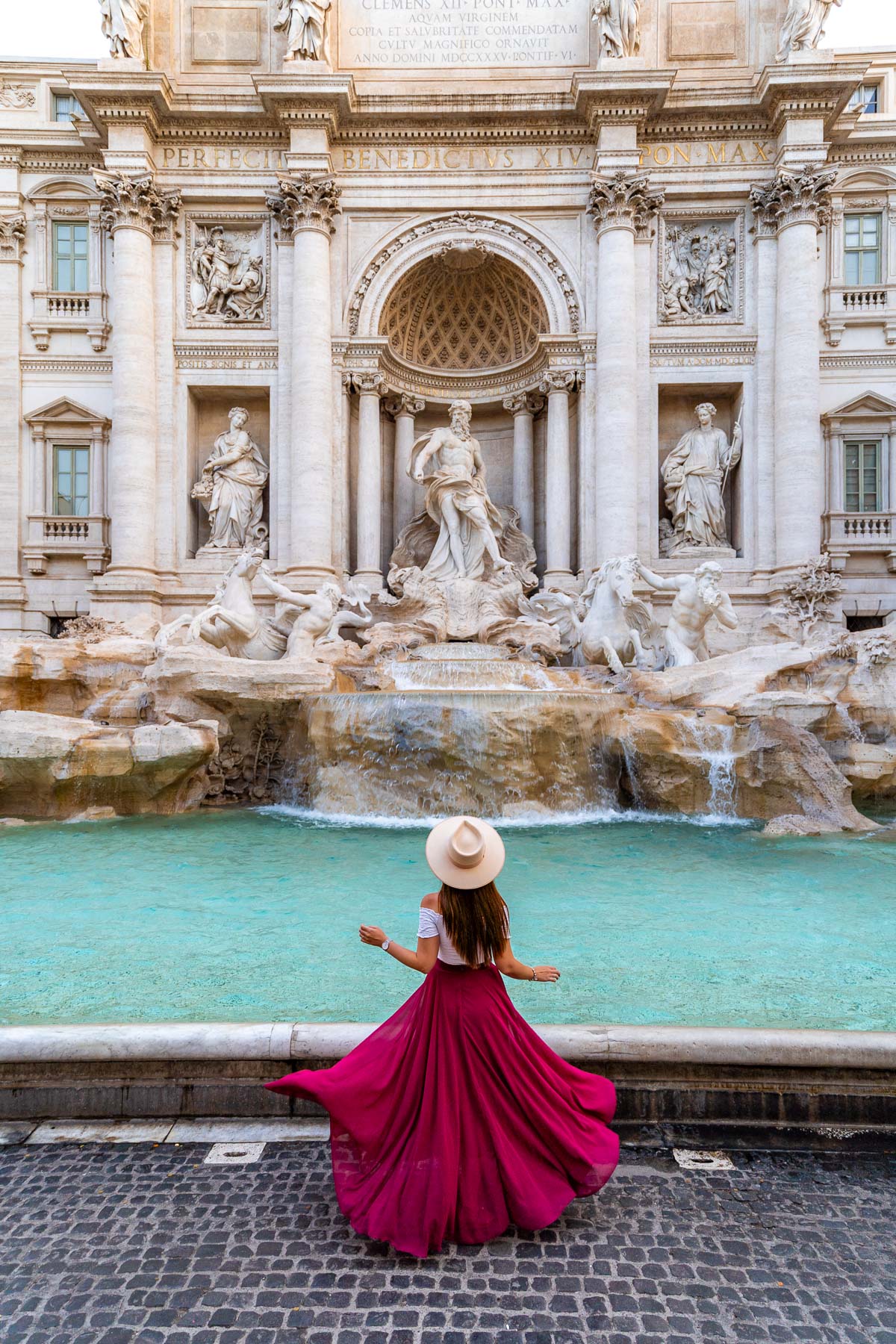
The Trevi Fountain is one of the most famous landmarks in Rome and one of the busiest spots in the historic center. It’s much larger in real life than most people expect, which is part of why it draws such big crowds.
Making a wish at the Trevi Fountain is one of the most popular things to do in Rome in 3 days. If you want to do it the traditional way, stand with your back to the fountain and toss a coin over your right shoulder using your right hand.
Even very early in the morning, the Trevi Fountain is rarely empty these days. Around 6 am, there are already plenty of people around, just far fewer than later in the morning or afternoon.
Going early won’t give you the fountain to yourself, but it does make the experience much more manageable and less chaotic!
There have also been some recent changes to how the Trevi Fountain is accessed. The outer viewing area around the fountain, where people used to sit on the railings and steps, is now separated by barriers. This area is still accessible, but from February, there will be a small entry fee if you want to step inside and get closer to the fountain.
If you don’t feel like paying, you can still view the Trevi Fountain for free from outside the perimeter. You’ll still have a clear view of the fountain, and it’s enough for photos, just without being right up at the edge.

Related Post
Spanish Steps
From the Trevi Fountain, it’s about a 10-minute walk to the Spanish Steps. The staircase connects Piazza di Spagna with the Trinità dei Monti church at the top and has become one of the most recognizable spots in Rome.
The steps are best appreciated as a quick stop rather than somewhere to linger. It’s no longer allowed to sit on them, and fines can be issued if you do, so this is really a walk-up, take a few photos, and move on kind of place.
If you’re here earlier in the morning, it’s a lot easier to enjoy and far less chaotic than later in the day, when this area gets extremely busy.

💌 SAVE THIS POST
Terrazza del Pincio
Terrazza del Pincio is an elevated viewpoint right by the entrance to Villa Borghese, which makes it an easy stop before heading into the park. From here, you get a great view over Piazza del Popolo, with St. Peter’s Basilica visible in the distance on a clear day.
I recommend heading here before exploring the park, before the terrace gets busy. That said, it’s also one of the best sunset viewpoints in Rome, so if you happen to be nearby in the evening, it’s worth coming back.
From the Spanish Steps, it’s about a 10-minute walk to reach the terrace. You can either head down toward Piazza del Popolo and approach it from below, or walk up to Trinità dei Monti and take the upper path, which leads you straight to Terrazza del Pincio.


Borghese Gallery & Villa Borghese
Villa Borghese sits right behind Terrazza del Pincio, so once you’re done with the viewpoint, you can head straight into the park. It’s the largest green space in central Rome and home to several museums, gardens, and walking paths.
While there’s plenty to see here, I recommend focusing on the Borghese Gallery rather than trying to cover everything. The gallery is the main highlight and the reason most people come to Villa Borghese in the first place.
The Borghese Gallery is housed in a beautiful villa and features works by artists like Bernini, Caravaggio, Raphael, and Botticelli. The collection is very well curated, and the building itself is just as impressive as what’s inside.
Tickets are limited and timed, so booking in advance is essential. Entry slots sell out quickly, especially during peak season. You can visit on your own with a standard ticket, but a guided tour is worth considering if you want more context and don’t want to rush through the rooms.


Related Post
Piazza del Popolo
Piazza del Popolo is the large square you overlooked earlier from Terrazza del Pincio, so it’s a great stop as you make your way back down into the city. It sits at what was once Rome’s northern entrance and is easy to walk through without lingering too long.
This is also a good area to stop for a late lunch before continuing into the historic center. We ate at Brillo Restaurant and were really happy with both the food and the service. It’s casual, reliable, and a nice break after a busy morning.
If Brillo is full, Babette is a solid alternative nearby and works just as well for a relaxed lunch before the afternoon sightseeing.

Pantheon
From Piazza del Popolo, it’s about a 20-minute walk to the Pantheon. I recommend walking along the Tiber for part of the way if you can, as the views are really nice and it’s a pleasant break from the busy streets.
The Pantheon is a Catholic church today, but it was originally built as a temple dedicated to all Roman gods. It’s one of the best-preserved ancient buildings in Rome, which is especially impressive given how much of the city has changed over the centuries.
Inside, the main highlight is the massive dome and its open oculus at the top, which lets in light, rain, and even the occasional breeze. It’s still the largest unsupported dome in the world and feels surprisingly modern once you’re standing underneath it!
Entry is no longer free, so you’ll need to purchase a ticket to go inside. If you want more background on what you’re seeing, a guided tour can be a good option, but even a short visit on your own is worth it just to experience the space.


Piazza Navona
If you still have some time before your food tour, swing by Piazza Navona. It’s one of Rome’s most lively squares and well worth seeing in person, even if you don’t stay long.
The square is known for its fountains, especially the Fountain of the Four Rivers in the center, and it’s a nice place to slow down a bit after a busy afternoon.
There are plenty of cafés around the square, which makes it an easy stop for a quick coffee or short break before heading to the meeting point for your food tour.

Food Tour
Taking a food tour is one of the best ways to experience Roman cuisine, especially during your first few days in the city. It’s a great way to learn interesting facts about Italian food while actually tasting it, instead of trying to decode menus on your own.
There are quite a few food tour options in Rome, and I don’t think you can go wrong with any of them (just keep an eye on the ratings). We personally chose this street food tour with a local guide, and it turned out to be an awesome choice!
The tour starts in Campo de’ Fiori, one of Rome’s liveliest squares, so it’s worth arriving a little early to have a quick look around before meeting the group.
Over the course of about two and a half hours, you’ll sample local favorites like suppli (this was one of my favorites on this tour), zucchini flower fritters, pizza, and gelato, with drinks included. It works perfectly as dinner and is a fun way to wrap up a full sightseeing day.

Day 3
Vatican Museums
This morning, you’ll head to Vatican City to visit the Vatican Museums. The museum complex is huge and packed with art, sculptures, tapestries, and historic rooms, so it’s very easy to spend your entire morning here without feeling rushed.
Walking through the museums means moving through long corridors and grand halls before eventually reaching the Sistine Chapel, where you can look up at Michelangelo’s famous frescoes.
Visiting the Vatican Museums is the only way to see the Sistine Chapel, as it’s not possible to enter it on its own.
Because the Vatican Museums are busy year-round, going early makes a big difference. Lines can get extremely long later in the morning, so booking tickets in advance is strongly recommended. A guided tour is also worth considering if you want more context while navigating such a large space.
A dress code is enforced throughout Vatican City, so make sure your shoulders and knees are covered before arriving.


St. Peter’s Basilica
After finishing your visit to the Vatican Museums, head over to St. Peter’s Basilica, which sits just next door.
If you’re visiting on your own, you’ll need to exit the museums and walk around to the Basilica entrance, and most likely stand in another line to get inside.
If you booked a guided Vatican Museums tour, some tours include direct access to the Basilica through a separate passageway, which can save time. This depends on the tour and the day, so it’s not guaranteed, but it’s a nice bonus when it works out.
St. Peter’s Basilica is the largest church in the world, and even if churches aren’t usually high on your list, this one is hard to skip. The scale alone is impressive, and the interior is filled with Renaissance and Baroque artwork, including Michelangelo’s dome towering above the space.
Entry to the basilica itself is free, but there is a fee if you want to climb to the top of the dome. You can either walk all the way up or take the elevator part of the way and climb the remaining steps.
It’s a bit of a workout, but the view from the top is one of the best in Rome and absolutely worth the effort if you have the energy!
If you want more context during your visit, you can also join a guided tour of St. Peter’s Basilica, which includes visiting the underground grottoes and climbing the dome, too.
As with the rest of Vatican City, a dress code applies here, so make sure your shoulders and knees are covered before entering.


Castel Sant’ Angelo
From St. Peter’s Basilica, it’s an easy walk along the river to Castel Sant’Angelo. You’ve probably already spotted the massive round fortress from a distance, but it’s worth seeing up close as you cross the bridge.
Originally built as Emperor Hadrian’s mausoleum, Castel Sant’Angelo has had many lives over the centuries. It’s been used as a fortress, a papal residence, a prison, and even an execution site, which already makes it pretty fascinating before you step inside.
You can walk around the exterior and enjoy the views without a ticket, but there’s an entry fee if you want to go inside and visit the museum. The castle has seven floors of exhibits, so you can easily spend about an hour here.
To be completely honest with you, the museum itself was not particularly interesting (at least to me it wasn’t). What makes Castel Sant’Angelo really worth it are the views from the top!
From the terrace, you get fantastic views over Vatican City, the River Tiber, and the rooftops of Rome, which makes the visit worthwhile even if you’re not that into museums.
You can book your tickets online in advance, or opt for a guided tour for more info.

Belvedere di Gianicolo
Belvedere di Gianicolo is one of the best viewpoints in Rome and a great stop in the late afternoon. From here, you get wide views over Vatican City, the historic center, and several of Rome’s neighborhoods, all from a slightly different angle than the viewpoints earlier in the trip.
It’s a nice contrast to places like Terrazza del Pincio, as the city feels more spread out and less polished from up here. If you’re a fan of viewpoints, this one is absolutely worth the effort.
To save some time and energy, you can take a bus from the Paola area up to Piazzale Garibaldi and walk the last stretch. From here, it’s an easy downhill walk past Fontana dell’Acqua Paola and straight into Trastevere, which works perfectly for the evening.

Trastevere
Trastevere is one of the best neighborhoods in Rome to slow down and wander, and it’s the perfect place to end your day. The area is packed with narrow streets, colorful buildings, small squares, and plenty of spots that are great for photos.
Spend some time walking around with no real plan. You’ll pass churches, lively piazzas, and tucked-away corners that feel very different from the more polished parts of the historic center.
From Trastevere, it’s easy to walk across to Isola Tiberina via Ponte Cestio. The small island sits in the middle of the Tiber and offers a different perspective of the river and both riverbanks. It’s a quick detour and easy to fit in if you still have some energy.
Trastevere is also full of excellent restaurants, from casual trattorias to more modern spots, which makes it an ideal area for dinner. After a long day of sightseeing, this is a great place to sit down, relax, and enjoy your final evening in Rome!