

10 Most Beautiful Lakes in the Dolomites You Can’t Miss
Planning a trip to the Dolomites and wondering which lakes are actually worth adding to your route? After visiting the region multiple times, I can safely say the lakes here are just as impressive as the mountains themselves.
From famous turquoise icons to quieter alpine lakes tucked away in the valleys, this list covers the most beautiful lakes in the Dolomites you really shouldn’t miss. These are the stops that are worth the detour, the early alarm, and the extra time in on your Dolomites itinerary.
Disclosure: This post contains a few affiliate links, which means I may receive a small commission, at no cost to you, if you make a purchase through my link.
Quick Travel Planning Tips for the Dolomites
🏨 Where to Stay: Ortisei and Cortina d’Ampezzo are two of the best bases in the Dolomites. Hotel Angelo Engel is a great option in Ortisei, while Hotel Aquila is centrally located in Cortina.
⛰️ Best Time to Visit: June to September is best for hiking and mountain scenery, while December to March is ideal for skiing in the Dolomites.
✈️ Where to Fly To: The closest major airports are Venice and Milan. Venice is the easiest option for Cortina and the eastern Dolomites, while Milan works better if you’re heading toward Val Gardena.
🚗 Getting Around: Renting a car is the easiest way to explore the Dolomites and reach trailheads and mountain passes. Use Discover Cars to compare rental options, especially if you’re visiting multiple areas.
🚌 Best Day Trips: If you don’t want to drive, join an organized Dolomites day trip from Venice that includes Cortina and Lake Braies, or a full day Dolomites tour starting from Lake Garda.
📱 Stay Connected: Use an eSIM from Airalo to stay online in the Dolomites for maps, navigation, and bookings without swapping SIM cards.
No time to read now?
Pin it for later!
Most Beautiful Lakes in the Dolomites
1. Lago di Braies
Lago di Braies is hands down one of the most popular places to visit in the Dolomites. It’s also the largest and one of the bluest bodies of water you’ll ever see! Located at an altitude of 1,496 meters, this lake sits within the Parco Naturale di Fanes-Sennes-Braies in the South Tyrol province.
The turquoise water is framed by dramatic limestone mountains and dense spruce forests. You can walk the flat, easy 4 km loop around the lake in about 1 to 2 hours, making it accessible for almost everyone.
If you’re brave enough, you can even take a dip in the lake, though the water stays cold even in summer. That’s true for most alpine lakes in the Dolomites!
If you visit Lago di Braies during summer (mid-June to October), you can rent a wooden rowboat from the boathouse and paddle out onto the lake. There is also a tiny lakeside chapel, which was constructed in 1904.

As one of the most beautiful lakes in the Dolomites, Lago di Braies draws in the crowds. I highly recommend arriving early if you want to enjoy it with fewer people. Sunrise is easily the best time to visit and feels especially peaceful.
The easiest way to visit Lago di Braies is by car, but it’s important to know that parking restrictions are in place during peak season. Between July and September, access by car is restricted between 9:30 am and 4 pm, and you need to reserve a parking spot in advance.
If you arrive before 9:30 am or after 4 pm, you can park without a reservation. Alternatively, you can take the 442 bus from Dobbiaco during the summer months.


2. Lago di Dobbiaco
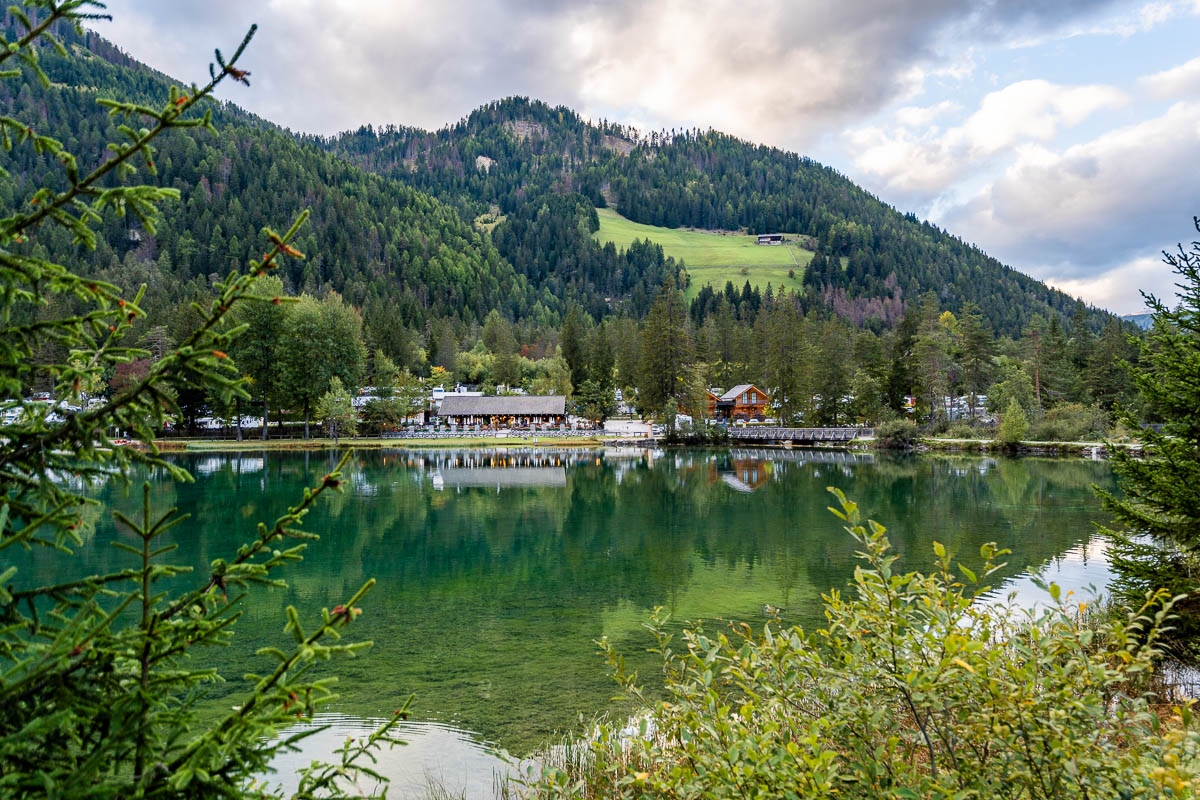
Lago di Dobbiaco is a great stop if you want something a bit quieter and more nature-focused. The lake is surrounded by wetlands and open meadows, and it feels very different from the dramatic, cliff-backed lakes you’ll see elsewhere in the Dolomites.
There’s an easy 4.5 km walking trail that loops around the lake, making it a nice option if you’re looking for a relaxed walk rather than a hike. This area is especially known for birdlife, so spring and autumn are great times to visit if you enjoy wildlife and photography.
Sunset is my favorite time to be here! You can walk part or all of the loop trail and then slow things down as the light changes and the mountains behind the lake start to glow.
Lago di Dobbiaco is located in South Tyrol, between the Tre Cime and Fanes-Sennes-Braies nature parks. You can drive right up to the lake and park nearby, though the parking area isn’t huge, so it’s worth giving yourself a bit of extra time if you’re aiming for sunset.
If you’re not driving, bus 445 from Dobbiaco also stops near the lake.
3. Lago di Carezza
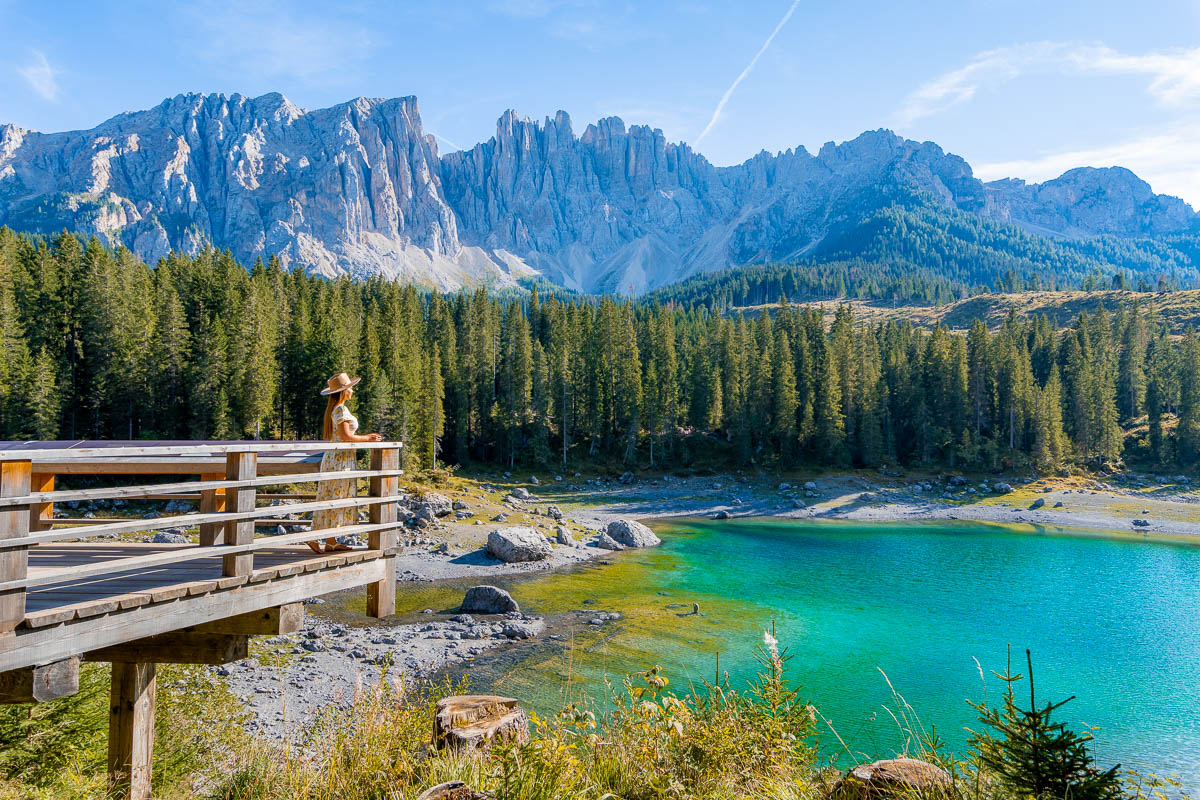
Lago di Carezza is often called the “Rainbow Lake,” and once you see it in person, the nickname makes total sense. Depending on the light, the water shifts between shades of blue and green, with hints of yellow and turquoise showing up on sunny days.
There’s a local legend behind the name, too. The story goes that a wizard once tried to win over a mermaid who lived in the lake by stretching a rainbow from the surrounding mountains.
When she saw through his plan and disappeared into the water, he shattered the rainbow and threw the pieces into the lake. Legend or not, the colors here really are something special!

Swimming isn’t allowed at Lago di Carezza due to its fragile ecosystem, but you can walk the easy loop trail around the lake in about 20 minutes. It’s a great quick stop on a Dolomites road trip itinerary to stretch your legs without committing to a longer hike.
The lake is fenced off, but the viewpoints along the path still give you great angles over the water. Look up from the lake, and you’ll see the sharp peaks of the Latemar mountain range rising above the forest!
Lago di Carezza is beautiful year-round, but it does get busy. There is a car park right by the lake, and you can also reach Lago di Carezza by public transport using bus 180 from Bolzano.

💌 SAVE THIS POST
4. Lago di Landro
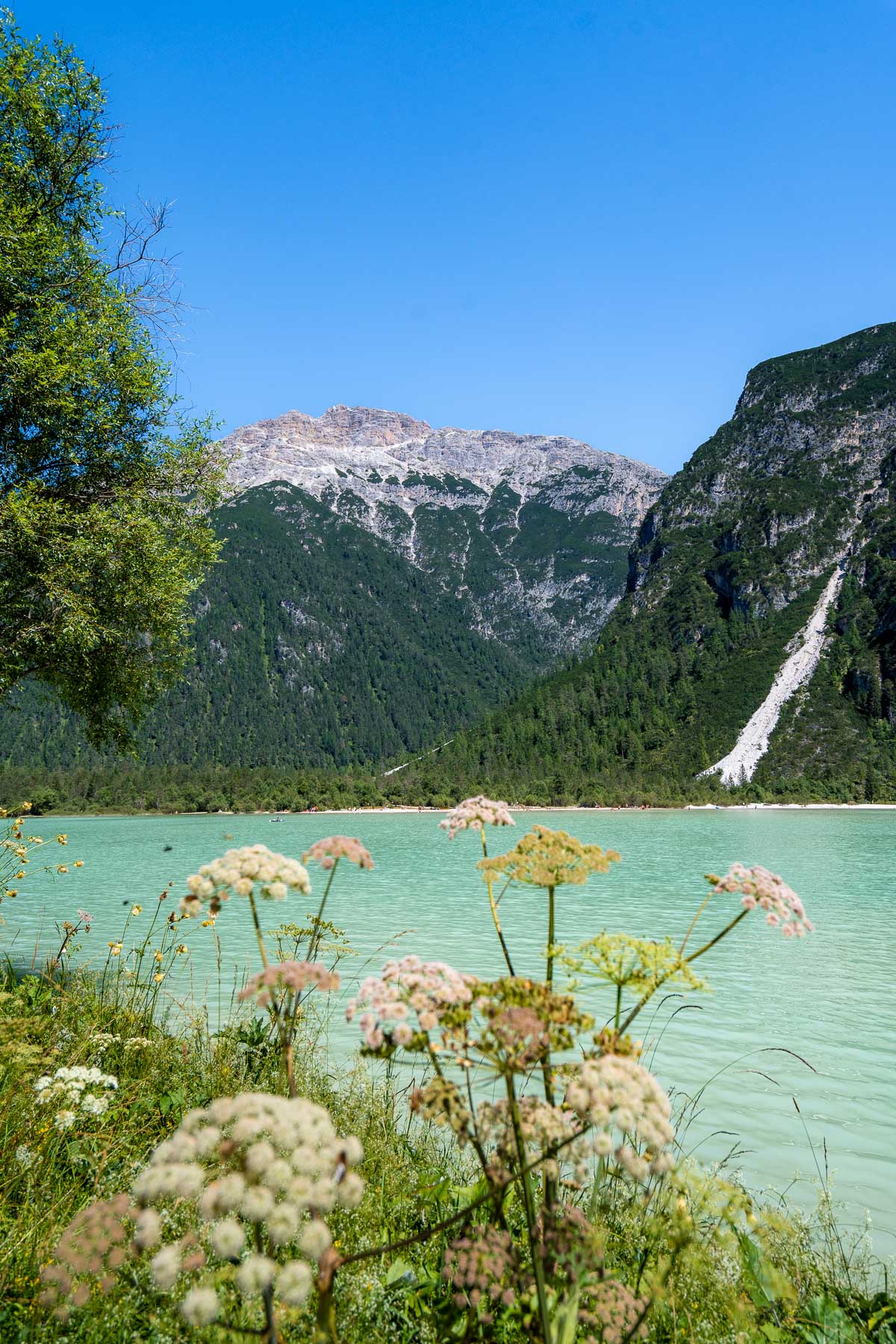
Lago di Landro (Dürrensee) is a high-altitude lake sitting at around 1,400 meters inside the Tre Cime Natural Park. From the shore, you get wide open views toward the Cristallo Group on one side and the Ampezzo Dolomites on the other, which makes this a great stop if you’re into mountain scenery.
There are a couple of easy walking options around the lake. One loop is about 5 km and takes roughly an hour, while the longer 6.2 km loop takes closer to 1.5 to 2 hours at a relaxed pace. Both are straightforward and don’t require any hiking experience.
If you’re brave enough, swimming is allowed here, though the water is cold even in summer. There’s also a lakeside restaurant, which makes Lago di Landro a nice place to stop for lunch or a longer break during a road trip.
The lake is right next to the main road, so it’s very easy to access. You can park directly by the lake, or if you’re not driving, take bus 445 from Dobbiaco, which also stops nearby.
5. Lago di Limides
Lago di Limides is one of those lakes that feels like a small reward at the end of an easy walk. Since you have to hike a bit to reach it, it’s usually much quieter than the more famous lakes in the Dolomites.
The hike to the lake is short and straightforward, around 2 km one way, and takes roughly 30 minutes. It’s a gentle uphill walk through the forest, and before you know it, you’re standing in front of a small, peaceful lake with beautiful mountain reflections.
Lago di Limides is located near Passo di Falzarego. There’s a parking area right next to Ristorante Grill da Strobel Paolo Michielli along the SR48 road. If you’re not driving, bus 030 from Cortina d’Ampezzo also stops right across from the restaurant.

6. Lago di Misurina
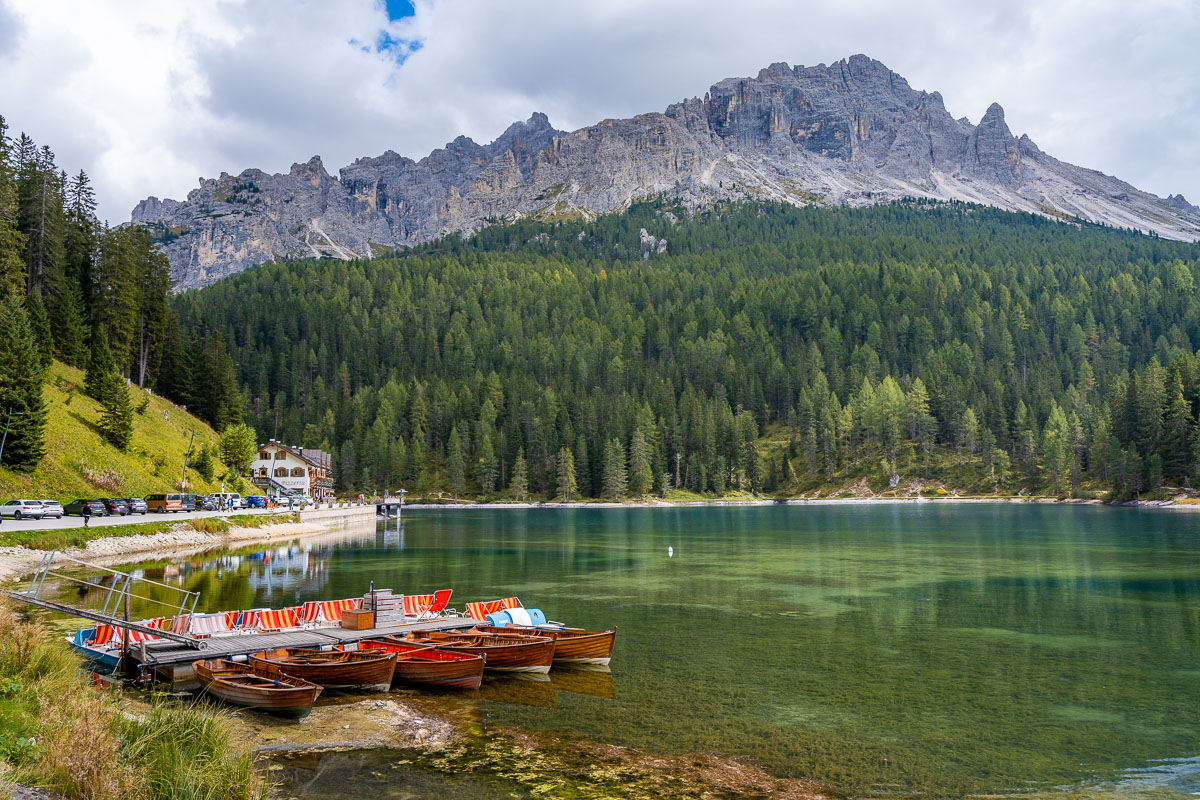
Lago di Misurina is the largest lake in the Cadore region and sits in the Belluno province. From the lakeshore, you get wide open views in every direction, with mountains rising all around, which makes this an easy and rewarding stop without any hiking.
One interesting thing about Lago di Misurina is that the air here is said to be especially clean, to the point that there’s even a children’s asthma center nearby. Whether that’s the reason or not, it definitely feels fresh and alpine compared to lower elevation lakes.
I recommend visiting early in the morning if you can. The lake is much quieter, the water is usually calmer, and you’re more likely to catch reflections before the wind and crowds pick up later in the day.
There are several hotels located right by the lake, many of them with great views, so it can also work as a short stop or an overnight base if it fits your route.
Parking is available in multiple lots around the lake, and if you’re not driving, public bus 445 connects Lago di Misurina with both Cortina d’Ampezzo and Dobbiaco.

7. Lago d’Antorno
Lago d’Antorno is a short drive north of Lago di Misurina, so it’s very easy to combine the two. This small lake is surrounded by larch forest and offers beautiful views toward the Tre Cime and the Cadini di Misurina, without the crowds you’ll find at some of the bigger lakes nearby.
Lago d’Antorno also marks the start of the road up to the trailhead of the Tre Cime di Lavaredo hike and the not-so-well-known, but fantastic Cadini di Misurina hike.
There’s a short walking path around the lake that takes about 20 minutes and is perfect for a quick, relaxed stop. Even though it’s right along a popular route, it often feels surprisingly quiet, especially compared to the nearby hotspots.
Parking is available for free at the southern end of the lake, but since it’s unattended, it’s best not to leave valuables in your car. If you’re not driving, bus 445 also stops here and runs between Cortina d’Ampezzo and Dobbiaco.

8. Lago di Sorapis
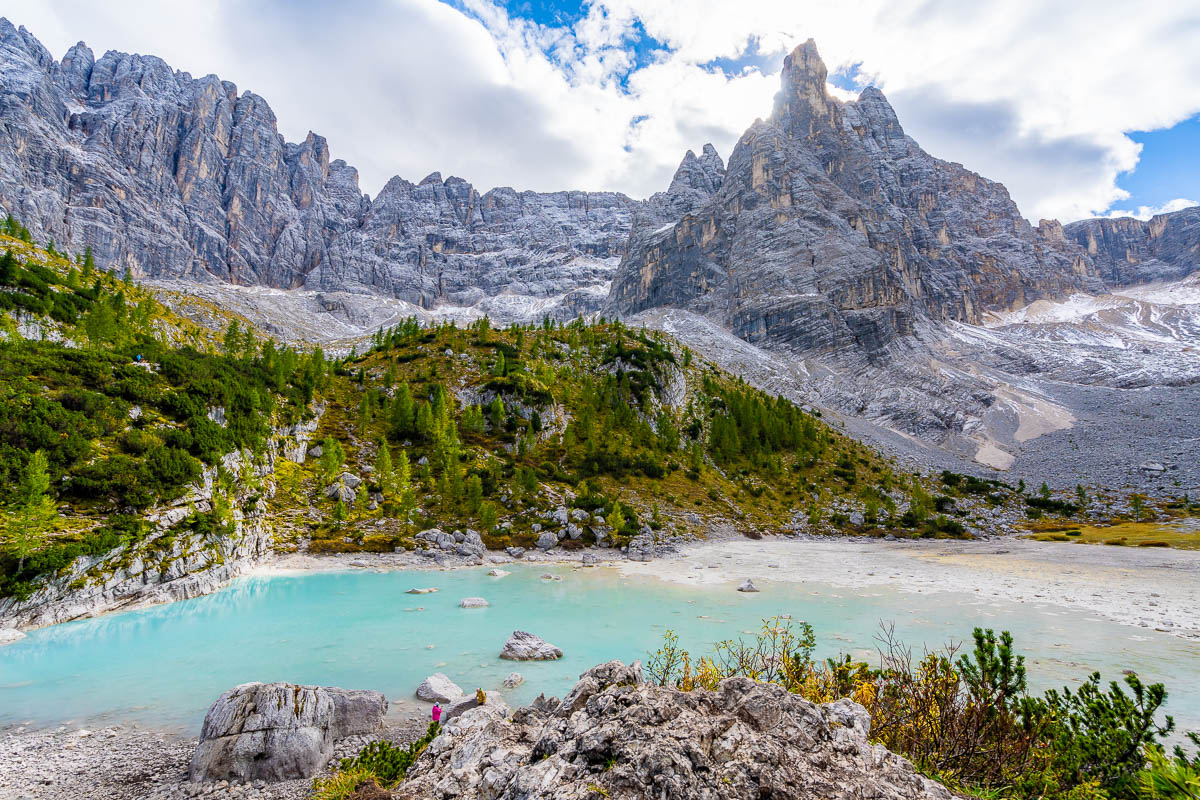
Lago di Sorapis is one of those lakes you really have to earn. Reaching it requires a 13.5 km round-trip hike, but if you’re up for a longer walk, it’s easily one of the most rewarding hikes in the Dolomites.
The trail takes around 2 hours each way and is well-marked. It’s not overly difficult, but there are a few narrow sections where you’ll want to take your time, especially if you’re not a fan of exposed paths. Overall, it’s very manageable for anyone with decent fitness and proper footwear.
Once you reach the lake, you can walk around it in about 30 minutes. The water has an intense milky turquoise color caused by glacial sediment, and on a clear day, the contrast with Mount Sorapis behind it is hard to forget!
Lago di Sorapis tends to dry up toward the end of summer, so timing matters here. Late spring and early summer are usually the best times to visit.
The trailhead is located at Passo Tre Croci, about 15 minutes from Lago di Misurina. Free parking is available at the pass, and if you’re not driving, buses 030 and 031 run here from Cortina d’Ampezzo.

9. Lago di Federa
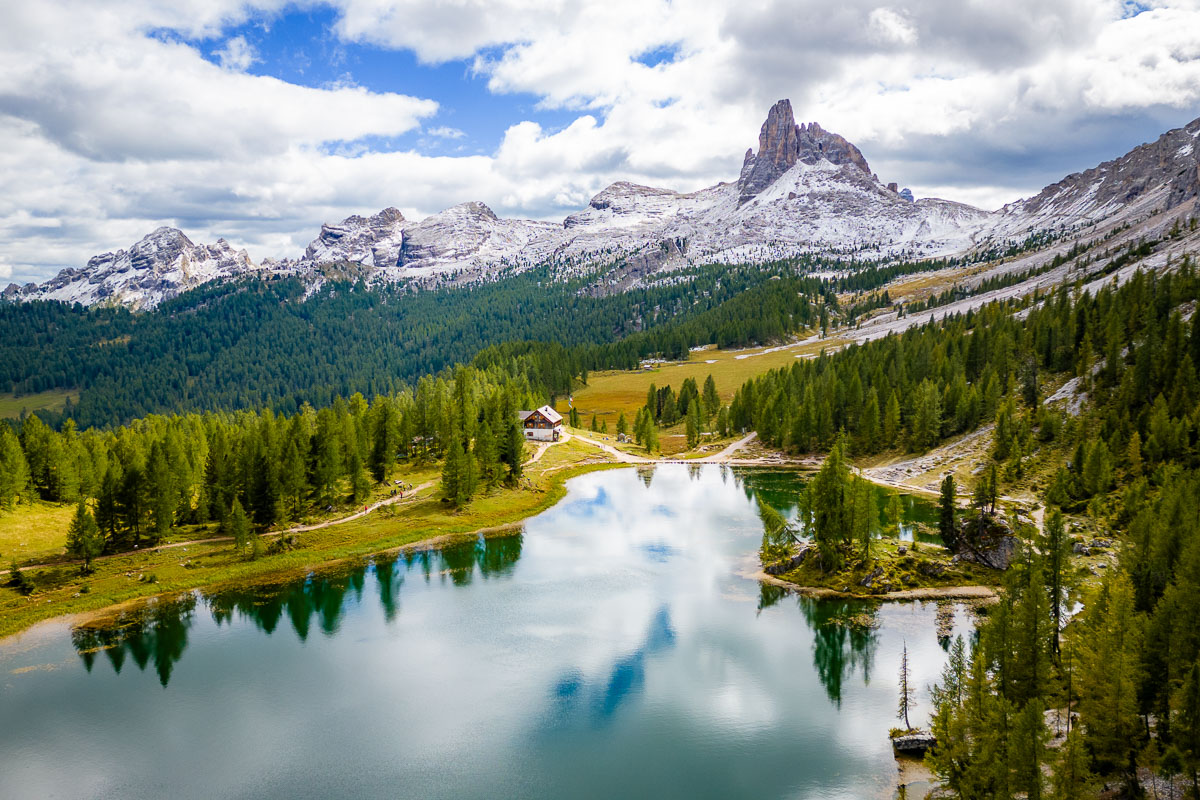
Lago di Federa is one of the more remote lakes on this list, and getting there requires a solid hike. The round trip is about 11.3 km, which naturally keeps crowds away and makes this a good option if you’re looking to escape the busiest areas of the Dolomites.
The hike is fairly demanding, with a few longer uphill sections, but it’s very doable if you’re reasonably fit and wearing proper hiking boots. Expect to spend around 6 hours on the trail, including breaks.
While the lake is beautiful at any time of year, October is a particularly nice time to visit as the larch trees around the lake turn golden. Just keep in mind that early snow is possible in autumn, so it’s important to check the forecast and pack accordingly.
The trailhead is located at Ponte de Ru Curto along road 638. Parking here is limited, especially in high season, so arriving early makes a big difference.
If you’re not driving, you can also reach the trailhead by bus 30/4 from Cortina d’Ampezzo or Pescul, though this service usually only runs from July through late September.

10. Lago di Valparola
Lago di Valparola sits right on the Valparola Pass and feels very different from the brighter, more famous lakes in the Dolomites.
Surrounded by wide valleys and rugged peaks, the lake has a more dramatic, understated look and is usually much quieter than nearby hotspots. It’s a great stop if you want to take a short break without crowds.
You can walk around the lake in about 20 minutes, and it’s an easy place to stop for a picnic or a quick stretch.
Just south of the lake is Forte Tre Sassi, a former military fort that’s now a small museum focused on the area’s role in World War One.
There are two parking areas at the north and south ends of the lake. You can also park near Rifugio Passo Valparola if you plan to eat there. Bus 072 connects the pass with Arabba and Colfosco.




We will be visiting the Dolomites in September but will not have a car – hence will be getting public transport to get around. We will be based in Ortisie. We wish to visit some lakes. Many buses leave from Dobbiaco. Where is this and should we base ourselves here for a couple of days? Thank you.
I think if you can do two bases instead of just one, that would be the best! I would choose Ortisei for the first, and then Cortina d’Ampezzo for the second. Dobbiacio is also a good alternative, but I prefer Cortina.