

Where to Stay in the Dolomites: 5 Best Areas & Hotels
The Dolomites are one of the most beautiful mountain regions in Italy, known for their dramatic peaks, alpine lakes, and wide open meadows. It’s a year-round destination, with hiking, cycling, and paragliding in summer, and skiing and snow activities taking over in winter.
One of the trickiest parts of planning a trip is deciding where to stay in the Dolomites. The region is huge, distances can be longer than they look on a map, and not every valley works well as a base, even if it looks amazing in photos.
In this guide, I’m focusing on the best areas to stay in the Dolomites based on multiple trips, easy access to top sights, and how people actually travel the region.
You’ll find a small selection of well-located bases, along with hotel recommendations for different travel styles and budgets, so you can choose the one that makes the most sense for your Dolomites itinerary.
Disclosure: This post contains a few affiliate links, which means I may receive a small commission, at no cost to you, if you make a purchase through my link.
Quick Travel Planning Tips for the Dolomites
🏨 Where to Stay: Ortisei and Cortina d’Ampezzo are two of the best bases in the Dolomites. Hotel Angelo Engel is a great option in Ortisei, while Hotel Aquila is centrally located in Cortina.
⛰️ Best Time to Visit: June to September is best for hiking and mountain scenery, while December to March is ideal for skiing in the Dolomites.
✈️ Where to Fly To: The closest major airports are Venice and Milan. Venice is the easiest option for Cortina and the eastern Dolomites, while Milan works better if you’re heading toward Val Gardena.
🚗 Getting Around: Renting a car is the easiest way to explore the Dolomites and reach trailheads and mountain passes. Use Discover Cars to compare rental options, especially if you’re visiting multiple areas.
🚌 Best Day Trips: If you don’t want to drive, join an organized Dolomites day trip from Venice that includes Cortina and Lake Braies, or a full day Dolomites tour starting from Lake Garda.
📱 Stay Connected: Use an eSIM from Airalo to stay online in the Dolomites for maps, navigation, and bookings without swapping SIM cards.
No time to read now?
Pin it for later!
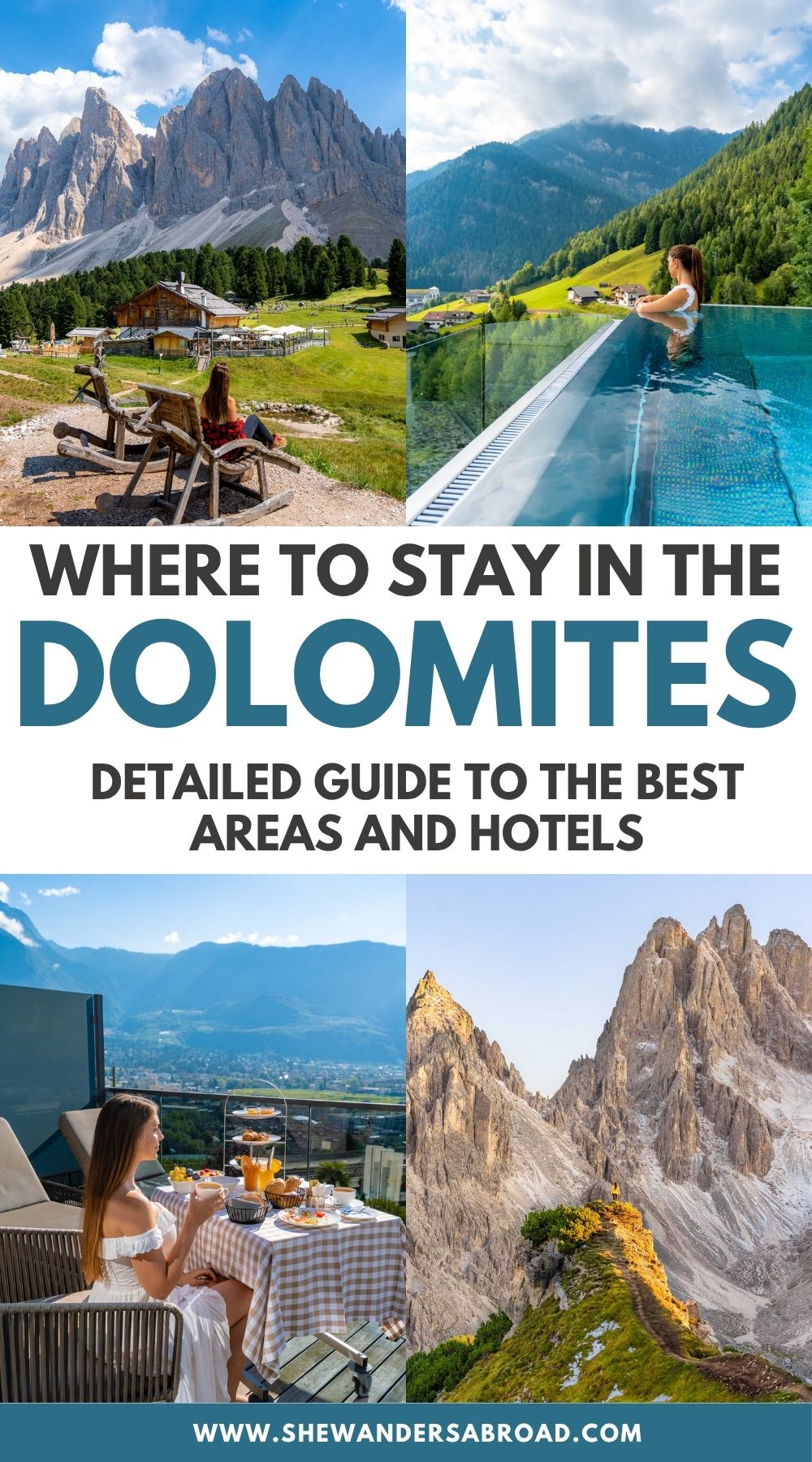
Overview of Where to Stay in the Dolomites
The Dolomites cover a large area, with mountain passes and winding roads connecting the main sights. Even though many places look close on a map, driving times can add up quickly, especially with the heavy traffic in summer.
For this reason, I usually recommend choosing more than one base in the Dolomites. Splitting your stay makes it much easier to explore different parts of the region without spending hours in the car each day.
As a general rule, Val Gardena or Alta Badia work best as a first base, while Cortina d’Ampezzo or Alta Pusteria are ideal for the eastern Dolomites. Alpe di Siusi can be a great third stop if you have more time, but it’s more of a nice addition rather than a must.
Below you’ll find a quick overview of the best areas to stay in the Dolomites, followed by a table comparing each location and hotel recommendations to help you choose the right base for your trip.
| Area | Recommended Hotel |
|---|---|
| Val Gardena (first timers, hiking, easy cable car access) | Hotel Garni Walter |
| Alta Badia (quiet base, excellent food, hiking) | Hotel La Majun |
| Cortina d’Ampezzo (town atmosphere, Tre Cime access, dining and shopping) | Hotel Aquila |
| Alta Pusteria (family-friendly, alpine lakes, eastern Dolomites) | Guesthouse Rosengarten |
| Alpe di Siusi (mountain scenery, hiking, special stay) | ICARO Hotel |
Map of the Best Areas to Stay in the Dolomites
Below you can find a customized map that includes the best places to stay in the Dolomites, including my recommended hotels for each area and for every budget.
How to use this map: This map is fully interactive, so you can move around, zoom in/zoom out, and click on the icons. If you want to see a larger map, click on the bracket in the upper right corner. To see more details and the different layers, click on the tab in the upper left corner. If you want to save it for later, click on the star icon next to the name of the map. Then simply open Google Maps either on your desktop or phone, go to ‘Saved’/’Maps’, and open the map whenever you need it.
Where to Stay in the Dolomites: Best Areas & Hotels
1. Val Gardena
Val Gardena is one of the best places to stay in the Dolomites, especially if it’s your first trip. The valley is well-connected, easy to get around, and gives you quick access to some of the most famous spots in the region without long daily drives.
I’ve been to the Dolomites three times, and every time I chose to stay in Ortisei for the first part of my trip. It’s an excellent base and makes exploring the area incredibly easy.
All the main cable cars start directly from town, including Seceda, Alpe di Siusi, and Resciesa, so you can reach high alpine views without needing to drive anywhere.
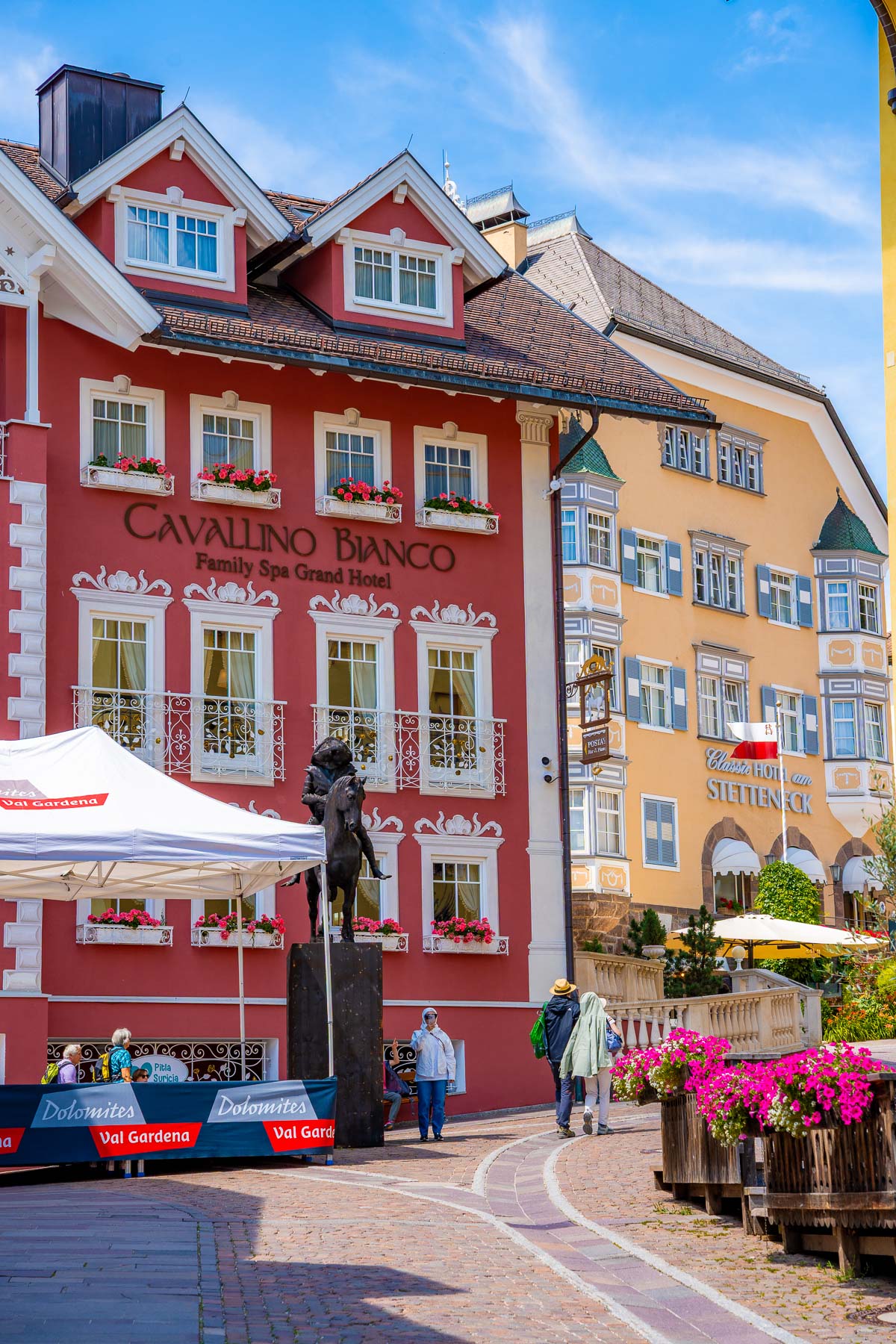
Ortisei 
Seceda ridgeline
Val Gardena is also a great choice if you don’t want to rely on a car every day. Many accommodations provide the Val Gardena Mobil Card, which gives you free access to public transport in the valley and to nearby areas.
That said, having a car still makes day trips much easier, especially if you want to visit places like Santa Maddalena or Lago di Carezza, both of which are a short drive away.
When it comes to choosing where to stay within Val Gardena, Ortisei is the most convenient option if you like being able to walk to restaurants, shops, and cable cars.
We stayed at Hotel Angelo Engel right in the town center and loved how easy it was to get around. On another trip, we stayed at La Cort My Dollhouse, which is adults-only and very quiet, but it’s a bit outside the center, so it’s less practical if you want to walk everywhere.
Santa Cristina and Selva di Val Gardena are also solid alternatives if you prefer a quieter base or want to be closer to the mountain passes, but for a first stay in the Dolomites, Ortisei is hard to beat.

Hotel Angelo Engel 
La Cort My Dollhouse
Pros and cons of staying in Val Gardena
Pros
- Excellent first base for the Dolomites
- Direct cable car access to Seceda, Alpe di Siusi, and Resciesa
- Great hiking right from the valley
- Easy to get around, even without a car
- Plenty of restaurants, shops, and accommodation options
Cons
- Can feel busy during the summer, especially Ortisei
- Difficult to find parking spaces for cars in peak season
- Prices can be higher compared to smaller valleys
Best places to stay in Val Gardena
- Luxury hotel in Ortisei: Hotel Angelo Engel
- Luxury hotel in Selva di Val Gardena: Hotel Antares
- Adults-only hotel in Ortisei: La Cort My Dollhouse
- Mid-range hotel in Ortisei: Hotel Garni Walter
- Budget-friendly hotel in Selva di Val Gardena: Hotel Garni Morene
- Budget-friendly hotel in Santa Cristina: Alpstay – Smart Hotel Saslong
2. Alta Badia
Alta Badia is a great option if you’re deciding where to stay in the Dolomites and want a quieter, more relaxed base with incredible scenery. The valley sits between several major mountain groups, which makes it an excellent area for hiking in summer and skiing in winter.
If hiking is a priority, Alta Badia is hard to beat. From easy valley walks to panoramic high altitude routes through areas like Puez Odle and Fanes Senes Braies, you’ll find some of the best hikes in the Dolomites right on your doorstep.
Gondolas make it easy to reach higher elevations, and there are plenty of well-marked trails that don’t require long drives.
One thing that really sets Alta Badia apart is the food scene. This area has one of the highest concentrations of excellent restaurants in the Dolomites, with a strong focus on Ladin cuisine mixed with Italian and Austrian influences. Even casual mountain huts here tend to serve surprisingly good food!

We stayed at Hotel La Majun and absolutely loved it. The area has a calm, polished feel without being boring, which made it a really nice contrast to busier bases like Ortisei or Cortina.
Alta Badia is also almost exactly between Val Gardena and Cortina d’Ampezzo, with both around an hour away by car. Because of this, it can work as a single base if you really want to stay in one place, although I’d still recommend splitting your stay if you have the time.
When choosing a town, Corvara in Badia and La Villa are the most practical options. Corvara is centrally located with easy access to lifts and trails, while La Villa is slightly quieter and works well if you want to be closer to nature without feeling isolated.


Pros and cons of staying in Alta Badia
Pros
- Excellent access to some of the best hikes in the Dolomites
- Quieter and more relaxed than busier bases like Cortina or Ortisei
- Strong food scene, including great mountain huts and restaurants
- Gondolas make high altitude hikes easy to reach
- Works well as a single base if you don’t want to move hotels
Cons
- Less of a town atmosphere compared to Cortina or Ortisei
- Fewer shops and evening options
- Public transport is more limited, having a car helps
- Can feel very quiet in the evenings, especially outside peak season
Best places to stay in Alta Badia
- Luxury hotel in Corvara: Hotel La Perla: The Leading Hotels of the World
- Mid-range hotel in La Villa: Hotel La Majun
- Mid-range hotel in Corvara: Hotel Sassongher
- Budget-friendly hotel in Corvara: Hotel Gran Fanes
💌 SAVE THIS POST
3. Cortina d’Ampezzo
Cortina d’Ampezzo is one of the most popular places to stay in the Dolomites, and for good reason! If you’re looking for a base that combines incredible scenery, easy access to famous hikes, and an actual town atmosphere, Cortina is hard to beat.
One of the biggest advantages of staying in Cortina is how easy it is to get into the mountains. Several cable cars start right from town, including the lifts to Tofana di Mezzo and Faloria, so you can reach high alpine views without needing to drive anywhere.
At the same time, many of the best hikes in the Dolomites are just a short drive away. Trailheads for Lago di Sorapis and Lago di Federa are close by, and scenic lakes like Lago di Misurina and Lago di Landro are easy to reach by car.
Cortina also works extremely well as a base for exploring the eastern Dolomites. Tre Cime di Lavaredo is only about a 45-minute drive, which makes Cortina one of the most convenient places to stay if Tre Cime is high on your list.

Beyond hiking, Cortina feels like a real mountain town rather than a small village. There are plenty of restaurants, cafes, bars, and boutique shops, and it stays lively well into the evening. If you enjoy having things to do after a long day in the mountains, Cortina offers far more options than most other bases.
We stayed at Nord Hotel, which was comfortable and worked well overall, but it’s a bit outside the town center. One thing to keep in mind is that parking in Cortina can be surprisingly difficult, especially during peak season.
Because of that, I’d strongly recommend staying directly in town or very close to the center, so you can walk to dinner and cable cars without constantly worrying about parking.
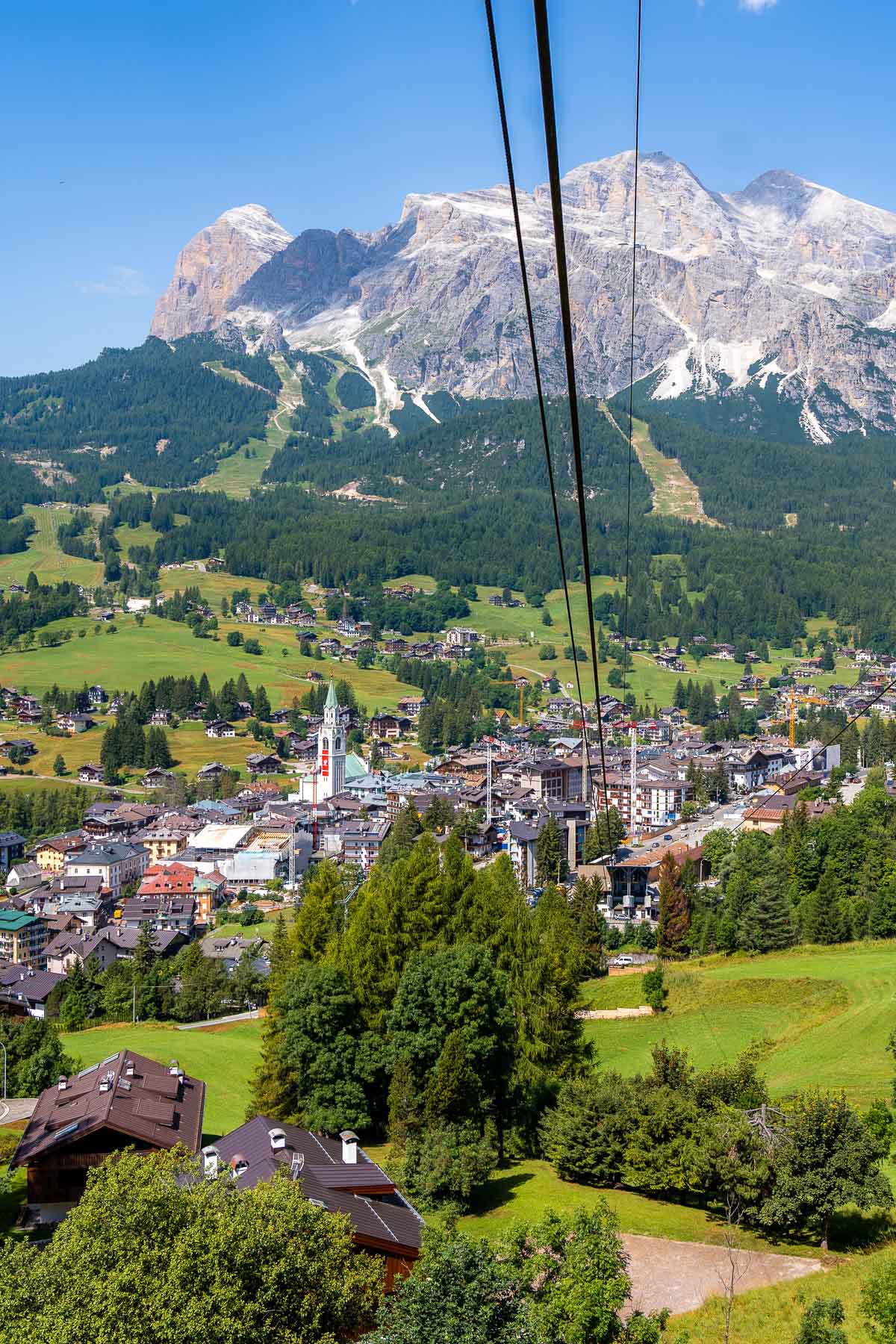
Cortina d’Ampezzo 
Lago di Sorapis
Pros and cons of staying in Cortina d’Ampezzo
Pros
- One of the most popular and well located bases in the Dolomites
- Excellent access to major hikes
- Short drive to Tre Cime di Lavaredo
- Cable cars start directly from town
- Lively town with restaurants, bars, shops, and cafes
Cons
- Accommodations usually sell out fast in peak season
- More expensive than other parts of the Dolomites
- Parking can be a struggle if you’re staying in the city center
- Less peaceful than smaller alpine villages
Best places to stay in Cortina d’Ampezzo
- Luxury hotel in Cortina: HOTEL de LEN
- Affordable luxury hotel in Cortina: Grand Hotel Savoia Cortina d’Ampezzo
- Mid-range hotel in Cortina: Ambra Cortina Luxury&Fashion Hotel
- Budget-friendly hotel in Cortina: Hotel Aquila
4. Alta Pusteria
Alta Pusteria is a great base if your trip focuses on the eastern Dolomites and some of the region’s most famous natural sights. This area is especially popular for its proximity to Tre Cime di Lavaredo, Cadini di Misurina, and some of the most beautiful lakes in the Dolomites, like Lago di Braies.
If you enjoy spending most of your time outdoors, Alta Pusteria makes a lot of sense. In summer, it’s ideal for hiking, cycling, and mountain walks, and in winter it’s well set up for skiing and other snow activities.
The pace here is noticeably quieter than places like Cortina or Val Gardena, which many people see as a plus.
We stayed in Dobbiaco and found it to be the most practical base in the area. Dobbiaco is well located, easy to reach, and a great starting point for early mornings.
Staying here made it very easy to reach Lago di Braies for sunrise, and it’s also close to places like Lago di Landro, Lago di Misurina, Tre Cime, and Cadini di Misurina. We stayed at Hotel Patris and loved it, especially the pool and the mountain views from our room.
Dobbiaco is also only about a 40-minute drive from Cortina d’Ampezzo, which makes it possible to explore that area as well.

San Candido is another good option if you prefer a slightly busier town with more restaurants and cafes. Sesto can also work, especially if Tre Cime and Val Fiscalina are your top priorities, but it’s a bit more remote and requires more driving overall.
One thing to keep in mind is that Alta Pusteria works best as part of a multi-base itinerary. While it’s excellent for nearby highlights, it’s farther from places like Val Gardena or Alta Badia.
There are also fewer accommodation options compared to some other valleys, so it’s best to book early.

Lago di Braies 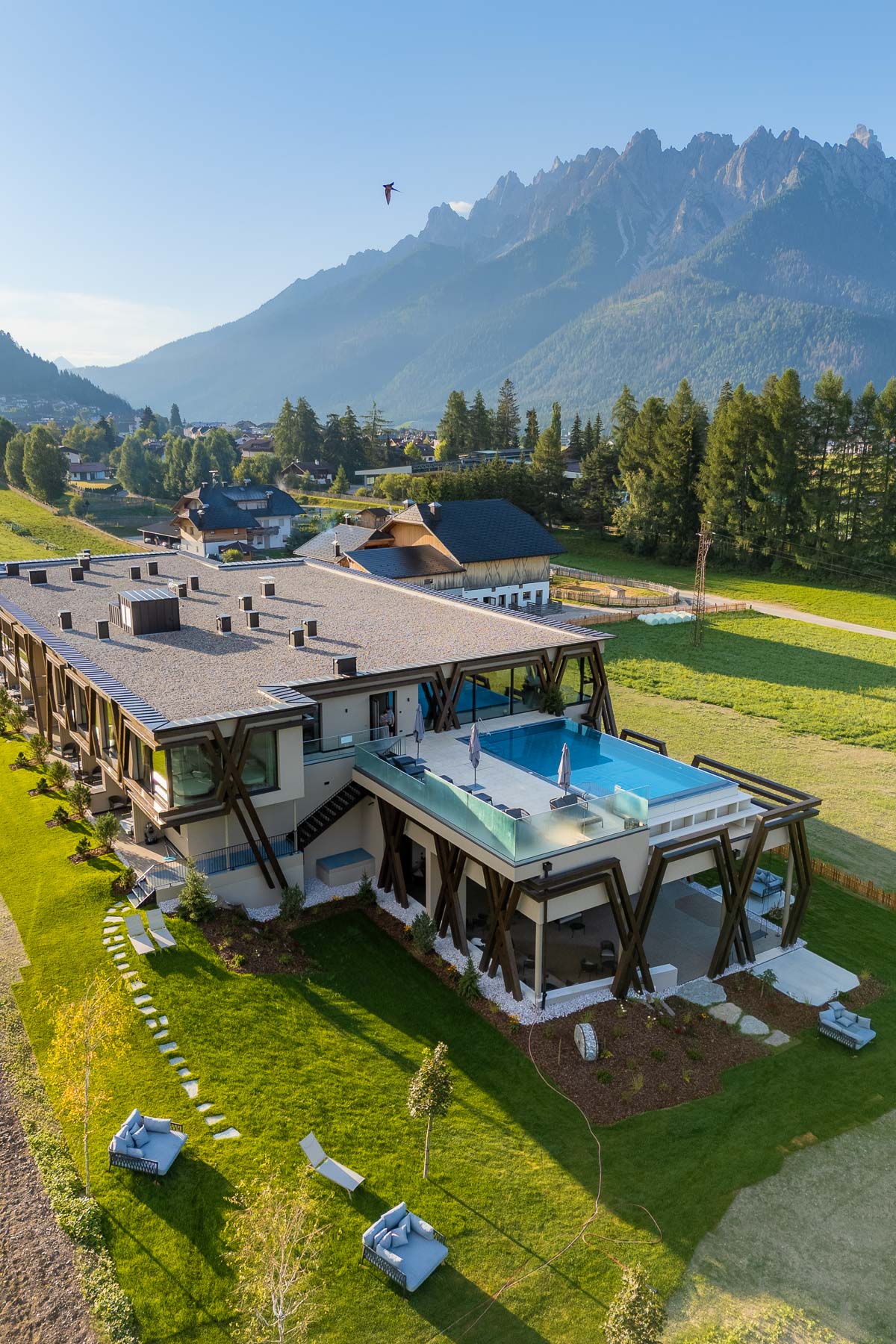
Hotel Patris
Pros and cons of staying in Alta Pusteria
Pros
- Excellent base for Tre Cime di Lavaredo and Lago di Braies
- Quieter and less crowded than Cortina or Val Gardena
- Easy access to the eastern Dolomites
Cons
- Farther from western Dolomites highlights like Val Gardena and Alta Badia
- Fewer accommodation options compared to other bases
- Less of a lively town atmosphere in the evenings
Best places to stay in Alta Pusteria
- Mid-range hotel in Dobbiacio: Hotel Patris
- Mid-range hotel in San Candido: Boutique & Gourmet Hotel Orso Grigio
- Mid-range hotel in Sesto: BAD MOOS – Aqua Spa Resort
- Mid-range hotel overlooking Lago di Braies: Hotel Lago di Braies
- Budget-friendly hotel in Dobbiaco: Guesthouse Rosengarten
5. Alpe di Siusi
Alpe di Siusi, also known as Seiser Alm, is one of the most beautiful places in the Dolomites, but it’s important to understand what people usually mean when they talk about staying here.
Alpe di Siusi is a very large area geographically, but most travelers refer to the high alpine plateau reached by the cable car from Ortisei. This is the area I recommend if you’re considering staying on Alpe di Siusi.
This part of the Alpe di Siusi is ideal if you want to slow things down and really enjoy the surroundings. Early mornings and evenings are especially great here, once the cable car stops running and day visitors leave.
If you enjoy quiet walks, sunset views, and being surrounded by open meadows, staying here even for one night can be a great experience.

We stayed at Sporthotel Sonne and absolutely loved the experience. The hotel offers half board with excellent food, a great pool area, and unforgettable views of Sassolungo, which made staying on the plateau feel truly special!
Access is more limited than in other areas, which is part of the appeal but also something to plan for. Alpe di Siusi is totally car-free during the day (there’s a ban on cars from 9 am to 5 pm), and driving up is only allowed if you have a hotel reservation.
Otherwise, the easiest way to reach this area is by cable car from Ortisei. Because of these restrictions, it’s not a practical base for exploring the wider Dolomites, but it works very well as a short add-on to another stay.
In winter, Alpe di Siusi is also an excellent choice for skiing and snow activities. Staying directly on the plateau gives you immediate access to the slopes, which is a big advantage compared to commuting up each day.
Since this is a small and very specific area, there are only a handful of hotels located directly on the plateau. When searching for accommodation, it’s important to look specifically for hotels in this area, not in nearby towns like Siusi or Castelrotto, which offer a very different experience.
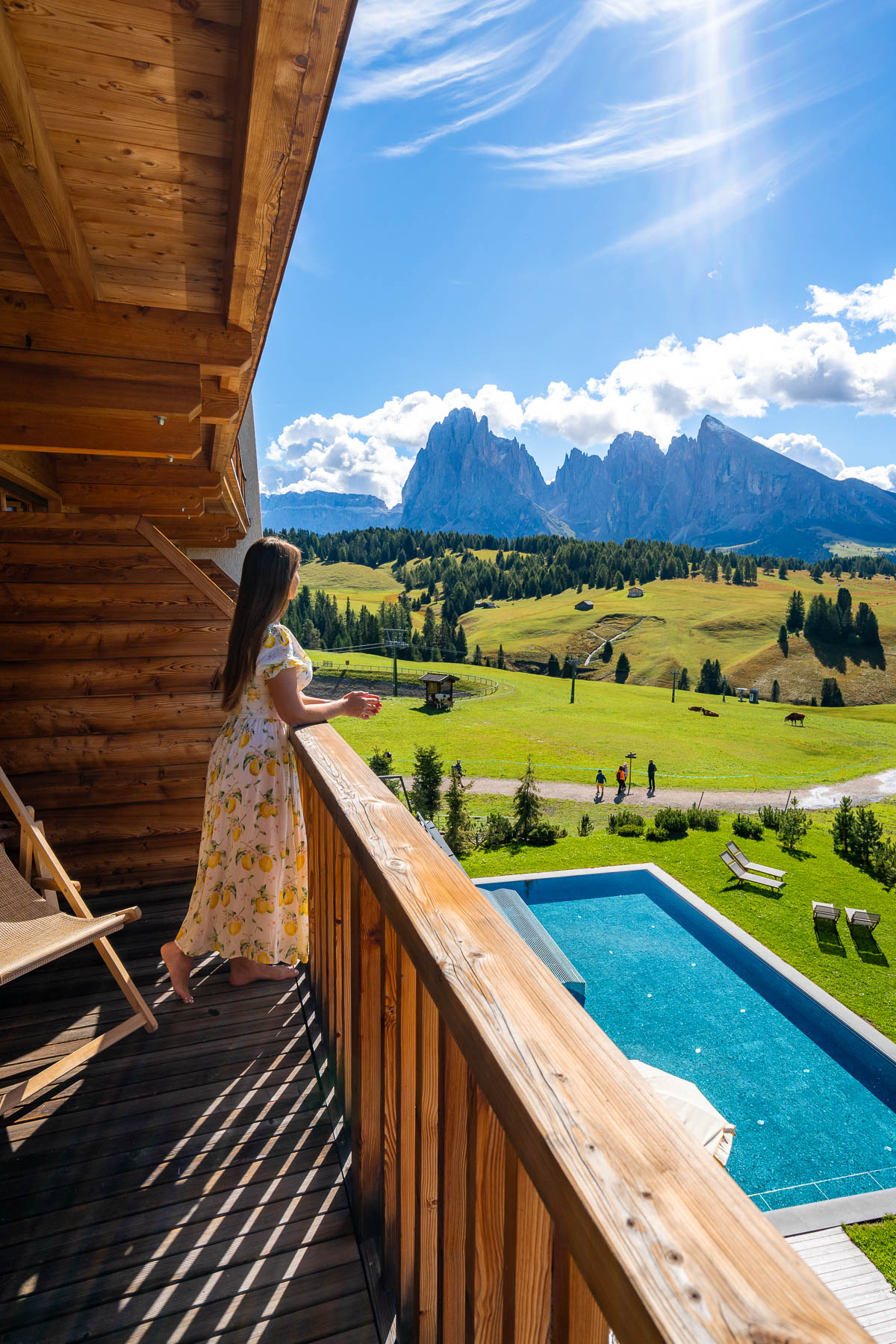
Sporthotel Sonne 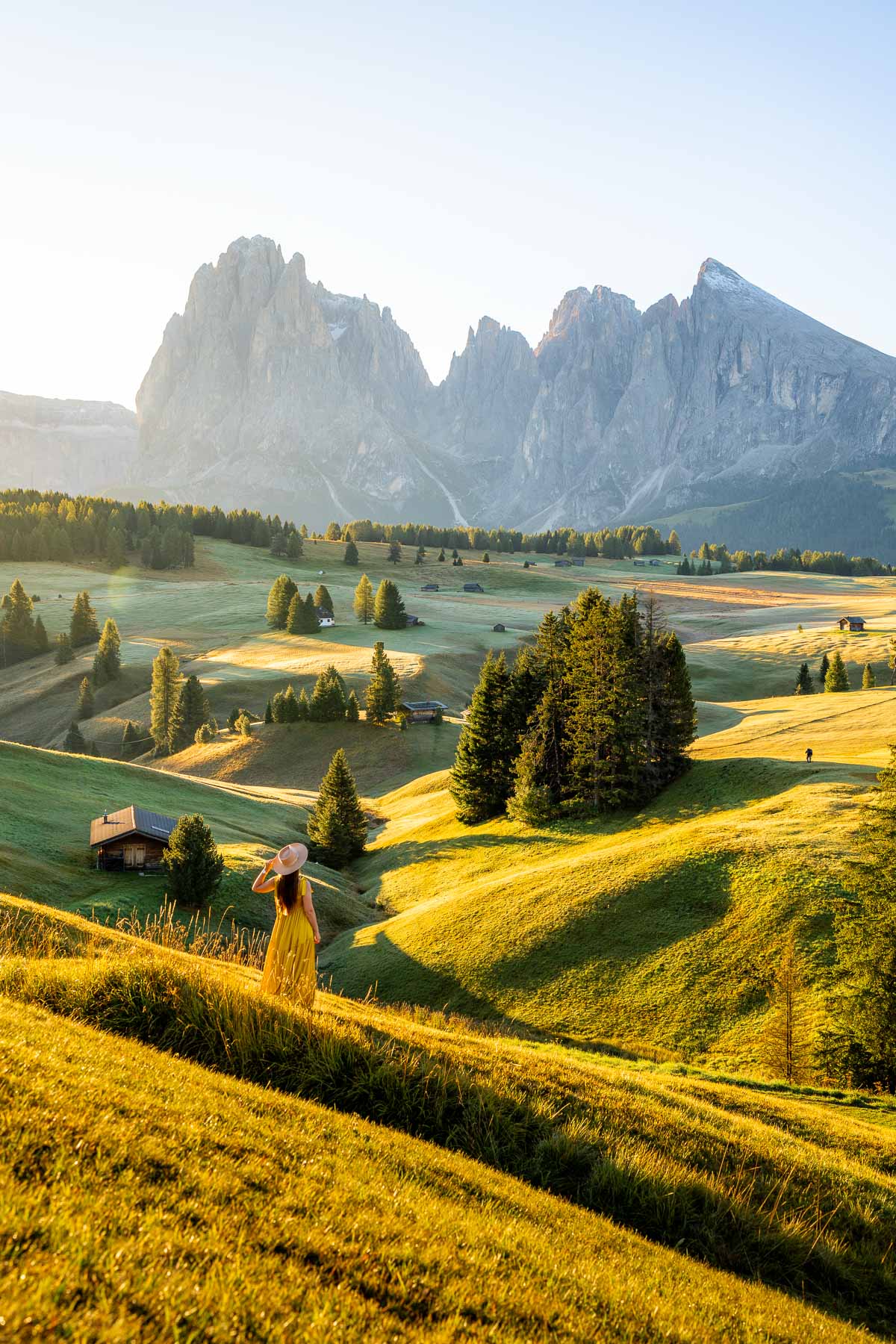
Alpe di Siusi
Pros and cons of staying in Alpe di Siusi
Pros
- Incredible scenery right outside your door
- Very peaceful in the mornings and evenings once day visitors leave
- Perfect for slowing down and enjoying the alpine landscape
- Great choice for skiing with direct slope access in winter
- Unique experience compared to staying in a valley or town
Cons
- Limited number of hotels, availability is very restricted
- Car access is limited and requires planning
- Not a practical base for exploring the wider Dolomites
- Dining and activity options are limited outside of hotels
- Works best as a short add on rather than a main base
Best places to stay in Alpe di Siusi
- Closest to the famous viewpoint: Sporthotel Sonne
- Very close to the viewpoint, slightly more secluded: ICARO Hotel
- On the plateau but a longer walk: Hotel Steger-Dellai
- In Compatsch, but still relatively close to Alpe di Siusi: Seiser Alm Urthaler




Thank you for the article, we are considering going to the Dolomites for a family ski holiday and have been struggling for two days now to understand the area. This was extremely helpful.
I’m so happy that I was able to help! The Dolomites are a vast area and it was hard to wrap my head around it at first so totally know how you feel. Hope you will have an amazing trip!
Hi
Your article is very helpful and detailed. Thank you. I am hoping you can provide some more information on the best town to stay in if you plan to hike to the New Bivouac Fanton? I’m having trouble finding the closest town to the trailhead. My son is studying in Florence and would like to hike to it and do some other hikes in the area.
Also, he plans to do this alone. Are there many solo hikers in that area.
Thank you for any and all advice you can share.
Ayrin
Hi Ayrin, to be honest I’ve never heard of this place until now but it looks super cool! Looks like it’s a pretty tough hike to get there and apparently the nearest town is Auronzo di Cadore from where you can take the ski lift up to the Marmarole trail. Unfortunately I don’t have first-hand experience and these are only based on other articles I looked up on Google so definitely double-check everything before the actual hike!
Hello! I have never been to the Dolomites and we are traveling there in January and will not have a car. Where do you recommend to stay at that time of year with no car and in a place that has views and accessible restaurants? Thank you!
Hey! I would say Ortisei or Cortina d’Ampezzo, depends on which part of the Dolomites you want to see more of.
Great info! I hope I am not overlooking it, but how do the colored areas on the Google map correspond to the geographical areas you’ve highlighted?
The colored areas are the ones I’m talking about in the article, like Val Gardena, Alpe di Siusi, etc.
wow I love reading your blog, thank you for putting in so much effort!
Aww thank you so much, I’m so happy to have you here!
Hey!.
I loved reading the blog. It was very helpful!!
We are visiting Dolomites in December during Christmas, we really want to stay in town close to Ortisei but also have great scenic views, please recommend something.
Why don’t you stay in Ortisei itself? 🙂 It’s one of my favorite towns in the area and has a lot of options when it comes to hotels!
Hi, I enjoyed reading your article on the Dolomites. It is very informative. We are wanting to go for 4 nights in the Dolomites mid May this year (2026) and will have a rental car.
I was looking at basing ourselves in Ortisei and doing day trips from there. We are four adults and would love to do some day hikes and visit the lakes etc.
I have read that the chairlifts etc may still be closed in mid May?? But can we drive up to the top of the mountains to explore?
I welcome your advice 🙂
Hi Angela, mid-May can be a bit tricky in the Dolomites. If a viewpoint is accessed by a cable car or chairlift, you generally can’t drive up there instead, that’s true in any season and why the lifts exist in the first place. If the lift is closed, there usually isn’t another way up. But I think the Alpe di Siusi cable car will run from early May, however, the one going to Seceda seems to be only open at late May. Also, snow can still be issue at higher elevations in mid-May, so many hiking trails may not be accessible or safe yet. That said, you can still drive to many lakes in the area, visit Santa Maddalena or Alpe di Siusi, etc. Just make sure to check the opening dates/hours a few days before going as weather can still impact those in May.