
18 Best Places to Visit in Vermont in the Fall
Vermont is one of the best places in New England to experience fall, with colorful mountain roads, charming small towns, covered bridges, and plenty of scenic hikes. Although the exact timing changes each year, foliage typically peaks between late September and mid-October, depending on where you go.
From popular spots like Stowe and Woodstock to quieter towns and scenic drives, this guide covers the best places to visit in Vermont in the fall. I’ve included a mix of towns, natural attractions, and viewpoints to help you plan your trip and make the most of foliage season.
Disclosure: This post contains a few affiliate links, which means I may receive a small commission, at no cost to you, if you make a purchase through my link.
No time to read now?
Pin it for later!
Good to Know Before Visiting Vermont in the Fall
Best time to visit Vermont for fall colors
The full season for fall foliage in Vermont runs from early September until mid-October. Late September brings the best colors in the northern parts of the state while mid-October generally works out better in the south.
Visiting at the start or middle of September runs the risk that you’ll arrive too early to witness the stunning Vermont fall colors.
Generally speaking, the first two weeks of October are your safest bet, however, this can change from year to year depending on lots of factors.
My best advice is to be as flexible as you can be, follow the weather forecast, and check out this interactive map to see how fall colors are developing in the different parts of the region.

Best places to stay in Vermont in the fall
If you’re planning a Vermont fall road trip, you’ll likely stay in several different towns as you make your way across the state. Even if you’re visiting for a shorter trip, I recommend choosing at least two bases rather than staying in one place the entire time.
Stowe and Woodstock are my top choices, as both are surrounded by beautiful fall scenery and close to many of the places featured in this guide. Burlington is another good option if you prefer a larger city with more restaurants and hotels, while Manchester works well for exploring southern Vermont.
Accommodation fills up quickly during foliage season, especially in Stowe and Woodstock, so it’s worth booking as early as possible!
Best places to stay in Stowe, Vermont
- Luxury: Trapp Family Lodge
- Mid-range: Green Mountain Inn
- Budget: Field Guide Lodge
Best places to stay in Woodstock, Vermont
- Luxury: 506 On the River Inn Woodstock
- Mid-range: The Shire Woodstock
- Budget: Sleep Woodstock Motel
How to get to Vermont
Vermont is located in New England, between New York, New Hampshire, Massachusetts, and the Canadian border. As many of the best fall destinations are spread across the state, the easiest way to visit is to fly into a nearby airport and rent a car.
Burlington International Airport is the most convenient option for northern Vermont, particularly if you plan to begin your trip around Burlington or Stowe. However, it mainly serves domestic routes, so international travelers will usually need a connecting flight.
Boston Logan International Airport offers a much wider selection of flights and is often the best option for international visitors. The drive from Boston to southern Vermont takes around 2.5 hours, while Stowe is approximately 3.5 hours away.
If you fly into Boston, you could also add a few days in the city before or after your Vermont trip. Even if you’re short on time, my one day in Boston itinerary covers the main highlights.

How to get around Vermont in the fall
Renting a car is by far the easiest way to get around Vermont. Public transportation is limited, particularly outside the larger towns, and many of the best places to visit in Vermont in the fall cannot be reached without a car.
Driving is also a big part of the experience. Scenic routes, quiet back roads, covered bridges, and small towns are some of the highlights of a Vermont fall trip, so having your own car gives you the freedom to stop whenever something catches your eye.
The main roads are generally easy to navigate, but traffic can be heavier during peak foliage weekends. Parking may also be limited at popular trailheads and viewpoints, so try to arrive early whenever possible.
Map of the best places to visit in Vermont in the fall
On the below map, you can see the exact locations for all the best places you can’t miss visiting in Vermont in the fall with their respective number.
The numbers don’t reflect any order, they are just simply here to help you find all the best places for seeing fall foliage in Vermont.
How to use this map: This map is fully interactive, so you can move around, zoom in/zoom out, and click on the icons. If you want to see a larger map, click on the bracket in the upper right corner. To see more details and the different layers, click on the tab in the upper left corner. If you want to save it for later, click on the star icon next to the name of the map. Then simply open Google Maps either on your desktop or phone, go to ‘Saved’/’Maps’, and open the map whenever you need it.
Best Places to Visit in Vermont in the Fall
1. Woodstock
Woodstock is easily one of the best places to visit in Vermont in the fall. Its historic buildings, tree-lined streets, and traditional New England architecture look particularly beautiful when surrounded by colorful foliage.
Begin around The Green, where you’ll find some of the town’s prettiest buildings, including the Woodstock Inn & Resort. From here, walk through the town center to browse the independent shops and cafés before crossing the Ottauquechee River via Middle Covered Bridge.
Woodstock is compact, so you can see the center in an hour or two. However, it’s also one of Vermont’s most popular fall destinations, so arrive early if you’re visiting during peak foliage season or on a weekend.


Related Post
2. Sleepy Hollow Farm
Located around 15 minutes from Woodstock, Sleepy Hollow Farm is one of the most recognizable photography spots in Vermont. The classic red farm buildings sit at the end of a winding dirt road, surrounded by rolling hills, ponds, and colorful woodland.
The farm itself is private property, so you cannot enter the grounds. Traditionally, visitors could photograph it from Cloudland Road, although the area has become extremely busy during fall foliage season.
Important Info
Cloudland Road has been closed to non-local vehicles during peak foliage season in recent years due to heavy traffic, illegal parking, and trespassing. A similar restriction is likely in this year as well, so check the latest information before visiting. Never drive past closure signs or park nearby and walk to the farm.


3. Sugarbush Farm
Known for its handmade cheeses and pure Vermont maple syrup, Sugarbush Farm is a family-run property just outside Woodstock. It’s free to visit and makes a lovely stop while exploring Vermont in the fall.
Follow the short nature trail through the woods to see how maple trees are tapped and learn how the sap is collected. You can also visit the sugarhouse, peek into the cheese workroom, and stop by the small farm chapel hidden among the trees.
The highlight is the farm shop, where you can sample several varieties of cheese and maple syrup before choosing your favorites. It also sells jams, preserves, smoked meats, and other locally made products.
There is no admission fee, but purchasing something from the shop is a great way to support the farm. The drive up is along a narrow dirt road, so take it slowly, especially when it’s busy.


4. Jenne Road Farm
Located around 15 minutes south of Woodstock, Jenne Road Farm is another classic Vermont photography spot. Its red barns sit below a gently sloping hillside, with the surrounding trees creating a particularly beautiful backdrop during fall.
The property is a working family farm rather than a visitor attraction, so you cannot enter the grounds. You can photograph it from the roadside, but make sure you stay on public land, avoid blocking traffic, and respect any posted signs.
The turnoff from Route 106 is easy to miss, so keep an eye out as you approach. If maple syrup is available for sale during your visit, purchasing some is a nice way to support the farm.
Important Info
Access to Jenne Road has also been restricted during peak foliage season in recent years. Check for current road closures before visiting and never ignore local traffic or parking restrictions.

5. Billings Farm and Museum
For a closer look at Vermont’s farming traditions, head to Billings Farm and Museum. Visiting this working dairy farm and outdoor history museum is one of the best things to do in Woodstock, VT, particularly if you’re with children!
Your admission includes access to the animal barns, pastures, tractor collection, interactive exhibits, and the historic 1890 Farm Manager’s House. Demonstrations and educational programs offer more insight into traditional farming practices and rural life in Vermont.
The farm also hosts seasonal events throughout the year, with harvest celebrations and special activities taking place during fall. Check the event calendar before visiting to see what is scheduled during your trip.
Plan to spend at least a couple of hours exploring the farm and museum, then stop by the gift shop for locally made products and souvenirs.

💌 SAVE THIS POST
6. Quechee Gorge
Often called Vermont’s “Little Grand Canyon,” Quechee Gorge plunges 165 feet down to the Ottauquechee River. The easiest viewpoint is from the Route 4 bridge, where you can look directly into the gorge and across the surrounding forest. The views are especially impressive when the trees change color in the fall.
For a different perspective, follow the trail from the bridge down toward the river. You can also extend your visit by exploring more of the walking trails in Quechee State Park.
Parking is available near the Quechee Gorge Visitor Center, which has exhibits about the area’s history and geology. You don’t need long to see the main viewpoint, but allow extra time if you plan to hike into the gorge or explore the state park.

7. Quechee Covered Bridge
With a waterfall on one side and the Ottauquechee River on the other, Quechee Covered Bridge is one of the most scenic stops in the village. A pedestrian walkway runs alongside the road, making it easy to cross the bridge and enjoy the views without worrying about traffic.
Unlike many of the covered bridges in Vermont, this one is relatively modern and was built in 1970. Traditionally, bridges were covered to protect their wooden structures from rain and snow, helping them last much longer.
You’ll find the bridge near the center of Quechee, only a short drive from Quechee Gorge. It doesn’t take long to visit, so the two attractions are easy to combine in the same morning or afternoon.


8. Montpelier
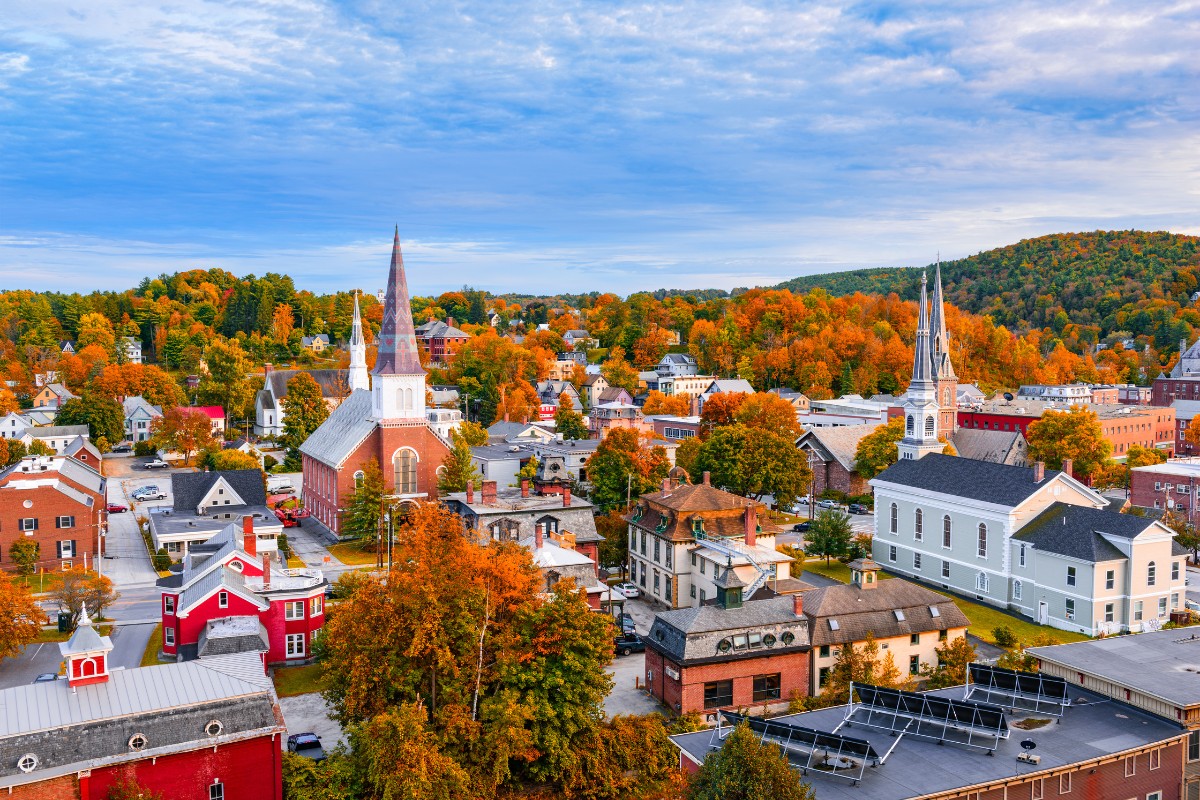
As the smallest state capital in the country, Montpelier feels more like a charming New England town than a typical capital city. Its compact downtown, historic buildings, and surrounding hills make it a worthwhile stop during fall in Vermont.
The city’s most recognizable landmark is the gold-domed Vermont State House, which dates back to 1859. You can explore the grounds independently or join a free guided tour when available. The nearby Vermont History Museum is also worth visiting if you want to learn more about the state’s past.
For fall views, head to Hubbard Park and follow the short uphill trail to Hubbard Park Tower. From the top, you’ll have views across Montpelier and the colorful hills surrounding the city.
Around 10 minutes from downtown, Bragg Farm Sugar House offers maple syrup tastings, demonstrations, and a shop filled with maple products. It’s an easy final stop before continuing your Vermont road trip.
9. Stowe
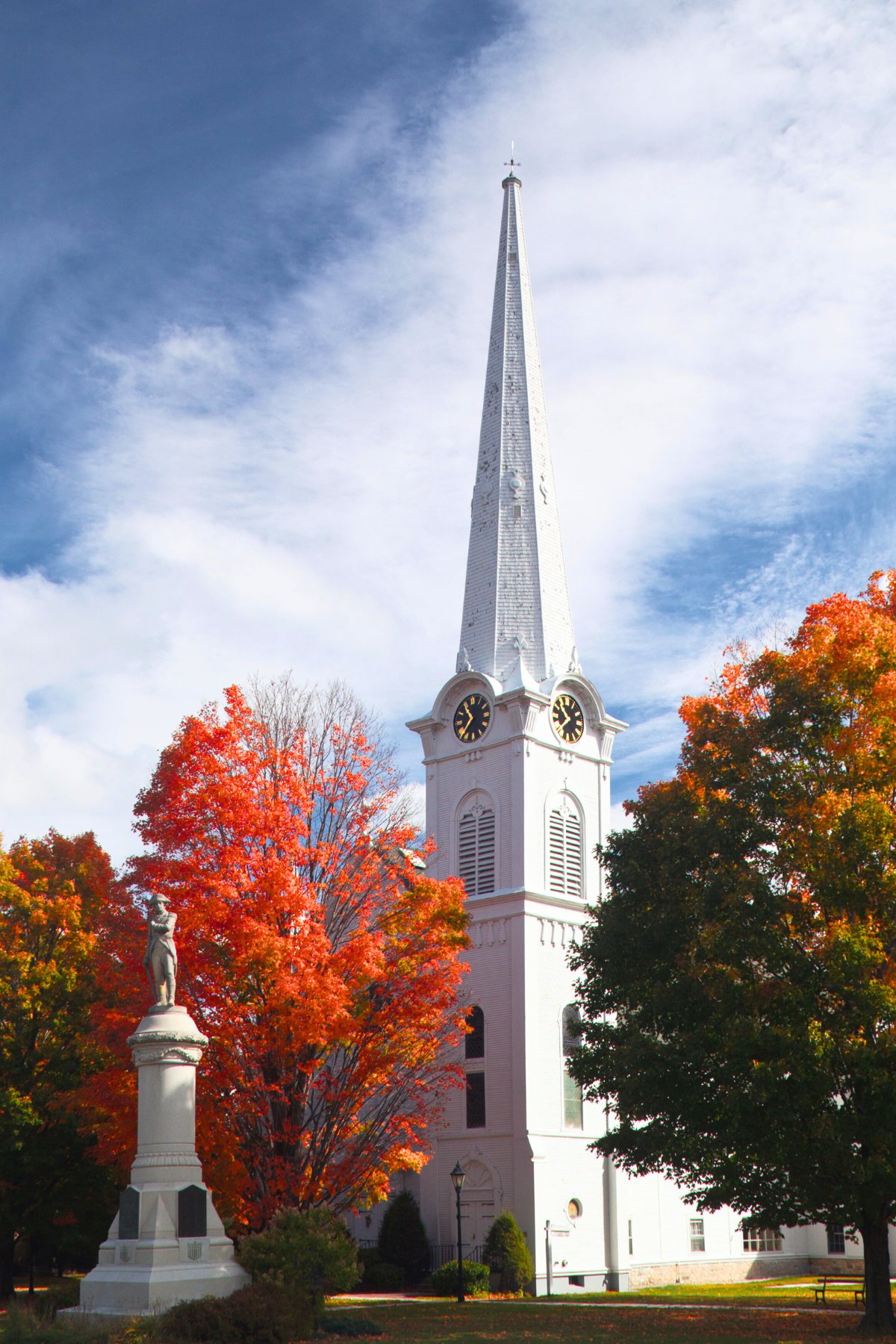
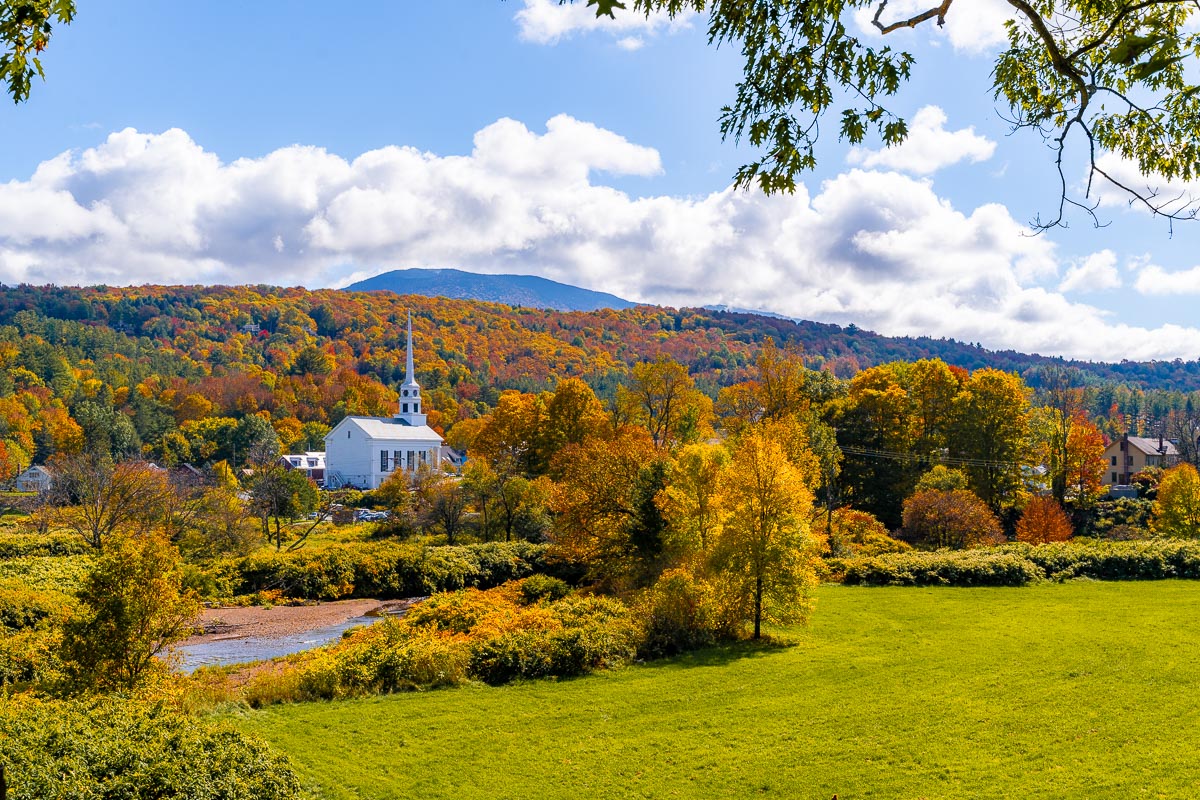
Few towns capture the classic Vermont fall atmosphere quite like Stowe. Its white church, historic Main Street, and mountain backdrop make it one of the most popular stops in the state during foliage season.
Spend some time walking around the town center, browsing its independent shops, and stopping at one of the cafés along Main Street. For the iconic view over Stowe Community Church, head to the viewpoint along Mountain Road or follow the short trail up to Sunset Rock.
The 5.3-mile Stowe Recreation Path is another lovely way to enjoy the scenery. This paved path begins near the village and follows the West Branch Little River through forests, meadows, and farmland. You can walk or cycle as much of it as you like rather than completing the entire route.
There are plenty more things to do in Stowe, so I recommend staying for at least two nights. It’s also one of the most popular places to stay in Vermont in the fall, and hotels fill up months in advance during peak foliage season.


10. Smugglers’ Notch State Park
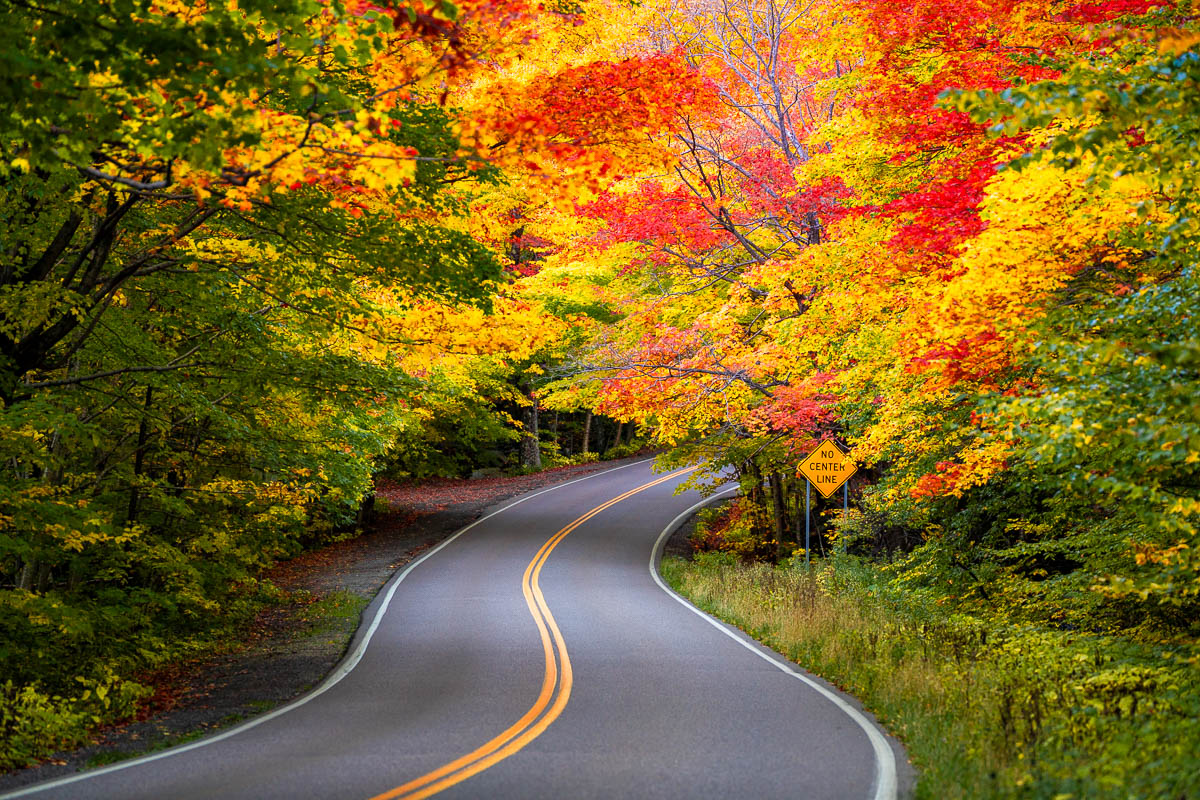
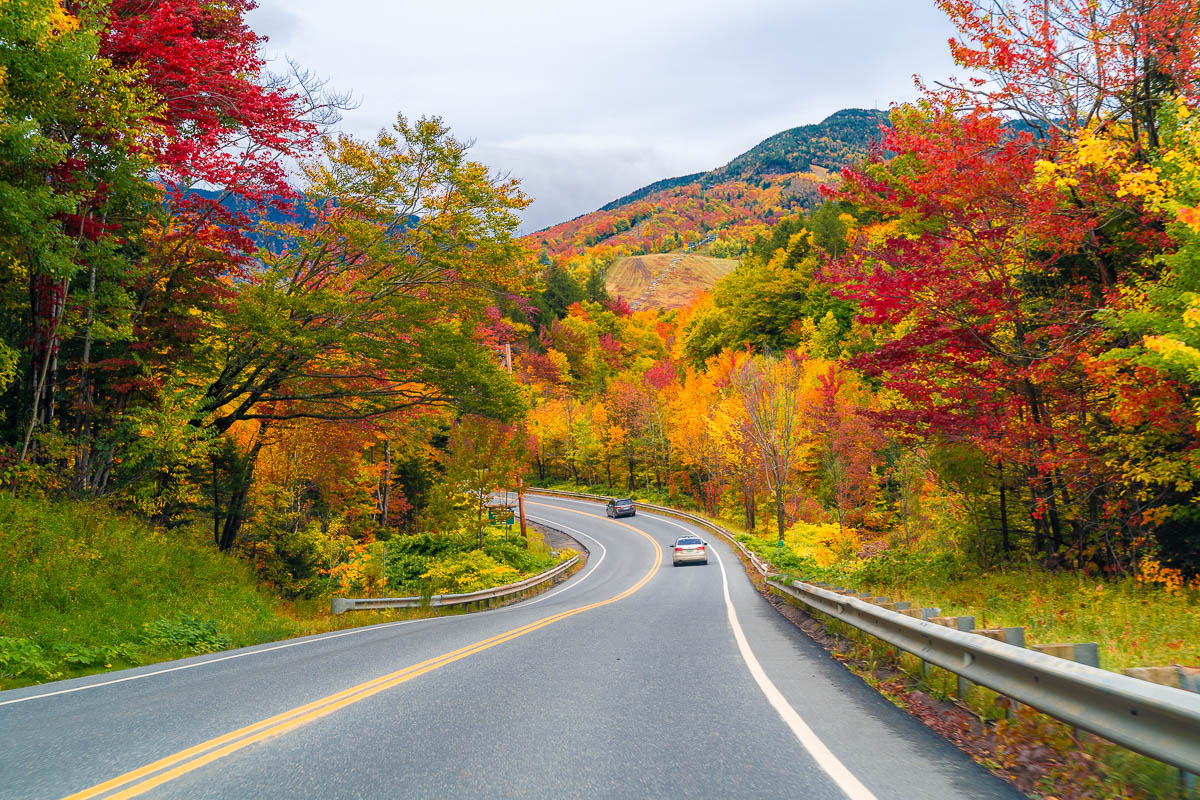
The drive through Smugglers’ Notch is easily one of the highlights of visiting Vermont in the fall. Route 108 winds between Mount Mansfield and Spruce Peak, passing dense forest, enormous boulders, and some of the most colorful scenery around Stowe.
Several hiking trails begin within the park, ranging from short woodland walks to more challenging mountain routes. Sterling Pond Trail is one of the most popular options, climbing steeply through the forest to a small mountain pond. You can also simply stop at the designated pull-offs and explore the huge boulders around the narrowest section of the pass.
Parking is limited and the road becomes extremely busy during peak foliage season, so visit early in the morning if possible.


11. Mount Mansfield
Rising 4,395 feet above sea level, Mount Mansfield is the highest mountain in Vermont and one of the best places to see the surrounding fall foliage from above.
Experienced hikers can reach the summit via several routes, but this is not an easy walk. The trails are steep and rocky, and some sections require scrambling. Conditions can also change quickly at higher elevations, so bring suitable footwear, warm layers, and plenty of water.
For an easier option, take the Gondola SkyRide from Stowe Mountain Resort. The gondola does not take you to the true summit, but it still offers incredible views across the mountains without the strenuous climb. Experienced hikers can continue toward the summit from the upper station via a steep and challenging trail.
The Auto Toll Road is another option, taking you most of the way up the mountain by car. Both the gondola and toll road operate seasonally, so check opening dates and weather conditions before visiting.

12. Moss Glen Falls
Moss Glen Falls is one of the tallest waterfalls in Vermont, yet it takes very little effort to reach. The trailhead is around 10 minutes north of Stowe, and the main viewpoint is only a short walk from the parking area.
The first part of the trail follows a boardwalk through the forest. When the path splits, take the steeper trail on the left to reach the best viewpoint overlooking the waterfall. The path continuing beside the river leads closer to the base, but it can become muddy and slippery, particularly after heavy rain.
You only need around 30 minutes for the short walk and viewpoint. A longer woodland trail continues beyond the falls if you have more time, but the quick route is enough to see the main attraction. Parking is limited, so arrive early during peak foliage season.
13. Gold Brook Covered Bridge (Emily’s Bridge)
Just a few minutes south of Stowe, Gold Brook Covered Bridge is one of the town’s most interesting historic landmarks. Built in 1844, it crosses Gold Brook and is the only surviving 19th-century covered bridge in Stowe.
The bridge is better known as Emily’s Bridge due to a local ghost story. According to the legend, a young woman named Emily planned to elope here after her relationship was rejected by her lover’s family.
When he failed to arrive, she died at the bridge, and her ghost is now said to haunt it. Several versions of the story exist, and there is little historical evidence that Emily was a real person, but the tale remains part of local folklore.
You can drive through the bridge or stop briefly to take photos from the roadside. It stands in a residential area with very limited parking, so be considerate of nearby homes and avoid blocking the road or private driveways.

14. Lake Willoughby
Surrounded by steep mountains and dense forest, Lake Willoughby looks almost more like a Norwegian fjord than a typical Vermont lake. You’ll find it in the Northeast Kingdom, around an hour and 15 minutes from Stowe.
Route 5A follows the eastern side of the lake and offers beautiful views of the water between Mount Pisgah and Mount Hor. Several roadside pull-offs and beach areas provide places to stop, although parking can fill up quickly during peak foliage season.
For a more challenging adventure, hike the Mount Pisgah North Trail. The climb is steep, but several overlooks along the route offer impressive views across Lake Willoughby and the surrounding forest.
As northern Vermont usually changes color earlier than the southern part of the state, Lake Willoughby can be a great option at the beginning of the fall foliage season. Allow at least half a day for the drive and stops, or longer if you plan to hike.


View from the top of Mount Pisgah 
View from the top of Mount Pisgah
15. Burlington
After several days of covered bridges, farms, and small towns, Burlington makes a fun change of pace. Vermont’s largest city sits on the shore of Lake Champlain, but it’s still compact enough to explore in a day.
Start at Waterfront Park, where you can walk or cycle along the lake with views toward the Adirondack Mountains in New York. Boat cruises and sunset sailings usually continue into fall, although schedules become more limited later in the season.
A few blocks uphill, the pedestrianized Church Street Marketplace is lined with restaurants, cafés, shops, and bars. Burlington also has an excellent craft beer scene, so it’s worth visiting one of the local breweries if you have time.
The seasonal Burlington Farmers Market is another good stop for local produce and Vermont-made products. For something more unusual, head to the South End to see the 38-drawer filing cabinet created by artist Bren Alvarez.
You can find plenty more ideas in my guide to the best things to do in Burlington.

16. Hogback Mountain Scenic Overlook
Known for its famous “100-mile view,” Hogback Mountain Scenic Overlook is one of the best roadside viewpoints in southern Vermont. You’ll find it along Route 9, also known as the Molly Stark Byway, between Wilmington and Brattleboro.
The overlook sits at an elevation of around 2,250 feet and offers sweeping views across the Hogback Mountain Conservation Area. On a clear day, you can see forested hills stretching across Vermont, Massachusetts, and New Hampshire.
You can park beside the Hogback Mountain Country Store and walk straight onto the viewing terrace. Before leaving, stop inside the store for Vermont maple syrup, cheese, fudge, cider donuts, and locally made gifts.


17. Bennington
Bennington is a great base for exploring the covered bridges, mountain roads, and historic villages of southern Vermont. It also has enough to see in town to fill a relaxed morning or afternoon.
Begin in Old Bennington, where you’ll find historic homes, the Old First Church, and the cemetery where poet Robert Frost is buried. From here, it’s a short drive to the Bennington Battle Monument, the tallest structure in Vermont.
An elevator takes you to the observation level, which offers views across Vermont, New York, and Massachusetts. The monument operates seasonally, so check the opening dates before visiting.
Downtown Bennington has a good selection of independent shops, restaurants, galleries, and breweries. The local farmers market also takes place on selected Saturdays and is worth visiting if it coincides with your trip.
For hiking and more fall scenery, you can continue to nearby Lake Shaftsbury State Park or Woodford State Park. Both are within easy driving distance of the town.

18. Manchester
You could easily spend a full day in Manchester, especially if you combine its historic center with one of the scenic drives or hiking trails nearby. Bennington is only around 30 minutes away, so the two towns also work well together.
Walk along Main Street in Manchester Village to see its historic homes, white-steepled church, and beautifully maintained buildings. For shopping and cafés, head to Manchester Center, where you’ll find independent stores alongside several designer outlets.
One of the town’s highlights is Hildene, the former summer home of Robert Lincoln, the son of Abraham Lincoln. The estate includes a Georgian Revival mansion, formal gardens, walking trails, and beautiful views of the surrounding mountains.
Art lovers can also visit the Southern Vermont Arts Center, which has indoor galleries and an outdoor sculpture park.
For even wider views, drive the Mount Equinox Skyline Drive or hike one of the trails within the Equinox Preserve. The Skyline Drive operates seasonally and usually closes toward the end of October, so check its status before visiting.