

The Perfect 2 Days in Florence Itinerary
Florence is one of those cities that really lives up to the hype! Between the art, history, architecture, and food, it’s easily one of my favorite places in Italy.
The good news is you don’t need a full week to experience it. If you have a well-planned itinerary for your 2 days in Florence, you can see a lot of the city. And that’s where I come in!
Florence sits right in the heart of Tuscany, surrounded by rolling hills and some of the best wine regions in the country. The historic center is compact and very walkable, which makes it perfect for a short trip.
If you only have a weekend, this 2 days in Florence itinerary covers the must-see highlights, famous museums, and iconic viewpoints so you can make the most of your time in the city.
Disclosure: This post contains a few affiliate links, which means I may receive a small commission, at no cost to you, if you make a purchase through my link.
Quick Travel Planning Tips for Florence
🏨 Where to Stay: Stay in Florence’s historic center to be close to the main sights. B&B La Terrazza Sul Duomo is a great choice if you want amazing views of the cathedral, while Hotel De Lanzi works well for a more budget-friendly stay in a central location.
🌟 Best Tours: Join a walking tour with a local to get to know the city, or book a pasta cooking class with unlimited wine for a fun, hands-on experience.
🎟️ Attractions to Book in Advance: Book tickets ahead for the Uffizi Gallery, to see Michelangelo’s David at the Galleria dell’Accademia, and for Brunelleschi’s Dome climb, as they all tend to sell out quickly.
🗺️ Best Day Trips: From Florence, visit Pisa, Siena, and San Gimignano on a guided day trip, or choose a Cinque Terre and Pisa day tour.
✈️ Airport Transfers: If you don’t want to deal with public transport after landing, you can arrange a private airport transfer to get straight to your hotel.
📱 Stay Connected: Use an eSIM from Airalo to stay online for maps, transport, and bookings without swapping SIM cards.
No time to read now?
Pin it for later!
Overview of Your 2 Days in Florence Itinerary
This 2 days in Florence itinerary covers all the city’s biggest highlights in just a weekend. You’ll have time to visit Florence’s most famous museums, admire Renaissance masterpieces, wander through the historic center, and enjoy some incredible food along the way.
Day 1 focuses on the heart of Florence, including Michelangelo’s David at the Accademia Gallery, the Medici Chapel, and the iconic Duomo Complex. You’ll also have time for rooftop views and an evening stroll through the city center.
Day 2 starts with the Uffizi Gallery before taking you across the Arno River to some of Florence’s most beautiful spots, including Ponte Vecchio, Pitti Palace, Boboli Gardens, and Piazzale Michelangelo for sunset.
I highly recommend booking tickets in advance for the Accademia Gallery, Uffizi Gallery, and Duomo Complex. Florence is one of Italy’s most popular destinations, and reserving your tickets ahead of time can save you hours of waiting in line!
Breakdown of your Florence itinerary
- Day 1: Accademia Gallery, Medici Chapel, Lunch at Osteria Pastella, Duomo Complex, View on Art Rooftop Cocktail Bar, Piazza della Repubblica, Fontana del Porcellino, Dinner at Osteria del Fiore
- Day 2: Uffizi Gallery, Lunch at All’Antico Vinaio, Piazza della Signoria, Vivoli, Ponte Vecchio, Pitti Palace & Boboli Gardens, Giardino delle Rose, Piazzale Michelangelo, Dinner at Berberè Pizzeria or Misterpizza
Map for the best sights to see in Florence in 2 days
Below you can find a customized map that includes all the locations you will need for this Florence itinerary.
I marked your 2 days in Florence with different colors – I used blue for the first day and yellow for the second day, so you can easily see which places you’re going to visit each day.
How to use this map: This map is fully interactive, so you can move around, zoom in/zoom out, and click on the icons. If you want to see a larger map, click on the bracket in the upper right corner. To see more details and the different layers, click on the tab in the upper left corner. If you want to save it for later, click on the star icon next to the name of the map. Then simply open Google Maps either on your desktop or phone, go to ‘Saved’/’Maps’, and open the map whenever you need it.
Day 1
Accademia Gallery
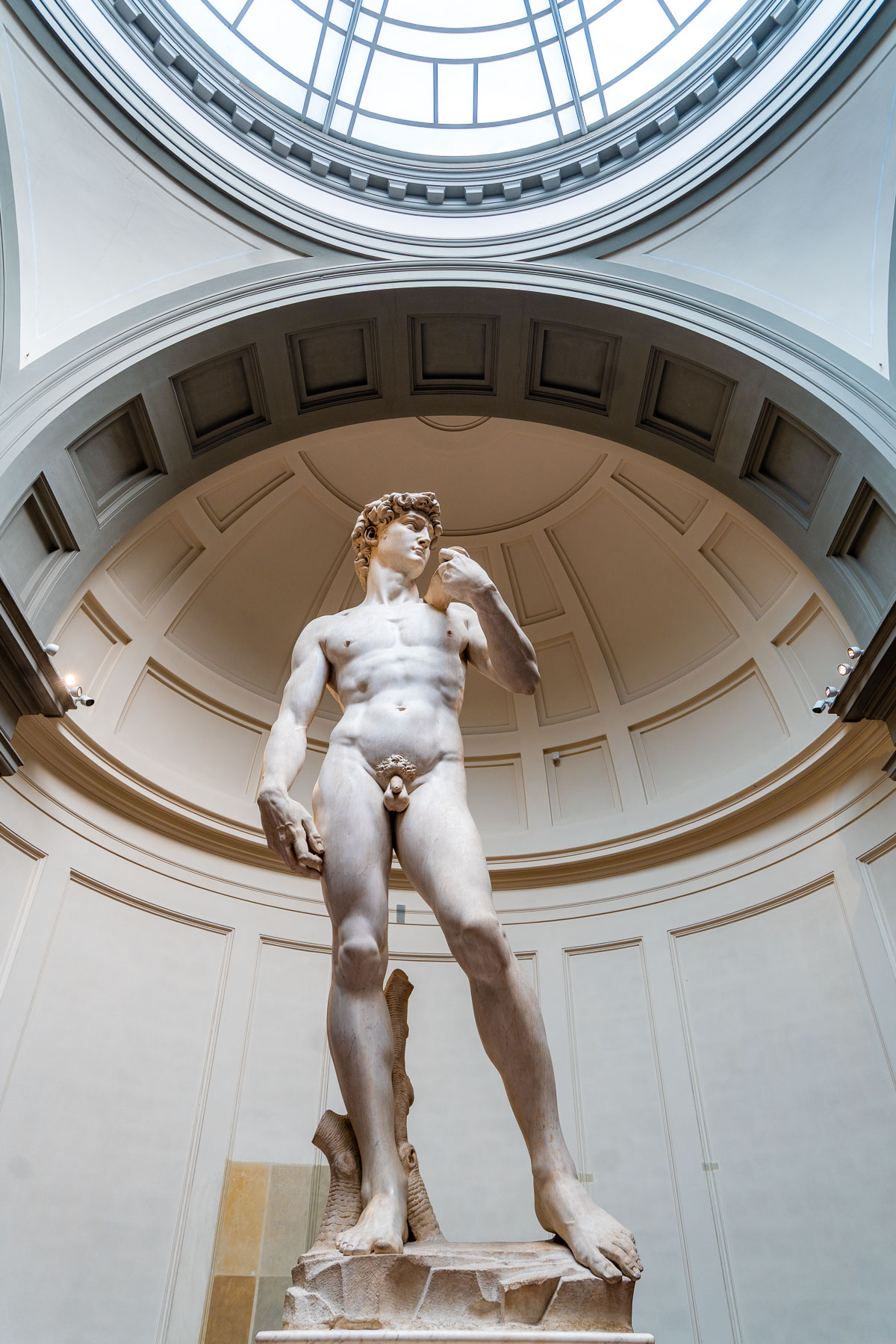
Start your first day in Florence at the Accademia Gallery, home to Michelangelo’s famous David statue. Even if you’re not usually big on museums, this one is worth it. Seeing David in person is completely different from photos, and it’s easily one of the most impressive sculptures in the world.
You’ll need to book a timed entry ticket for the Accademia Gallery, and I highly recommend booking as soon as you can. Tickets sometimes sell out weeks in advance, especially during peak season, so it’s not something you want to leave until the last minute.
If you want more context during your visit, joining a guided tour is a great option. These often include skip-the-line access, which can save you a lot of time on busy days.
I recommend booking an early morning time slot if you can. Crowds build quickly throughout the day, and the gallery is much easier to enjoy when it’s quieter. You can visit the gallery in 1-1.5 hours, depending on how much time you want to spend in each room.
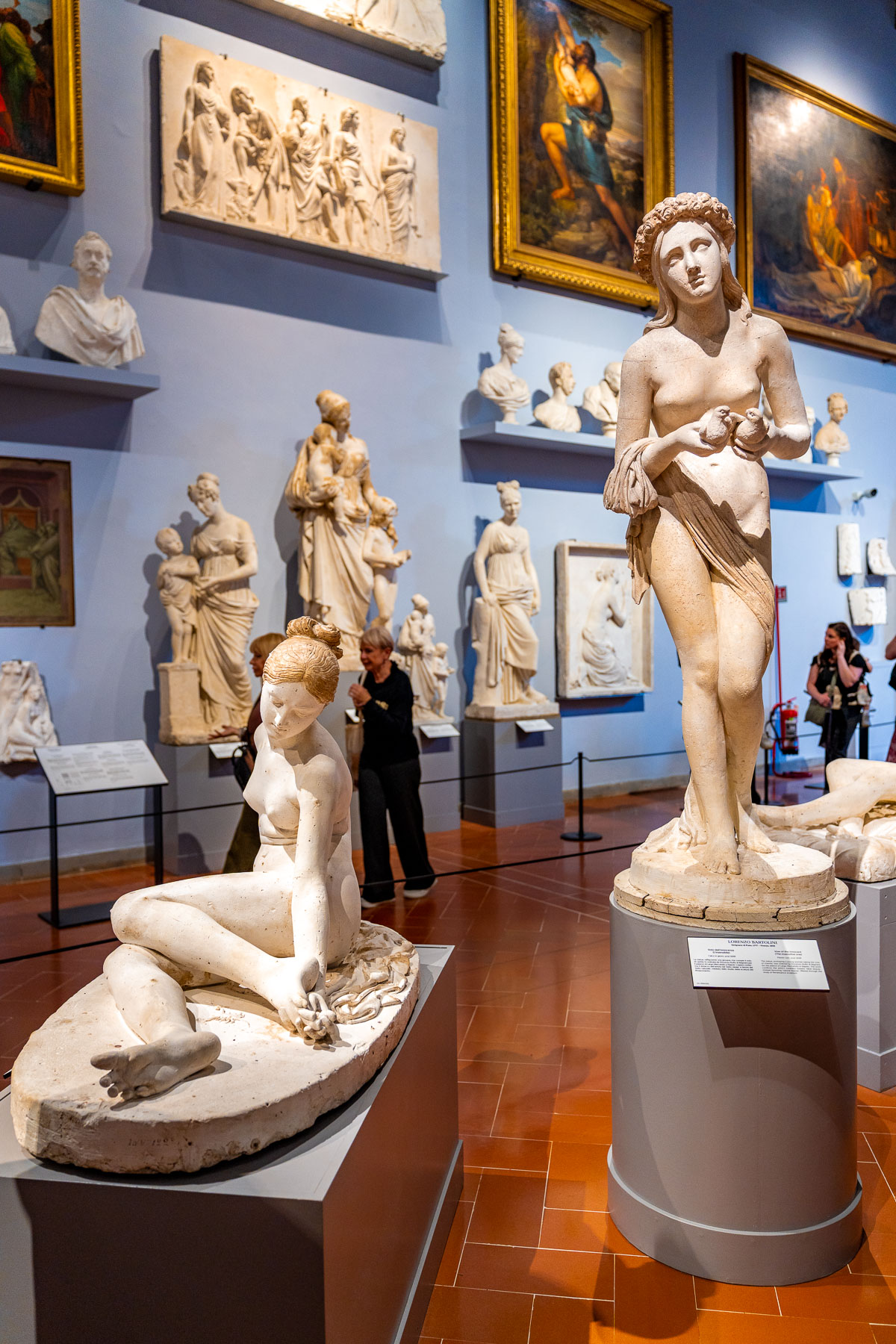
While David is the main reason most people visit, don’t rush straight past everything else. The unfinished Prisoners sculptures are really interesting to see, and they give you a cool look into Michelangelo’s process.
Medici Chapel
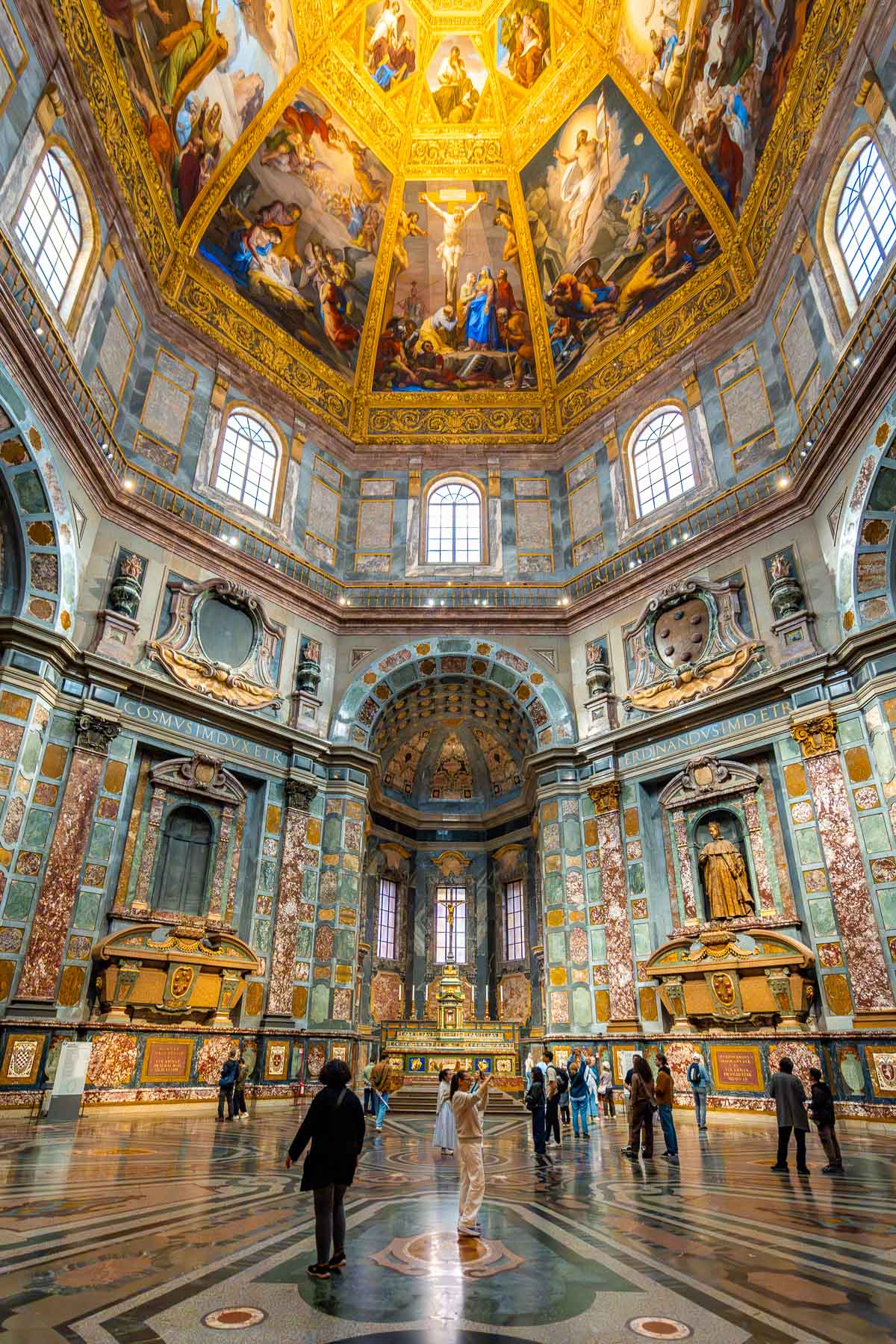
After visiting the Accademia Gallery, make your way to the Medici Chapel, one of Florence’s most impressive but often overlooked attractions. Located behind the Basilica of San Lorenzo, the chapels served as the burial place of the powerful Medici family, who played a huge role in shaping Florence during the Renaissance.
The highlight of the visit is the New Sacristy, designed by Michelangelo. It’s home to several of his sculptures, including Dawn, Dusk, Day, and Night, which were created for the tombs of two Medici dukes.
Even if you’re not particularly interested in history, the craftsmanship is incredible and makes this one of the most memorable places to visit in Florence.
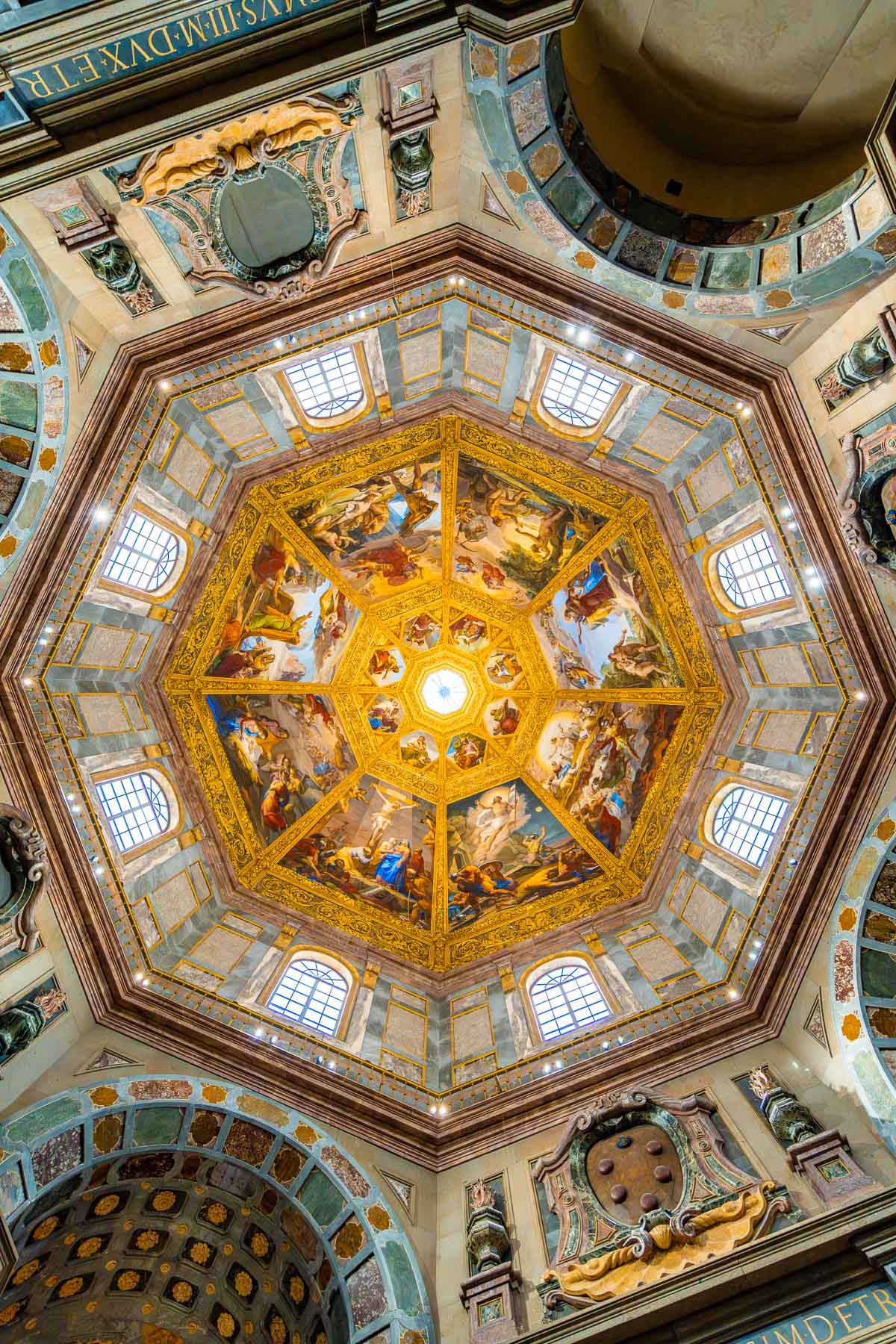
You’ll also get to see the Chapel of the Princes, a massive octagonal room decorated with colorful marble, granite, and semi precious stones. The contrast between the ornate chapel and Michelangelo’s more restrained designs makes the visit even more interesting.
Most people spend around 45 minutes to an hour exploring the chapels, making it an easy addition to your Florence itinerary. Since it’s only a short walk from the Accademia Gallery and the Duomo, it fits perfectly into your first day in the city.
Lunch at Osteria Pastella
After a busy morning of sightseeing, it’s time for a lunch break before continuing to the Duomo Complex. Osteria Pastella is one of the most popular restaurants in Florence, known for its fresh pasta dishes and unique tableside preparations.
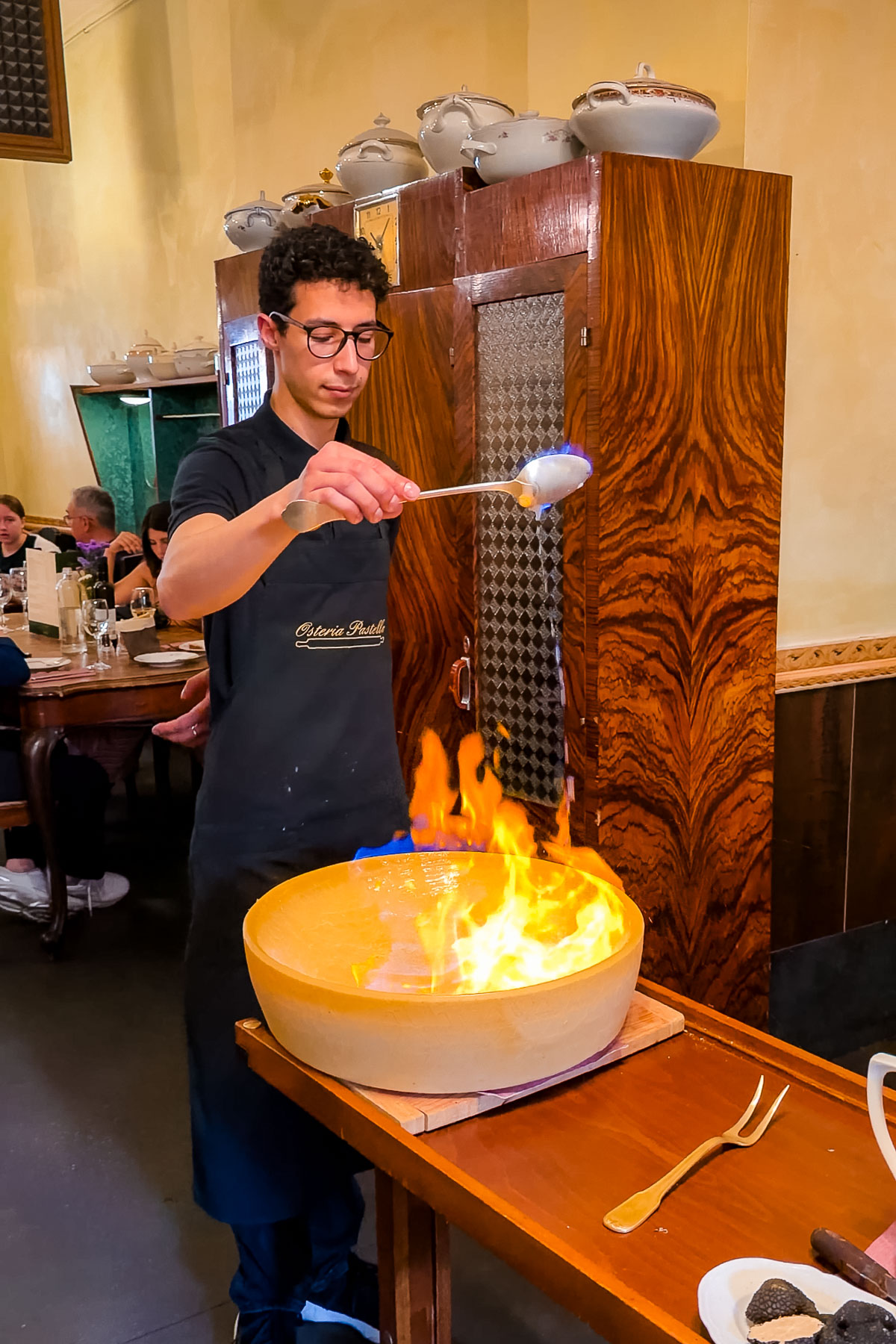
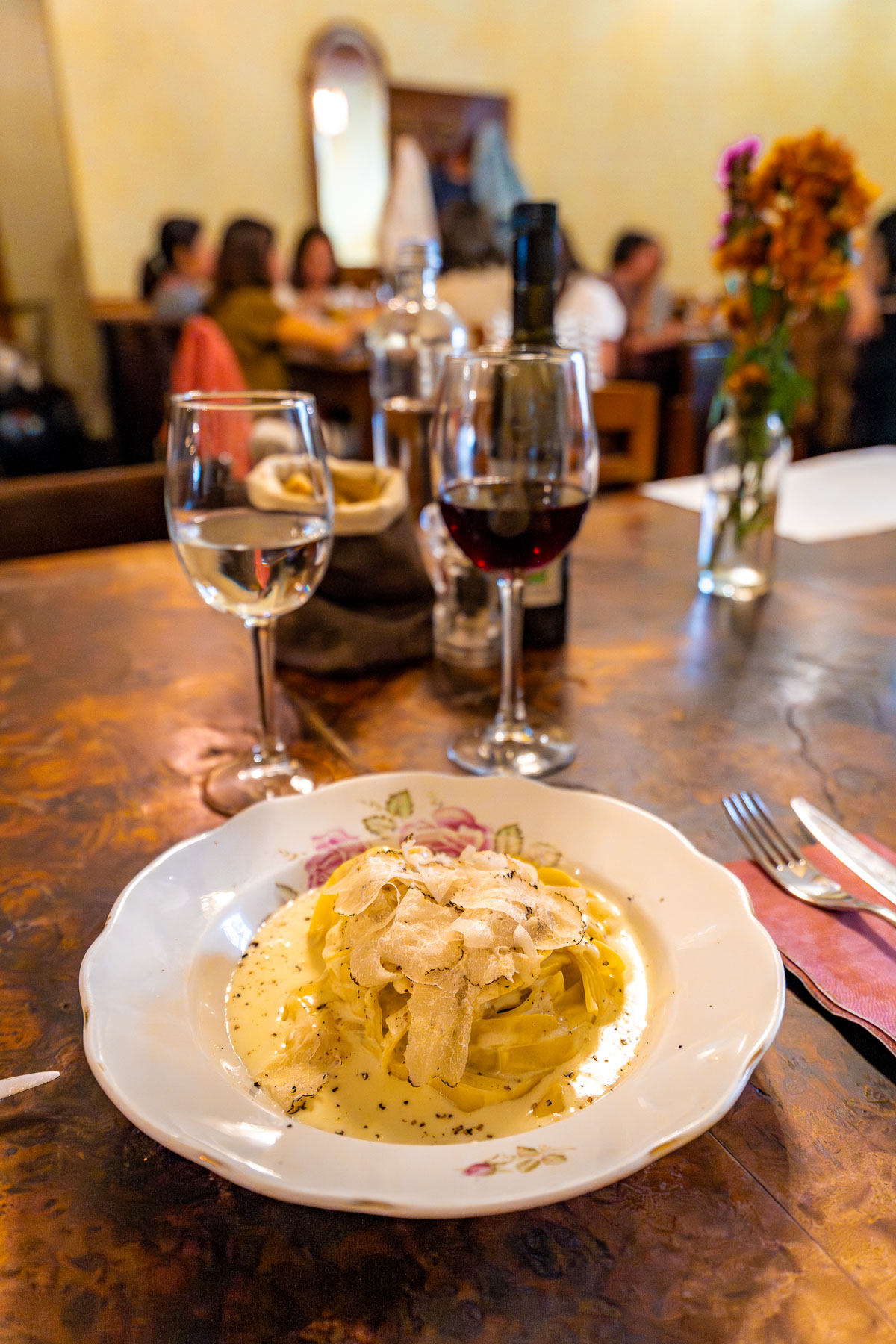
If you’re not sure what to order, I highly recommend the Tagliatelle Flambé! The dish is prepared right at your table, where the staff use a flambé technique to melt the cheese inside a giant pecorino wheel before mixing the pasta through it. It’s then topped with freshly shaved truffles.
It’s definitely a tourist favorite, but it’s also genuinely delicious and one of the most memorable meals I had in Florence.
Located just a 10-minute walk from the Medici Chapels, it’s a convenient stop on today’s itinerary. While there are plenty of great restaurants in Florence, I think Osteria Pastella is worth considering if you’re looking for something a little more special than a quick lunch between attractions.
Reservations are highly recommended, especially during peak season when tables can fill up quickly.
Duomo Complex
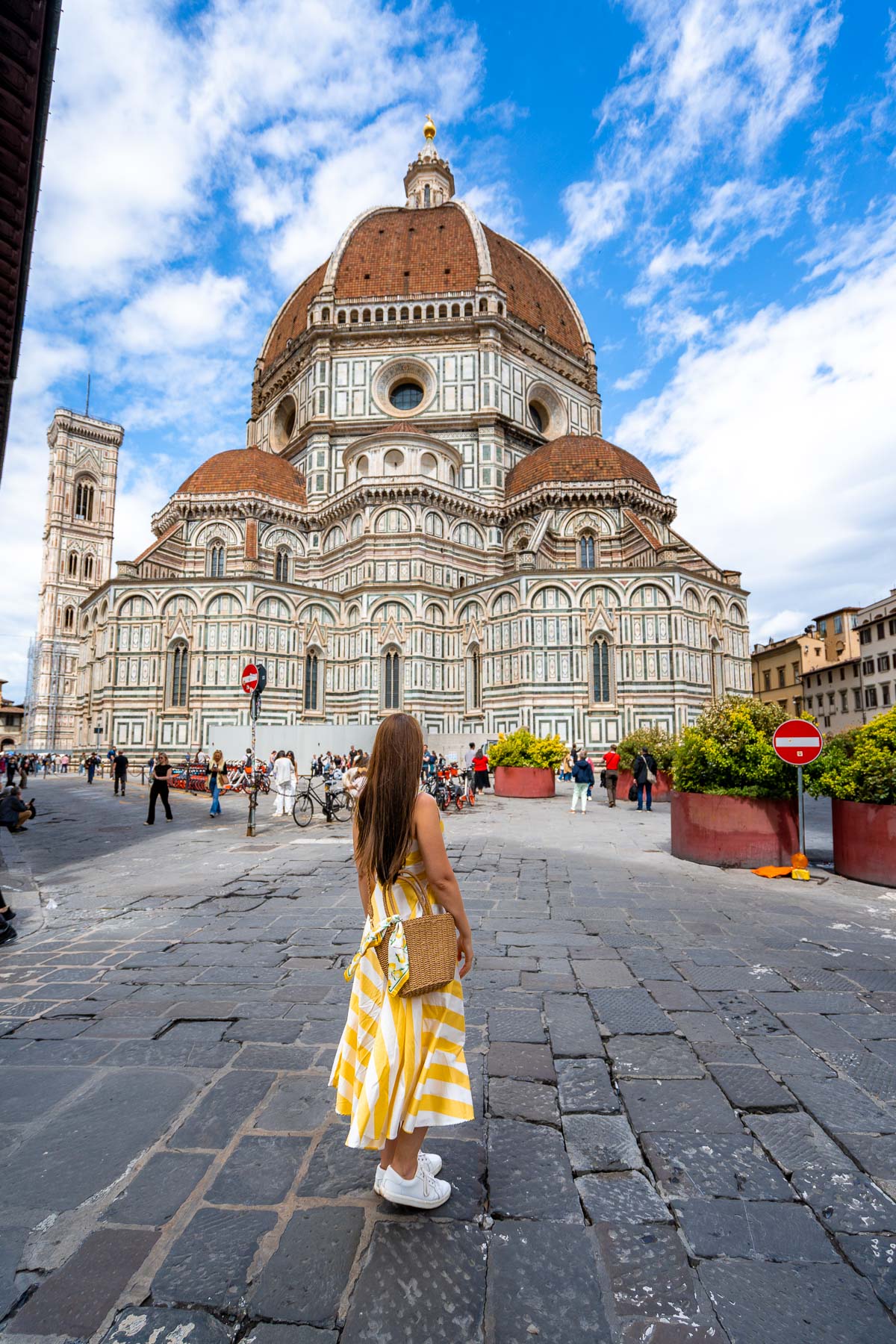
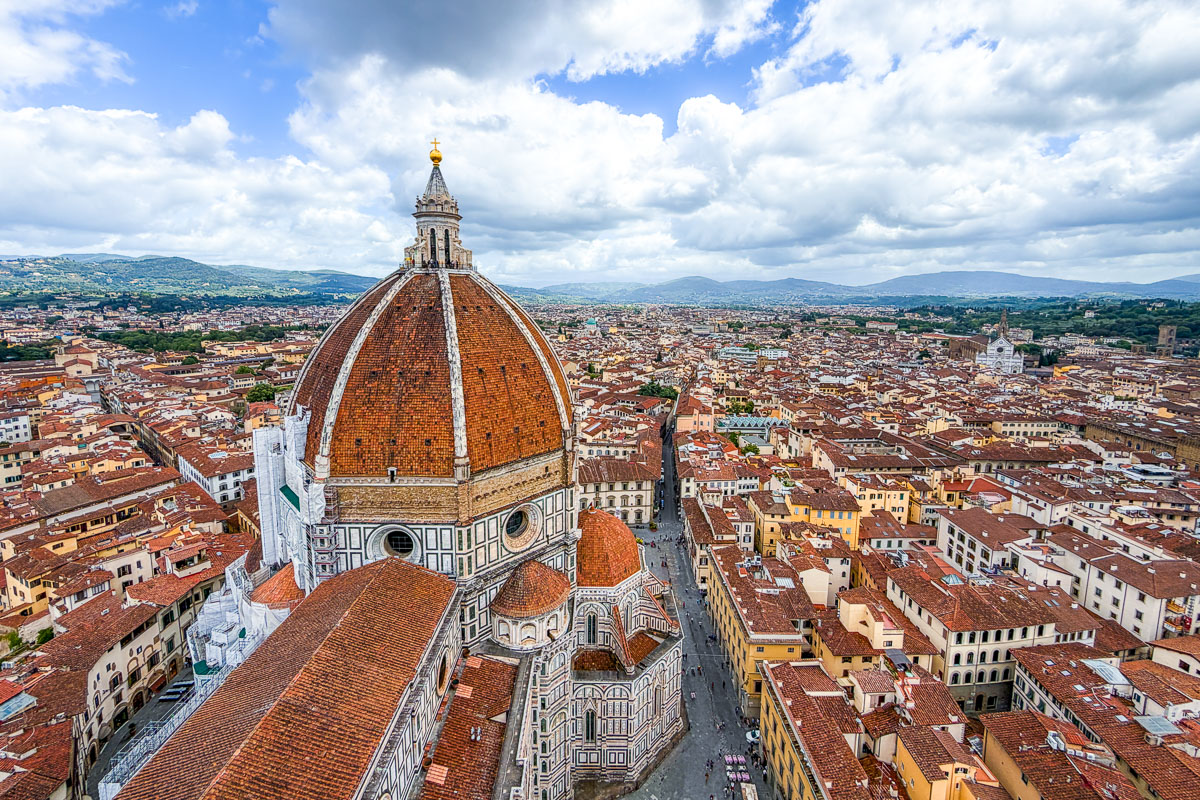
No first trip to Florence would be complete without visiting the Duomo Complex. Dominating the city’s skyline, Brunelleschi’s famous dome has become one of Florence’s most recognizable landmarks, and climbing to the top is one of the highlights of this itinerary.
Many people think the Duomo is just one building, but it’s actually a collection of several major landmarks located right next to each other.
The complex includes the Cathedral of Santa Maria del Fiore, Brunelleschi’s Dome (Cupola), Giotto’s Bell Tower, the Baptistery of San Giovanni, the Crypt of Santa Reparata, and the Opera del Duomo Museum.
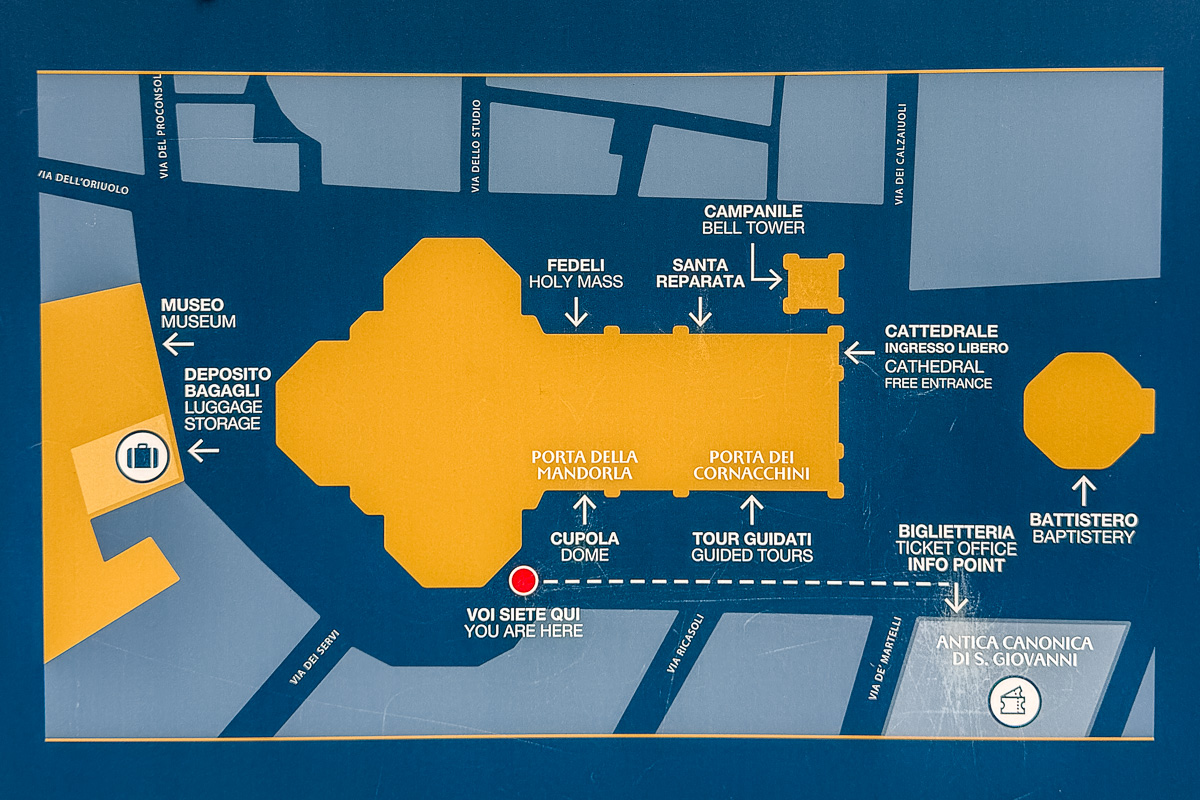
The inside of the cathedral itself is free to visit, but all other parts of the complex require a ticket, which you can buy directly on the website. There are three main ticket types available, called Brunelleschi, Giotto, and Ghiberti.
The Brunelleschi ticket is the all-inclusive option, and it’s the only one that includes the Dome climb so if you want to do that, you need to purchase this one! The ticket starts with the Dome climb and for this, you need to book a specific time slot in advance.
Then you have three calendar days to visit all the rest, but honestly, I think one afternoon is enough. Of course it depends on how big the lines are (every attraction has a different line), and how long you want to linger at each site.
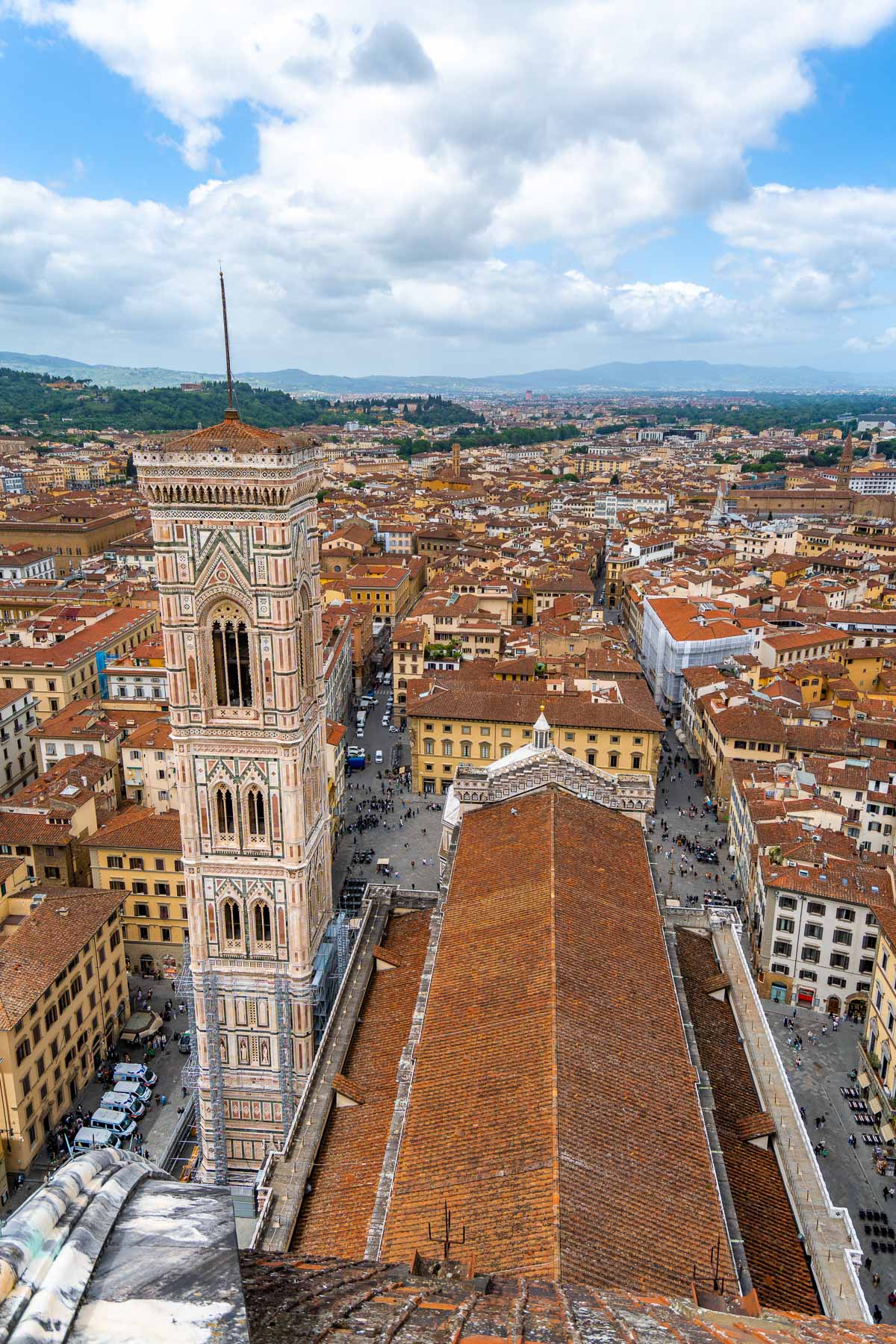
If you plan to climb the dome, keep in mind that it involves 463 steps and there is no elevator. The same applies to Giotto’s Bell Tower. Many people focus on the Dome climb, but I actually think the view from the Bell Tower is better since you can see the Dome itself from there!
While you can absolutely visit everything independently, I personally recommend booking a guided tour if it fits your budget. This tour includes skip-the-line cathedral access, the Duomo Museum, and the dome climb, all with a local guide.
If you want something even more special, you can also book this exclusive tour that includes access to the Duomo terraces, which are normally closed to the public.
The view from the top of Brunelleschi’s Dome 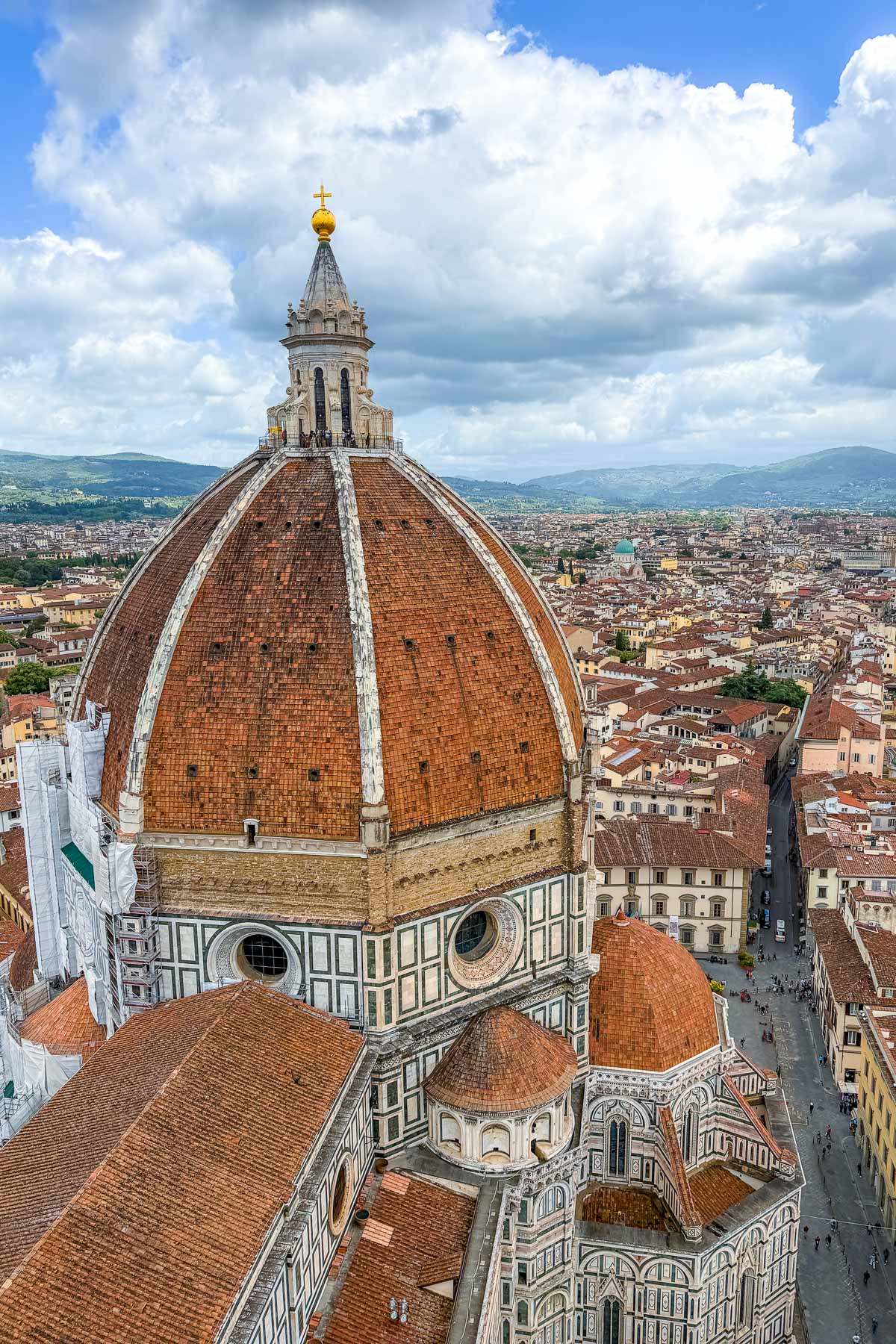
View from Giotto’s Bell Tower
View on Art Rooftop Cocktail Bar
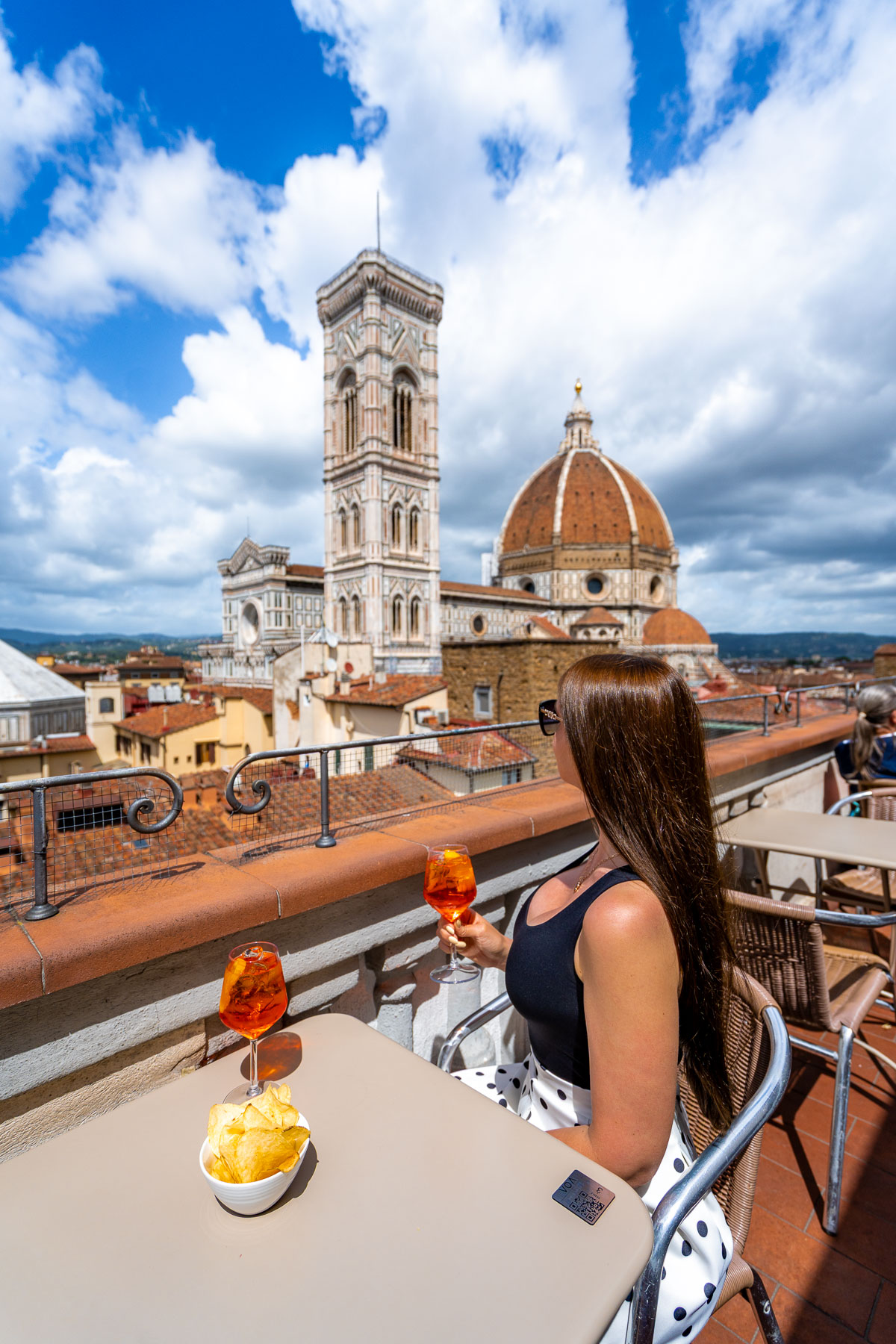
One of my favorite rooftop bars in Florence is View on Art Rooftop Cocktail Bar! Located on top of Hotel Medici, it offers incredible views over Florence’s historic center, including a fantastic close-up look at Brunelleschi’s Dome.
While I’ve included it after the Duomo Complex in this itinerary, you don’t necessarily have to follow that order. Since it’s located right super close to the Duomo, it’s easy to visit either after you’re done with the Complex, or in between sights if you need some rest.
I recommend visiting in the middle of the afternoon when the light is perfect for photos and the Duomo is beautifully illuminated. Grab a drink, take in the views, and enjoy a different perspective of Florence before continuing with the rest of your day!
Piazza della Repubblica
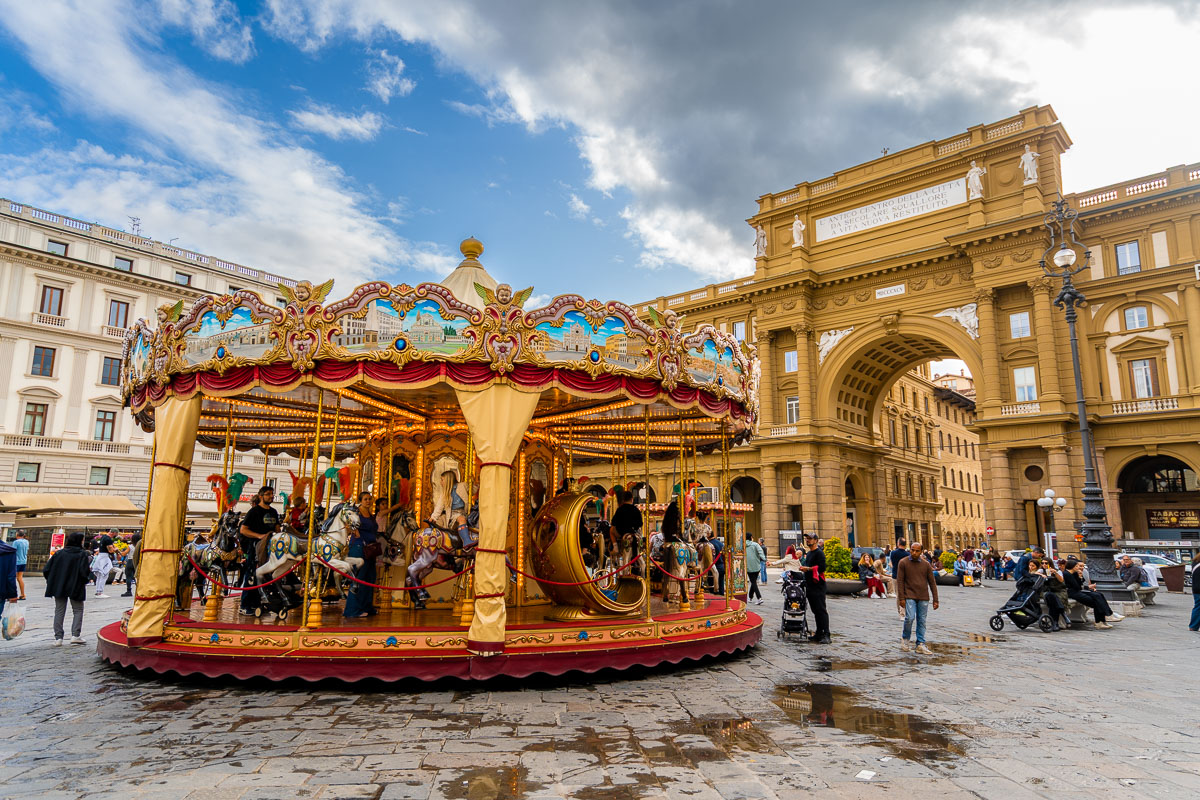
A short walk from the rooftop bar and the Duomo will bring you to Piazza della Repubblica, one of the most elegant squares in Florence. Surrounded by historic cafés, restaurants, and grand buildings, it’s a lively spot that feels quite different from the medieval streets you’ll find elsewhere in the city.
The square marks the center of ancient Florence and has been an important gathering place for centuries. It’s a great place to slow down for a few minutes, admire the architecture, and soak up the atmosphere. You’ll often find street performers and musicians here, especially in the late afternoon and evening.
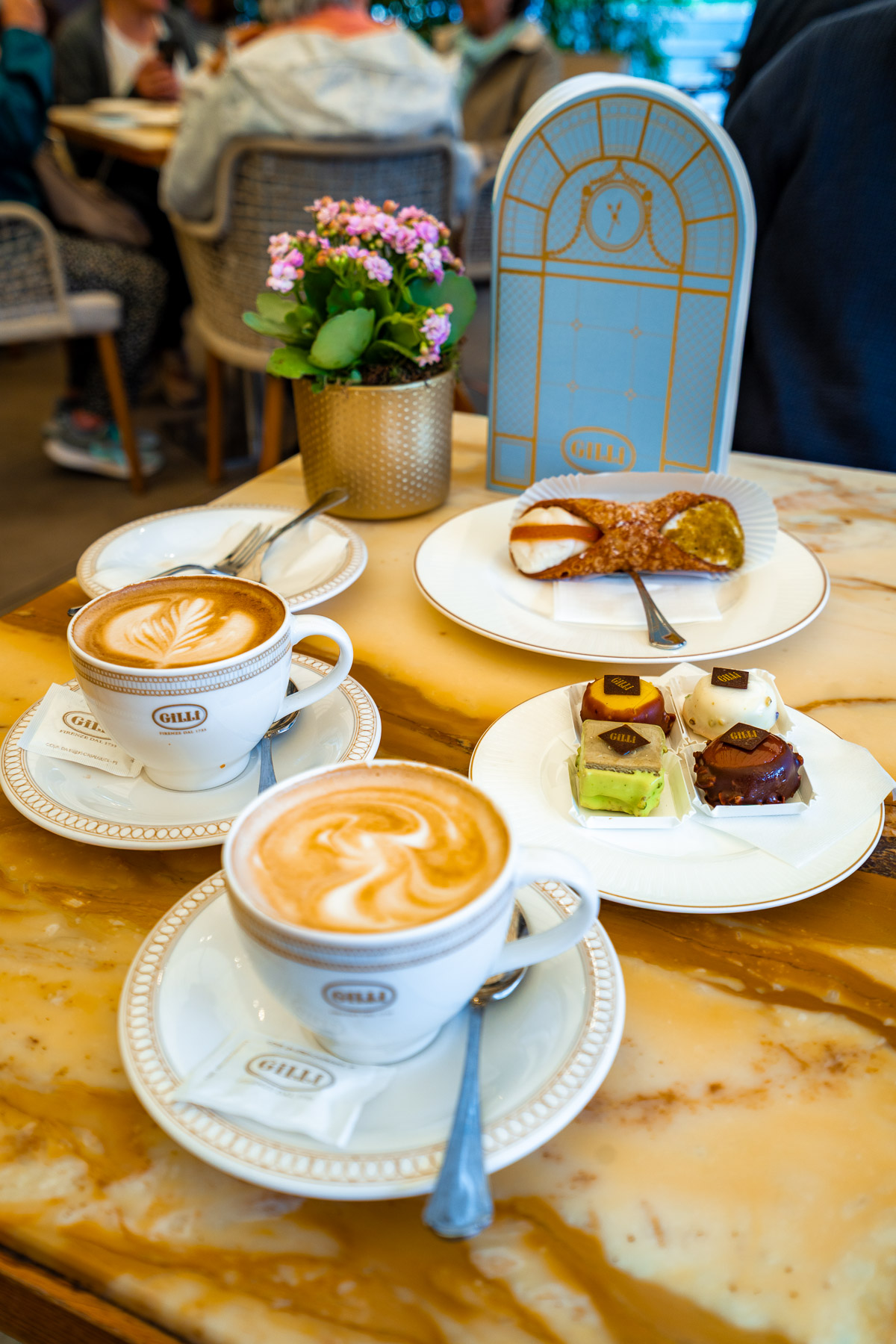
One of the most famous cafés on the square is Caffè Gilli, which has been serving customers since the 18th century. It’s the perfect place for an afternoon coffee if you need a bit of a caffeine boost!
Fontana del Porcellino
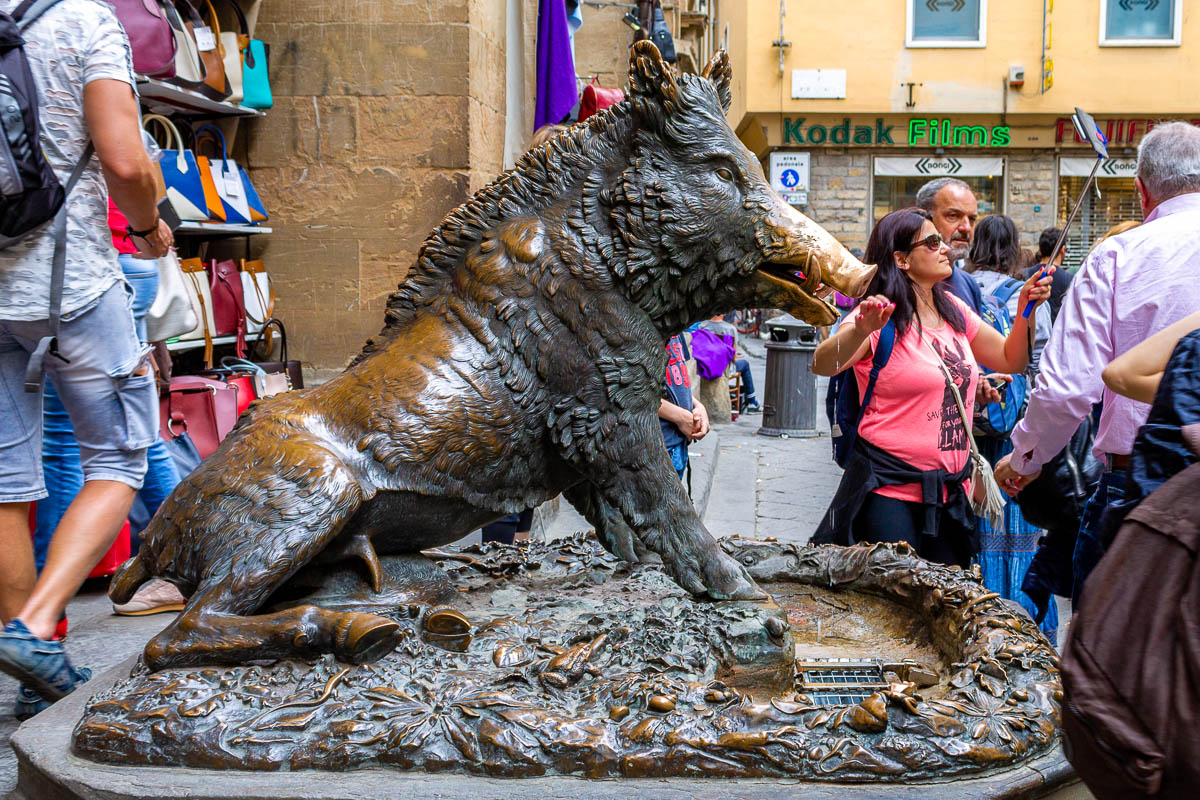
If you still have a bit of energy left after exploring Piazza della Repubblica, it’s worth taking a short 5-minute walk to Fontana del Porcellino. This famous bronze fountain depicts a wild boar and has become one of Florence’s most beloved landmarks.
According to local tradition, rubbing the boar’s nose and placing a coin in its mouth will bring you good luck and ensure you’ll return to Florence one day. The coin is supposed to fall through the grate below after you let it go, although don’t be surprised if it takes a couple of tries!
The fountain is located beside the historic Mercato Nuovo, which was once known for its silk and luxury goods merchants. Today, you’ll find a mix of souvenir stalls and leather vendors surrounding the area.
Dinner at Osteria del Fiore
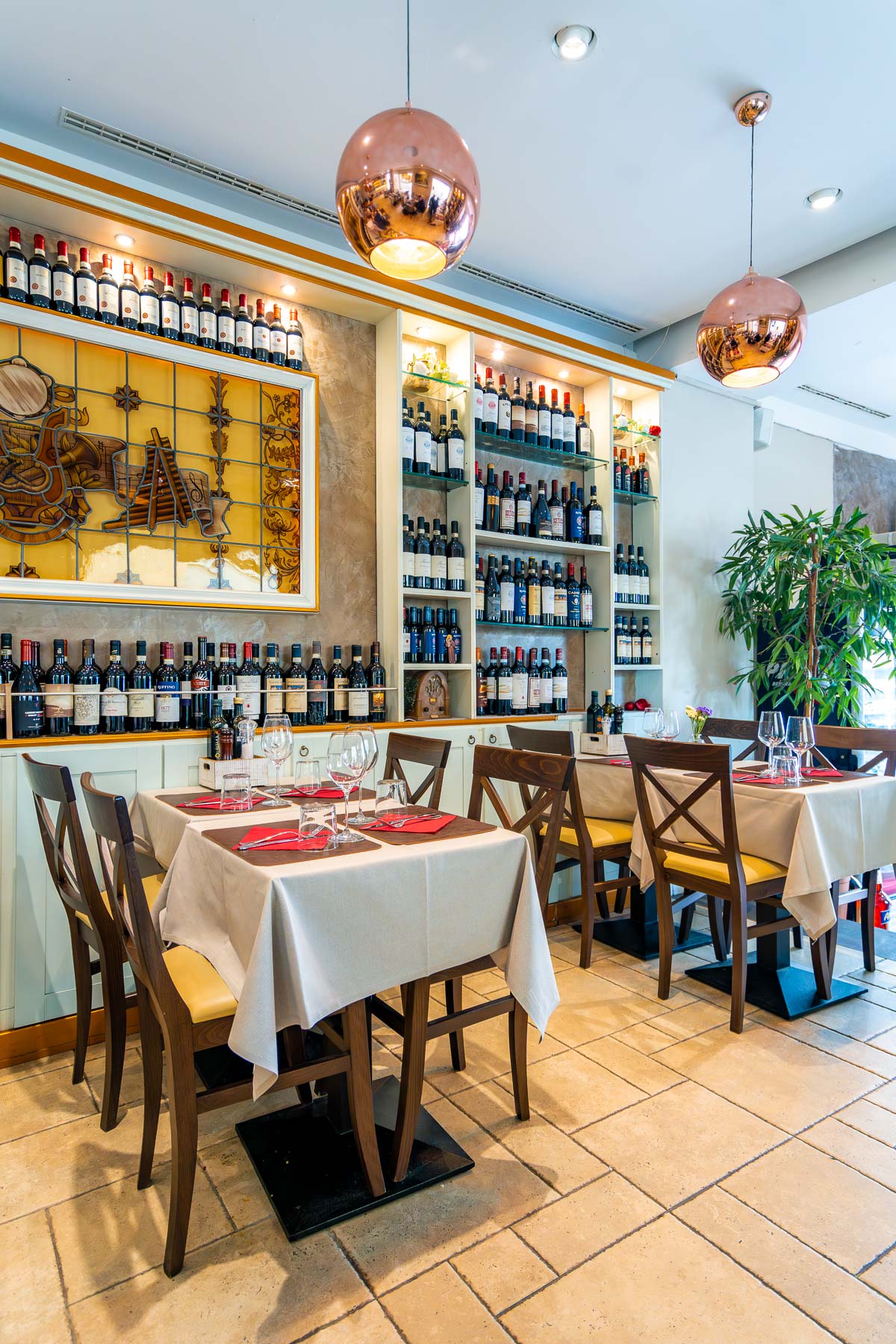
To wrap up your first day in Florence, head to Osteria del Fiore for dinner. Located just steps away from the Duomo, it’s a convenient option after a day spent exploring the city’s historic center.
The menu features a mix of traditional Tuscan dishes, fresh pasta, and Florentine specialties. Everything we tried here was excellent, making it one of my favorite restaurants in Florence.
Despite being in such a central location, the restaurant feels much less touristy than many of the places surrounding Piazza del Duomo. It’s a great spot to enjoy a relaxed dinner while reflecting on everything you’ve seen throughout the day. Reservations are recommended!
Day 2
Uffizi Gallery
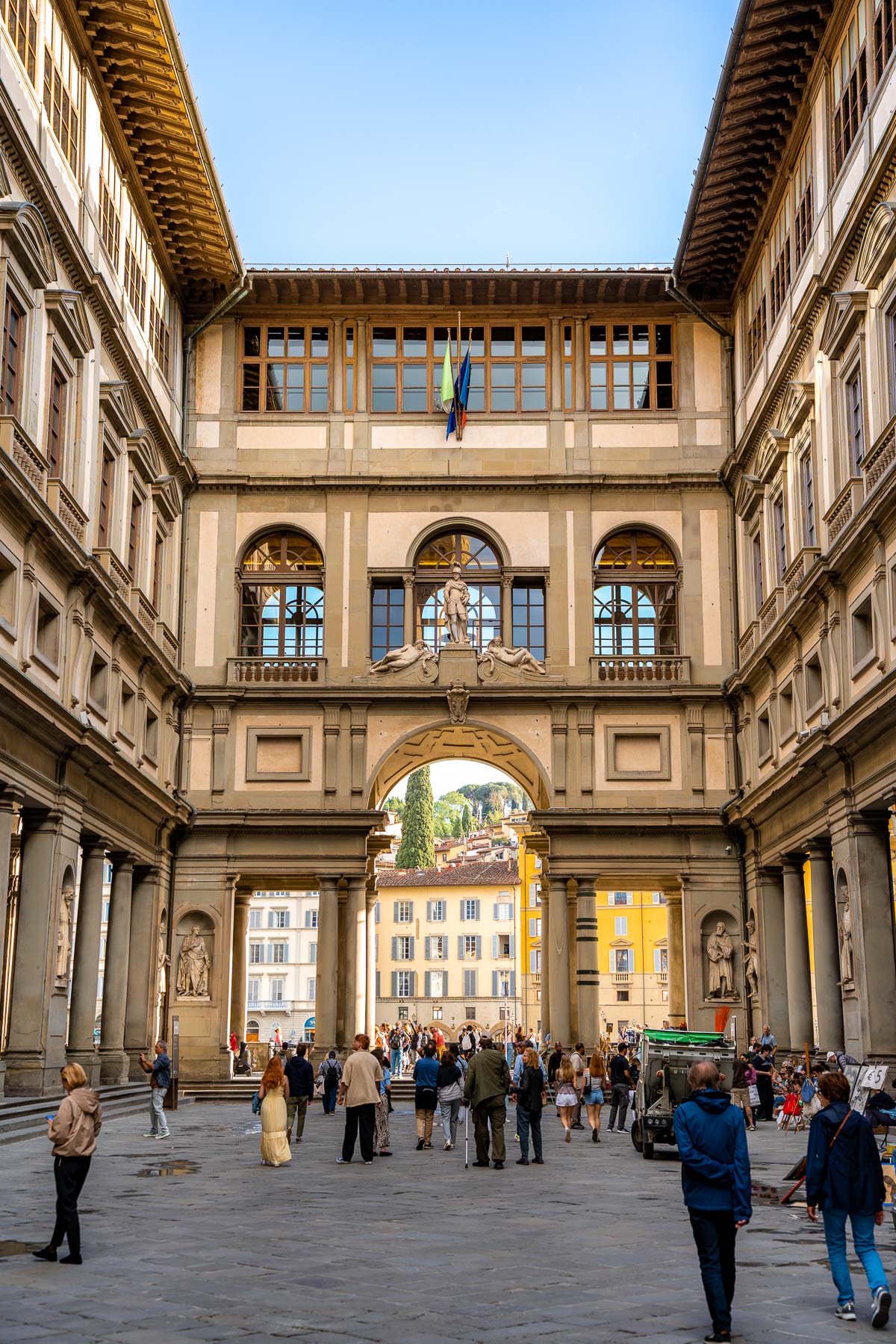
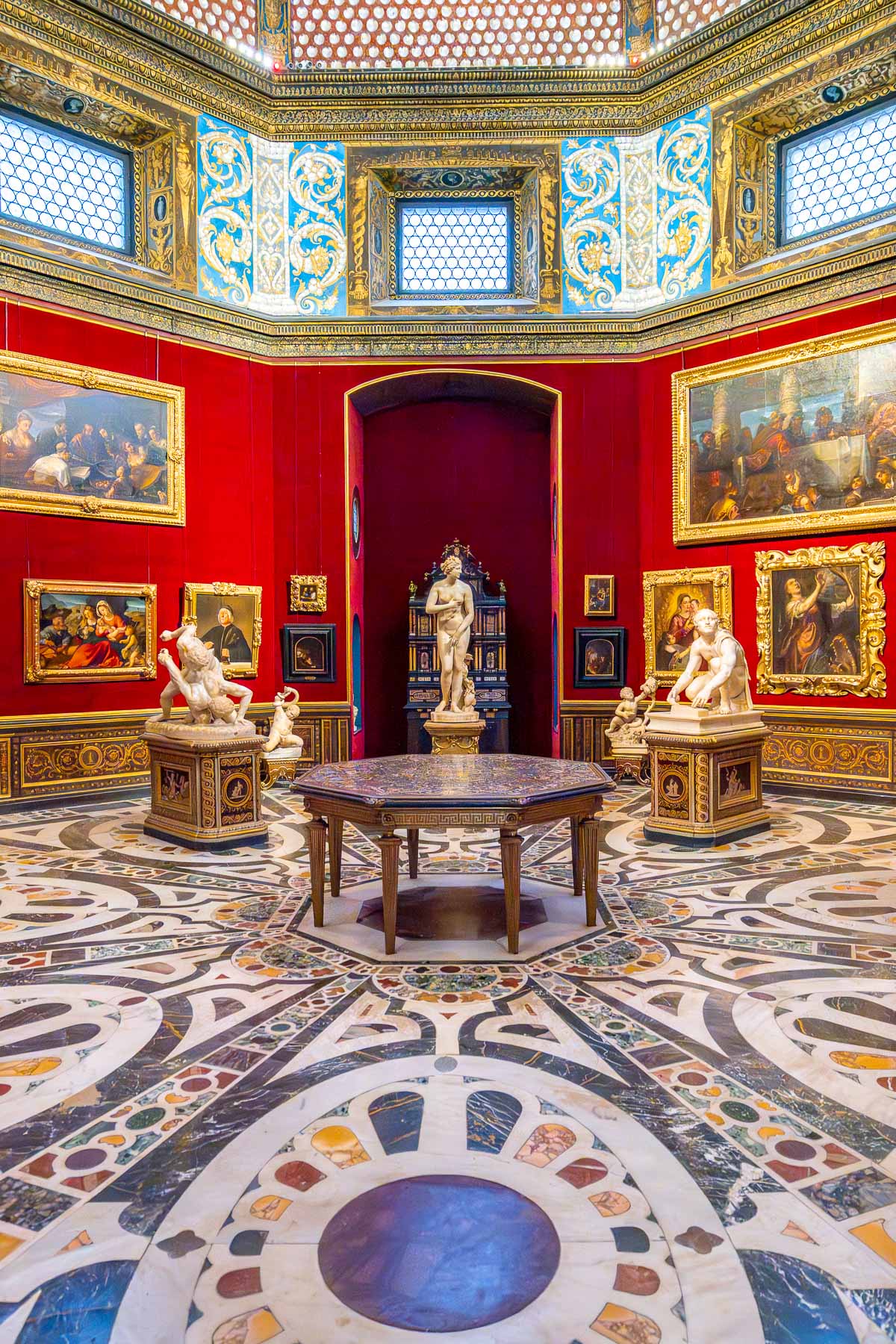
Start your second day with a visit to the Uffizi Gallery, one of the most famous art museums in the world, and a must-include stop in any Florence itinerary. This is where you’ll see some of the most important Renaissance masterpieces, including works by Botticelli, Leonardo da Vinci, Michelangelo, and Caravaggio.
You will need to book a timed entry ticket in advance for the Uffizi. This is not a place where you want to rely on same-day tickets, especially in peak season. Lines for on-site tickets can be very long, and timed entry makes the whole experience much smoother.
If you enjoy art history or want more context, a guided tour is a great option and often includes priority access. It’s also a great alternative if individual tickets are all sold out.
You’ll need around 2-3 hours to visit the museum, maybe even more, depending on how detailed you want your visit to be! One of the highlights you can’t miss is Botticelli’s Birth of Venus, which is usually one of the busiest rooms in the gallery.
Lunch at All’Antico Vinaio
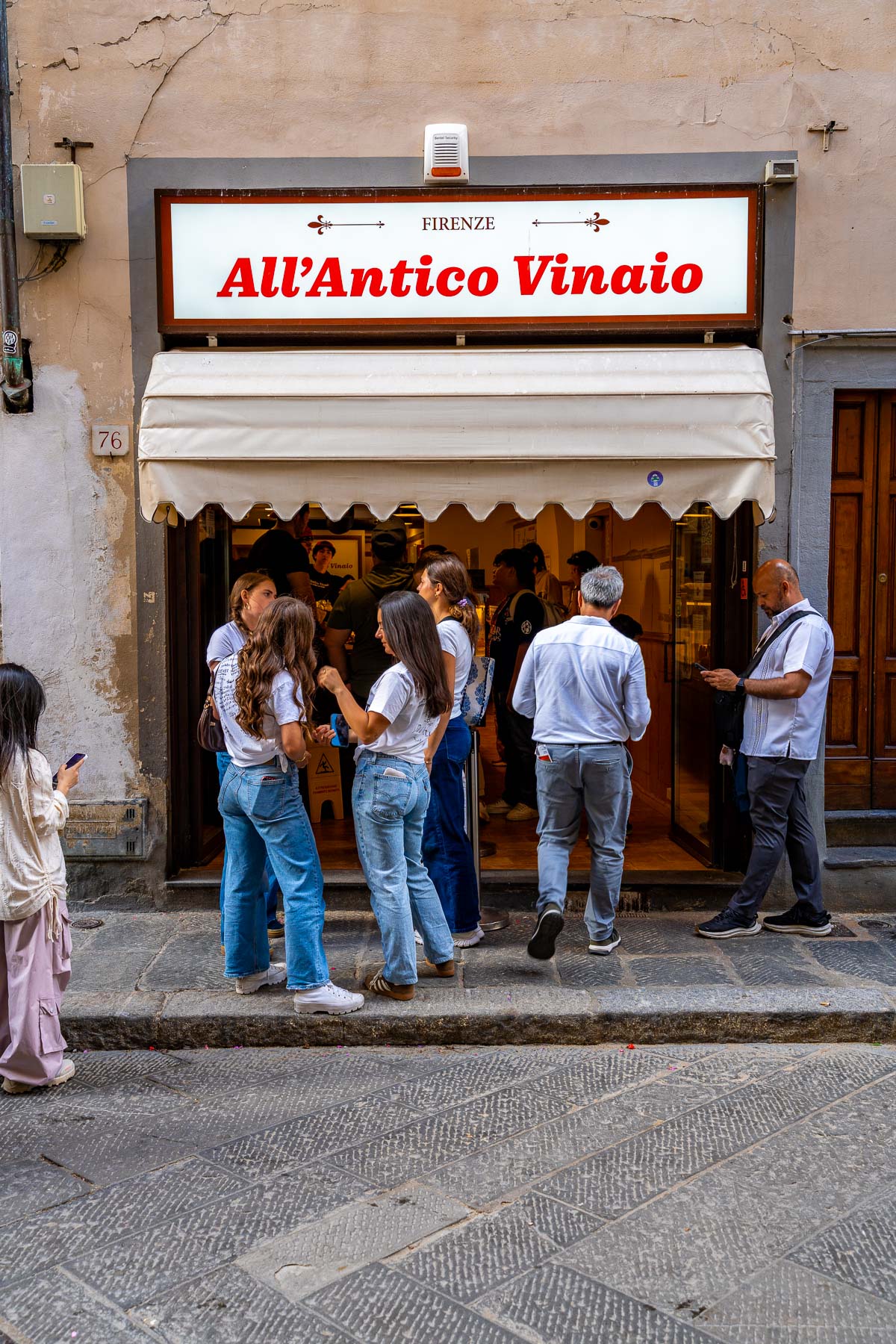
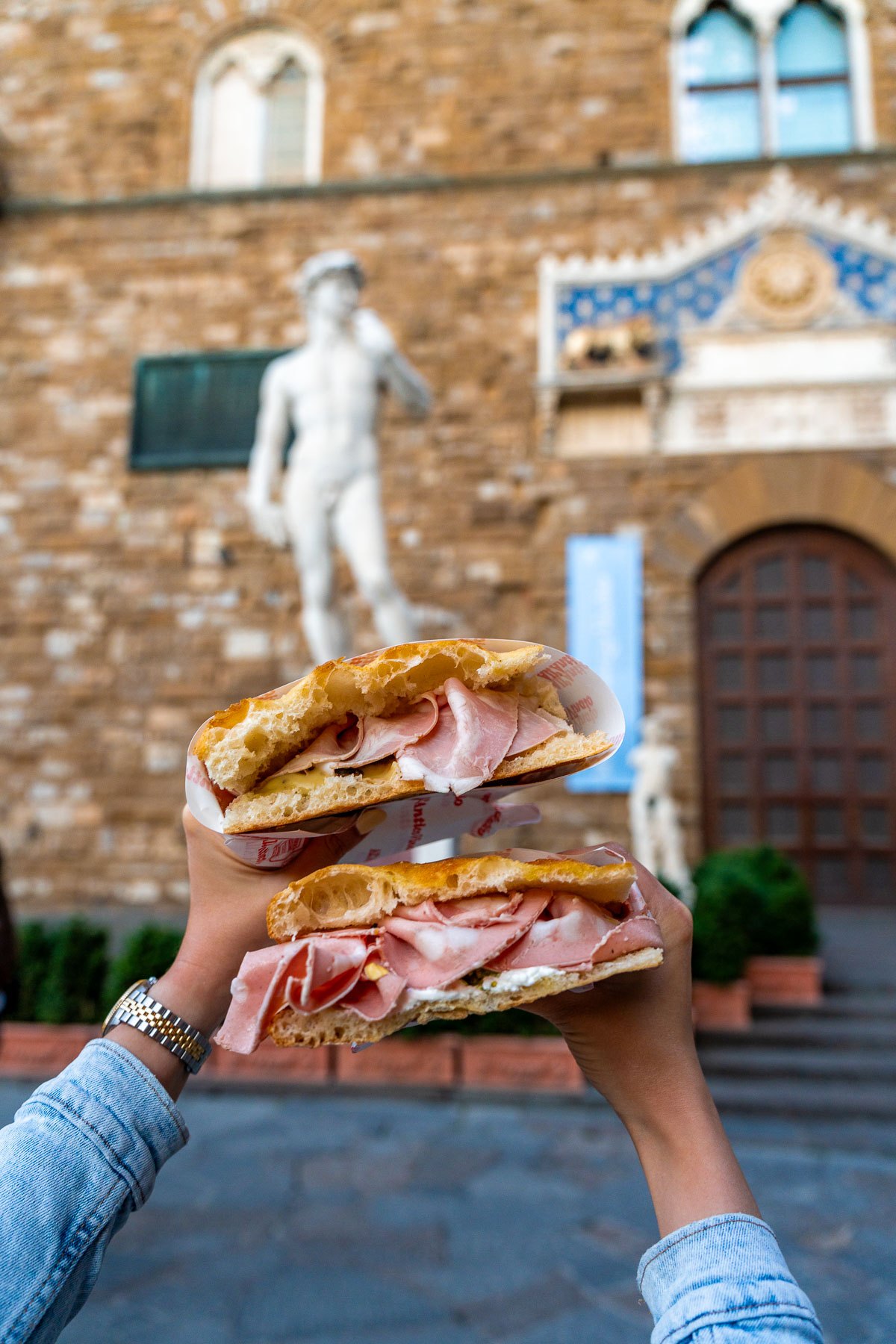
If you’ve seen photos of giant Florentine sandwiches all over social media, chances are they came from All’Antico Vinaio! Known for its freshly baked schiacciata bread and generously filled sandwiches, it’s one of the most famous places to eat in Florence.
There are several different locations around the historic center, but the original shop is located just a short walk from the Uffizi Gallery on Via dei Neri. The menu features a variety of fillings, ranging from classic Tuscan cured meats and cheeses to vegetarian options, so there’s something for everyone.
Don’t be surprised if you see a line stretching down the street. The queues can look intimidating, but they usually move quite quickly. Once you’ve got your sandwich, I recommend taking it to Piazza della Signoria, which is only a couple of minutes away and makes the perfect spot for a casual lunch break.
The portions are huge, the ingredients are fresh, and while there are plenty of sandwich shops in Florence, this is one of those places that’s worth trying at least once during your visit.
Piazza della Signoria
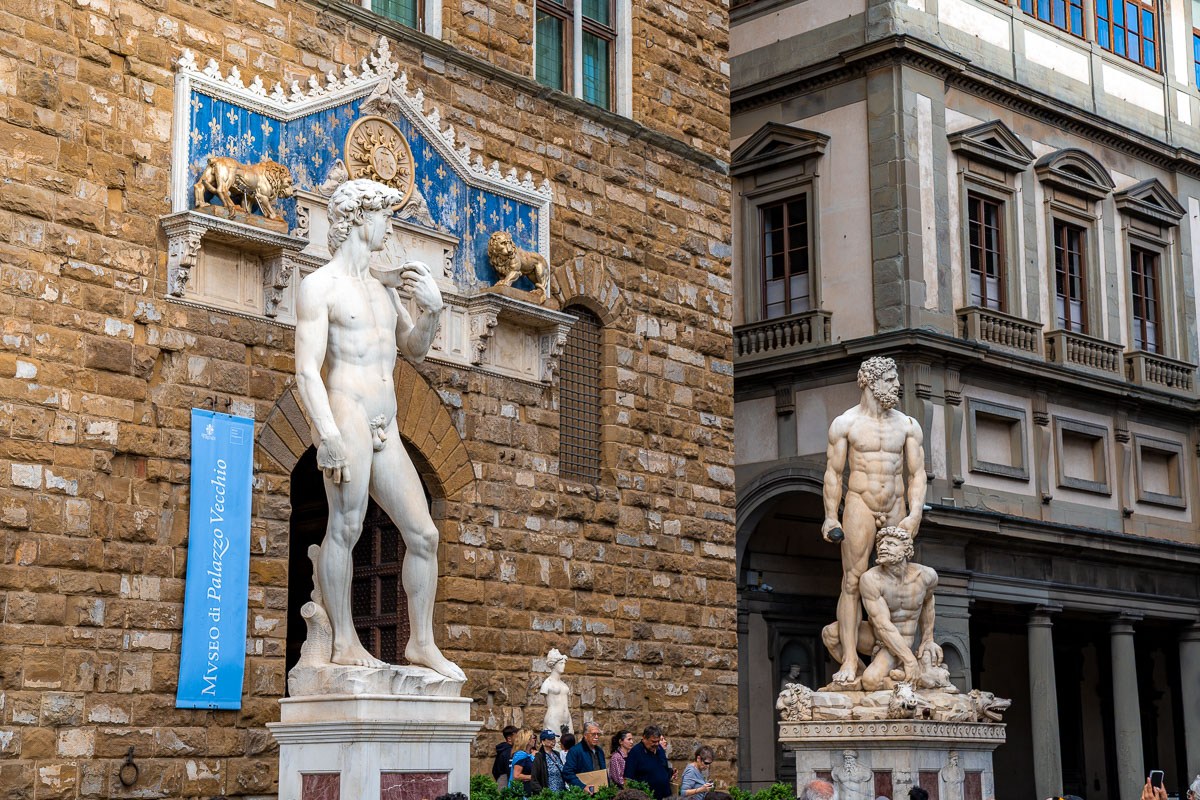
This square has been the political center of Florence for centuries, and today it’s basically an open-air museum filled with sculptures and historic buildings.
One of the main landmarks here is Palazzo Vecchio, the historic town hall of Florence. Even if you don’t go inside, it’s worth stopping for a minute to look at the building and the square around it.
Right next to it, you’ll find the Loggia dei Lanzi, which is free to visit and filled with impressive statues, including Perseus with the Head of Medusa.
You’ll also see a replica of Michelangelo’s David here, marking the original location where the statue once stood before it was moved to the Accademia Gallery. It’s a cool detail, especially since you saw the real statue on the first day of your Florence itinerary!
Affogato at Vivoli
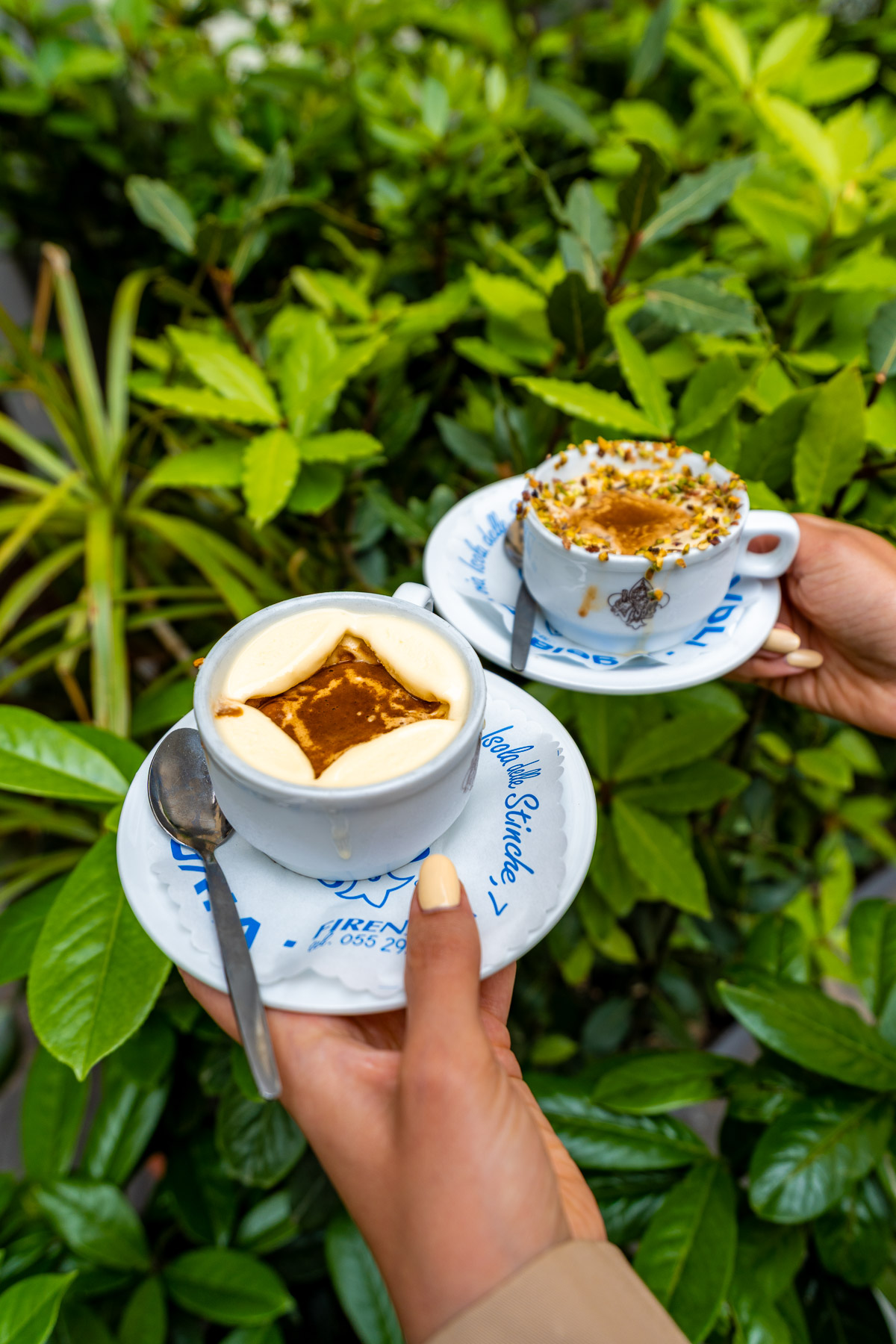
Just a few minutes from Piazza della Signoria, you’ll find Vivoli, one of Florence’s most famous gelaterias. While the gelato is excellent, there’s one thing I always recommend ordering here: the affogato.
If you’ve never had one before, an affogato is a scoop of gelato topped with a shot of hot espresso. It might sound simple, but it’s the perfect afternoon pick-me-up after a busy morning of sightseeing and a big schiacciata sandwich from All’Antico Vinaio.
Vivoli can get quite busy, but don’t let the lines put you off. There are actually two separate entrances: the one on the right is dedicated to affogatos, while the other leads into the gelateria itself. You can get affogato at both so just choose whichever one is shorter!
There’s very limited seating, so don’t be surprised if you end up enjoying your affogato sitting on the curb outside. It might not sound glamorous, but it’s all part of the experience!
Ponte Vecchio
From Vivoli, make your way toward Ponte Vecchio, Florence’s most famous bridge and one of the city’s most recognizable landmarks. Spanning the Arno River, the bridge is known for the colorful shops that line both sides, many of which have been selling jewelry and gold since the 16th century.
While most visitors simply walk across the bridge, it’s worth taking a few minutes to admire it from a distance as well. Some of the best views can be found from the nearby bridges and riverbanks, where you can really appreciate its unique appearance.
Ponte Vecchio is almost always busy, especially during the middle of the day, so don’t expect a peaceful stroll. Even so, it’s one of those places that every first-time visitor to Florence should see at least once.
As you cross the bridge, you’ll leave the historic center behind and enter the Oltrarno district, home to some of Florence’s most famous attractions, including Pitti Palace and Boboli Gardens, which are your next stops on this itinerary.

Pitti Palace & Boboli Gardens
Located on the other side of the Arno River, Pitti Palace is one of the largest and most impressive historic buildings in Florence. The palace was originally built for the wealthy Pitti family and was later purchased by the Medici family, who turned it into their main residence.
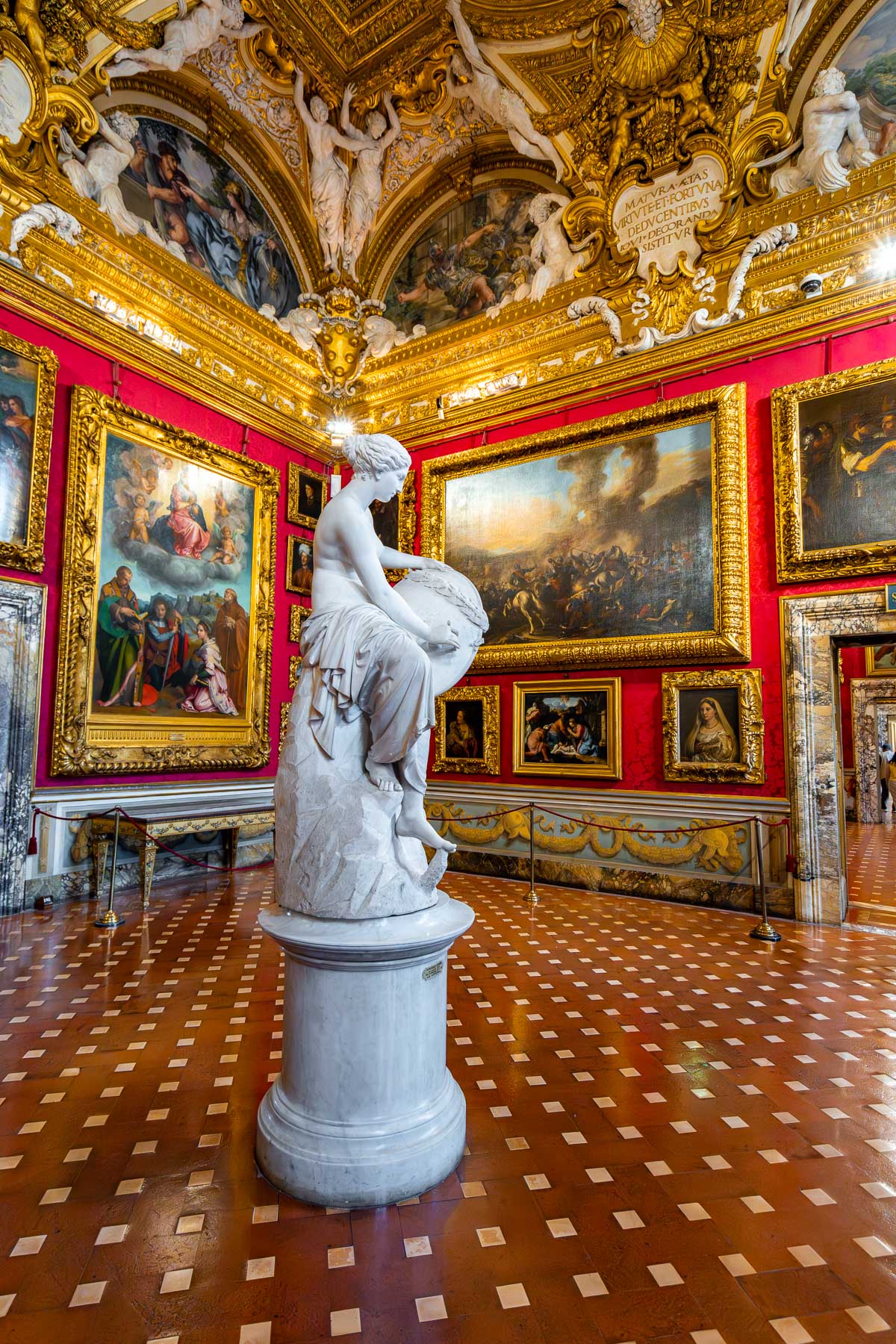
Today, Pitti Palace houses several museums, including the Palatine Gallery, which features works by Raphael, Titian, and Rubens, along with royal apartments and rotating exhibitions.
Right behind the palace, you’ll find Boboli Gardens, one of the most famous historic gardens in Italy. The gardens are large, beautifully landscaped, and filled with fountains, statues, and viewpoints overlooking Florence. It’s a nice change of pace after museum visits and gives you more open space to walk around.
You’ll need a ticket to visit both Pitti Palace and Boboli Gardens, but combined tickets are also available and usually make the most sense if you plan to see both. As with almost all attractions in Florence, you also have the option to join a guided tour, which includes both the Palace and the gardens.
Important Info
Boboli Gardens is currently undergoing a major restoration project that is expected to continue until 2030. The gardens remain open to visitors, but you’ll likely encounter construction work and fenced-off areas during your visit, so it’s not as pretty as it usually is.
Giardino delle Rose
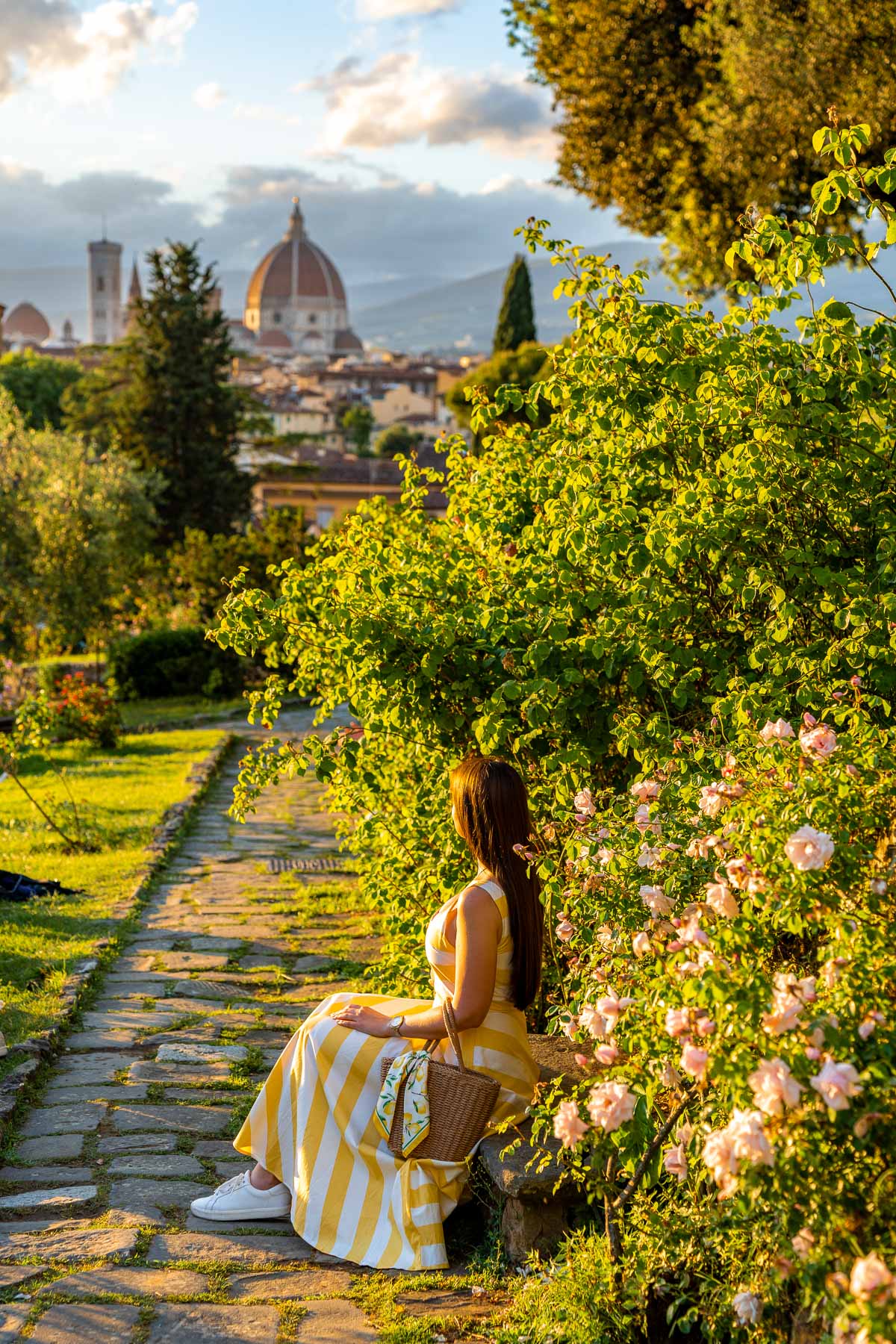
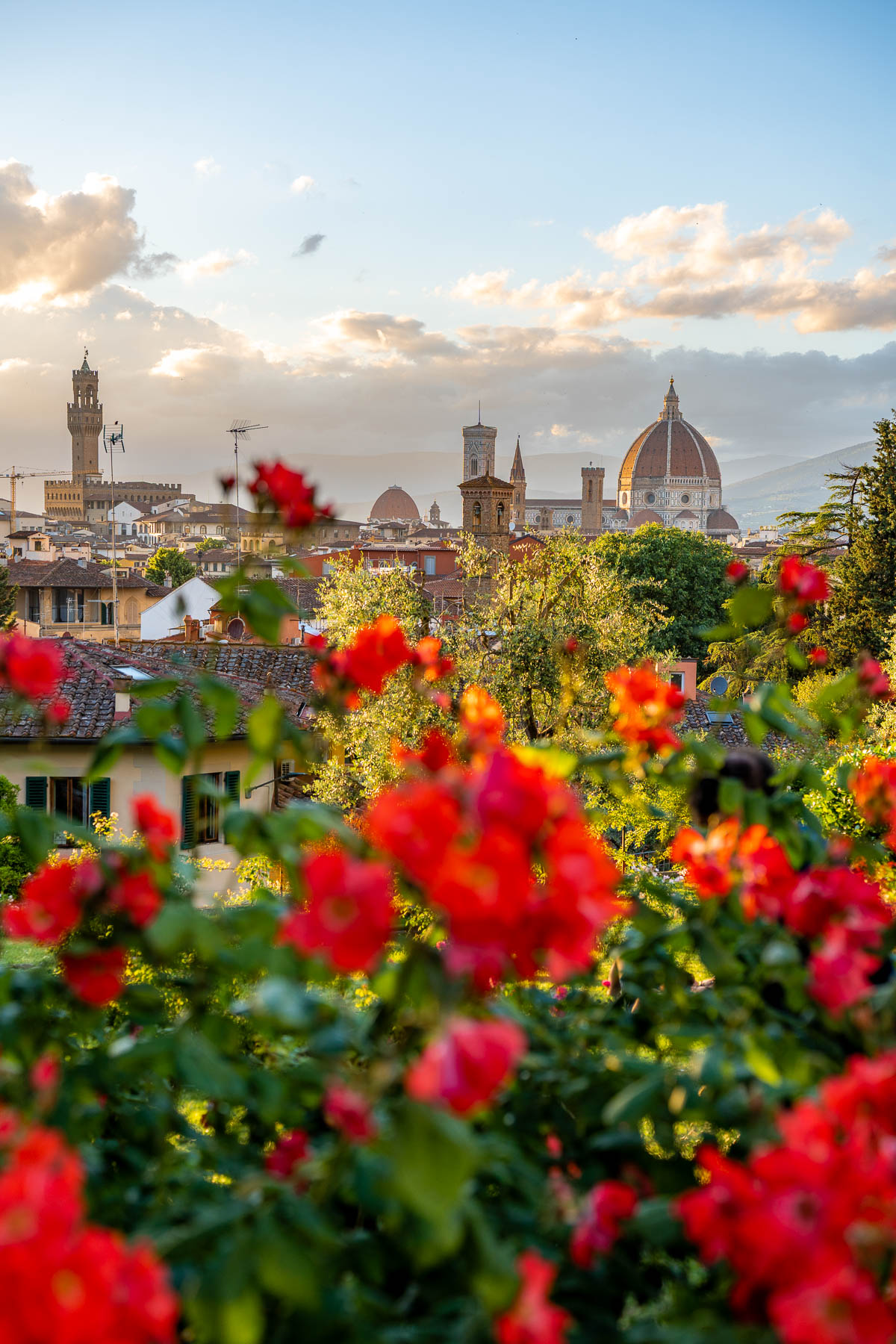
Before heading up to Piazzale Michelangelo, make a quick stop at Giardino delle Rose. Located on the hillside below the famous viewpoint, this small garden is one of Florence’s prettiest hidden gems.
As the name suggests, the garden is filled with roses, although the exact bloom period depends on the time of year. Even outside peak flowering season, it’s worth visiting for the beautiful views over Florence and the much quieter atmosphere compared to Piazzale Michelangelo.
The garden is free to enter and only takes about 15-30 minutes to explore. There are several benches scattered throughout the grounds, making it a great place to sit for a few minutes and enjoy the scenery before continuing uphill.
One of my favorite things about Giardino delle Rose is that it offers many of the same views as Piazzale Michelangelo but without the crowds. If you’re visiting Florence during the busy summer months, you’ll definitely appreciate the extra breathing room!
Piazzale Michelangelo
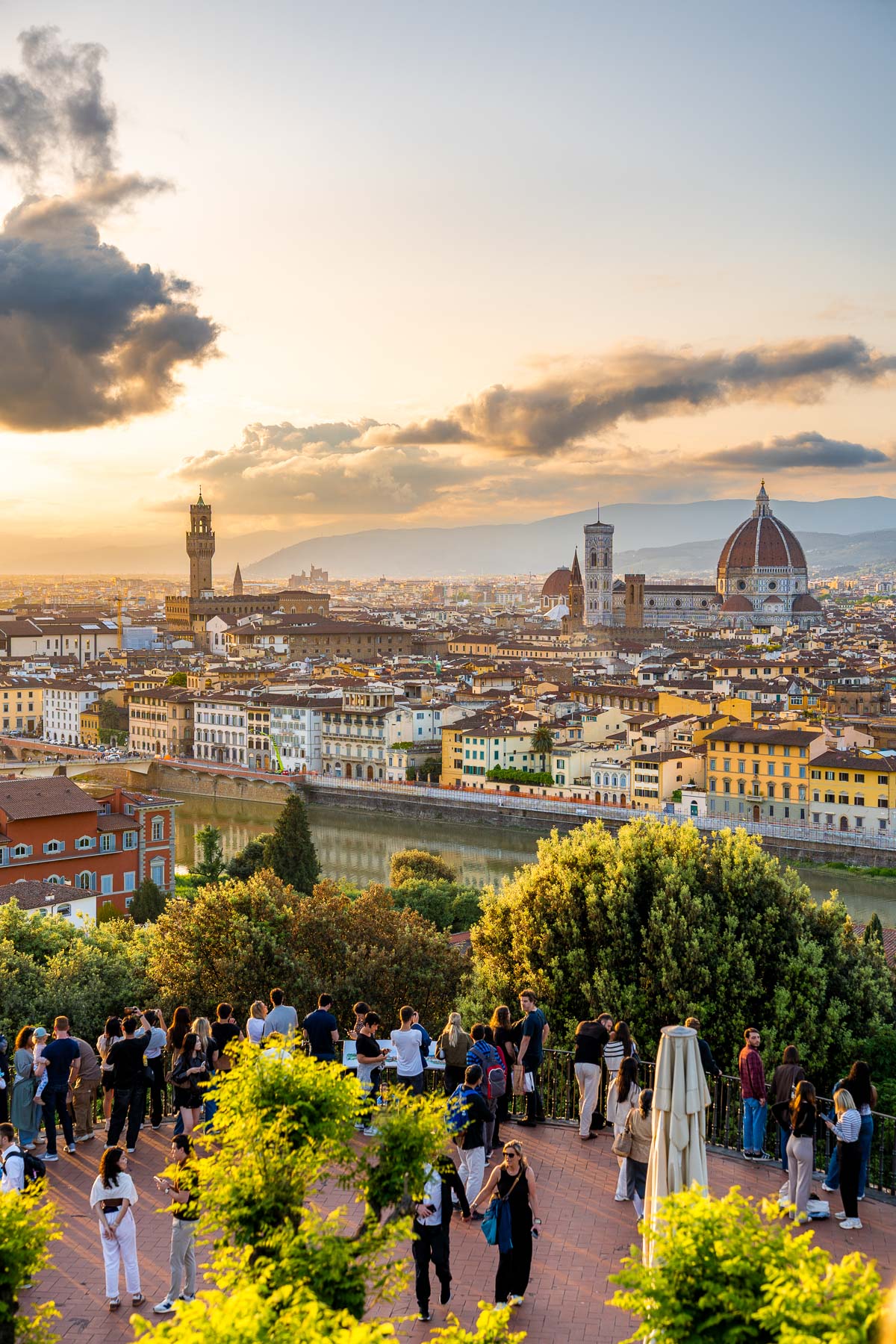
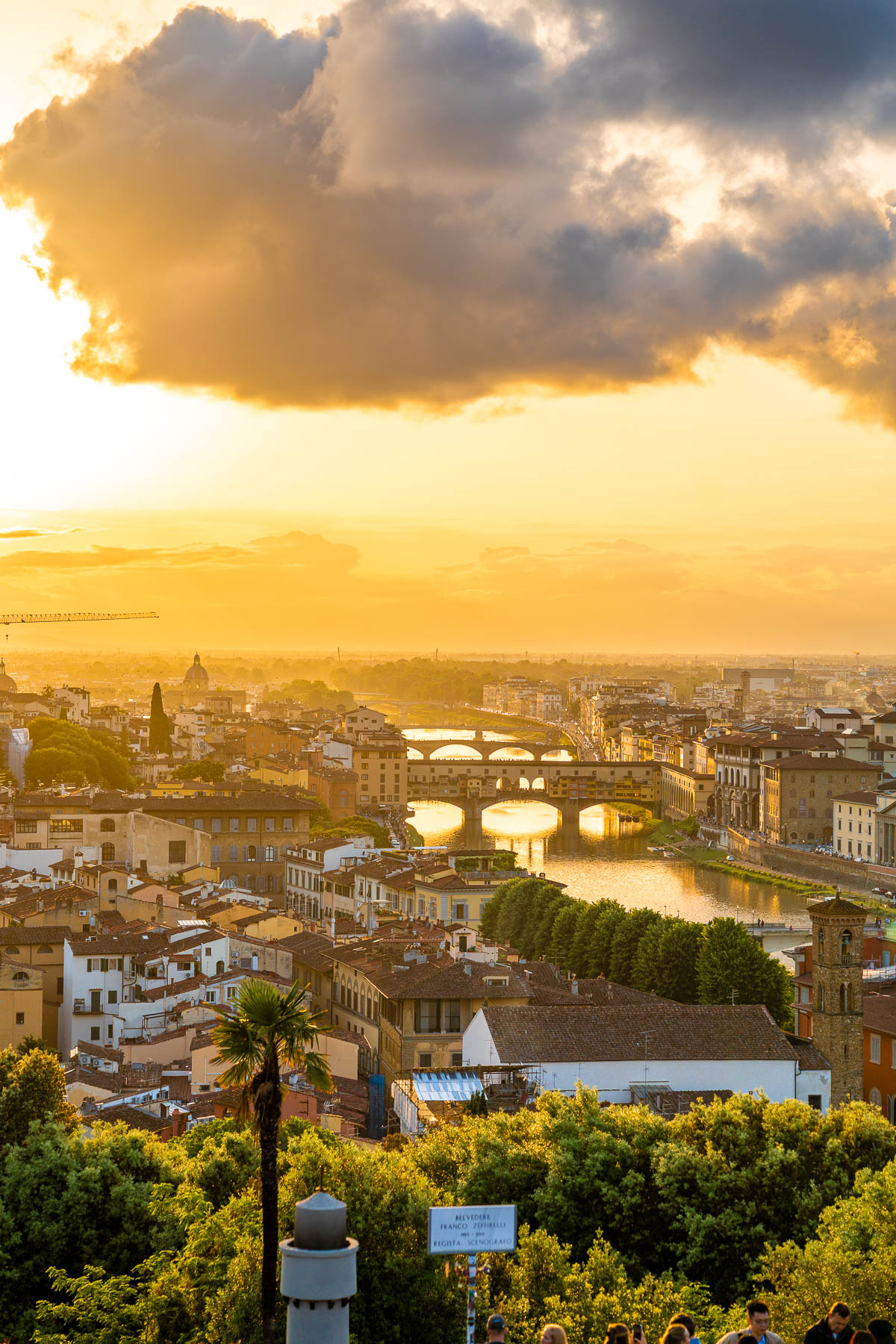
There’s no better way to end your 2 days in Florence than with sunset at Piazzale Michelangelo! Yes, it’s busy, yes, it’s touristy, but still so worth it.
Perched high above the city, this famous viewpoint offers a panoramic view of Florence’s terracotta rooftops, the Arno River, Ponte Vecchio, and Brunelleschi’s Dome.
The walk up from Giardino delle Rose only takes a few minutes, although it is a bit steep in places. Once you reach the top, you’ll find a large terrace with plenty of space to take photos and enjoy the view.
Sunset is by far the most popular time to visit, so expect some massive crowds. I recommend arriving at least 30-60 minutes before sunset to secure a good viewing spot. Even though it’s busy, it’s part of the charm and usually there are also street musicians or performers to make it even better.
Also, keep your eyes out for another replica of Michelangelo’s David statue in the center of the square!
Dinner at Berbere Pizzeria or Misterpizza
After a full day of sightseeing, finish your Florence itinerary with a well-deserved pizza. Both Berberè Pizzeria and Misterpizza are excellent options, so you really can’t go wrong with either one.
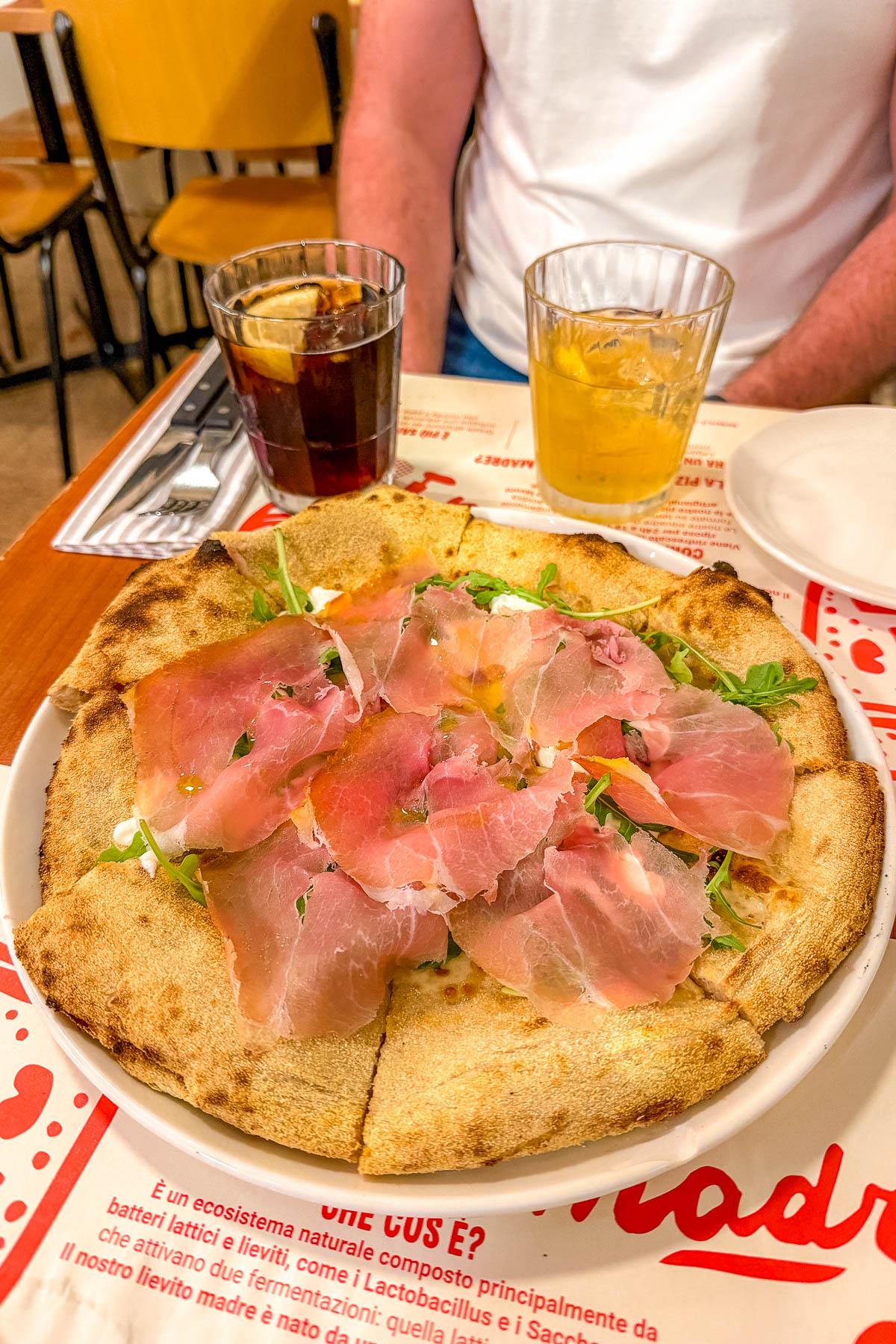
Berberè is known for its light, airy crust and high-quality ingredients. It’s one of the most popular pizza spots in Florence and a great choice if you’re looking for a more modern take on traditional Italian pizza.
Misterpizza is located right next to the Duomo, making it a convenient option if you’re staying in the historic center or simply don’t want to venture too far after a long day. The menu features a wide variety of pizzas, along with pasta dishes and other Italian favorites.
I visited both during my time in Florence, and while both are great, I’d pick Misterpizza if I had to choose! Whichever you choose, it’s the perfect way to wrap up your last evening in the city.
Berbere Pizzeria 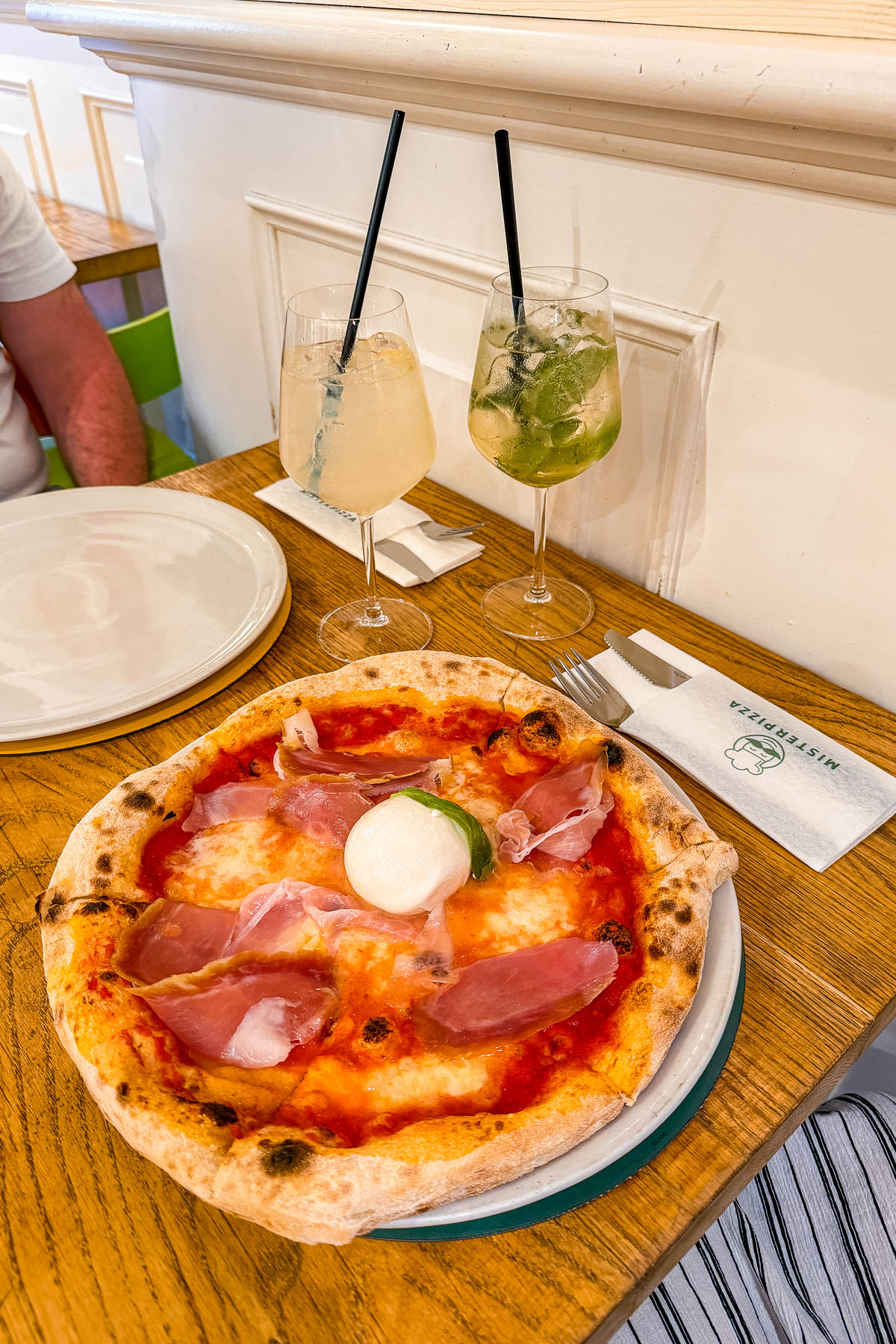
Misterpizza





Very nice, though just for accuracy’s sake, the Duomo IS the cathedral, not just part of it. You might be thinking it’s the “dome,” but Duomo isn’t dome, it’s the church itself.
Thanks so much for correcting me!
I wouldn’t miss seeing the David for anything! The Accademia opens at 8:15 am, so even if it’s all a person saw (and the Prisoners, of course) it would be worth it. Love the Uffizi, but I would trade it all for 15 minutes in the presence of this magnificent sculpture. For me it was unforgettable.
Thank you for sharing your experience! Yes I agree, it’s very different to everyone. I would also love to check out David next time I’m in Florence!